Refacing Versus Kitchen Replacement Compared
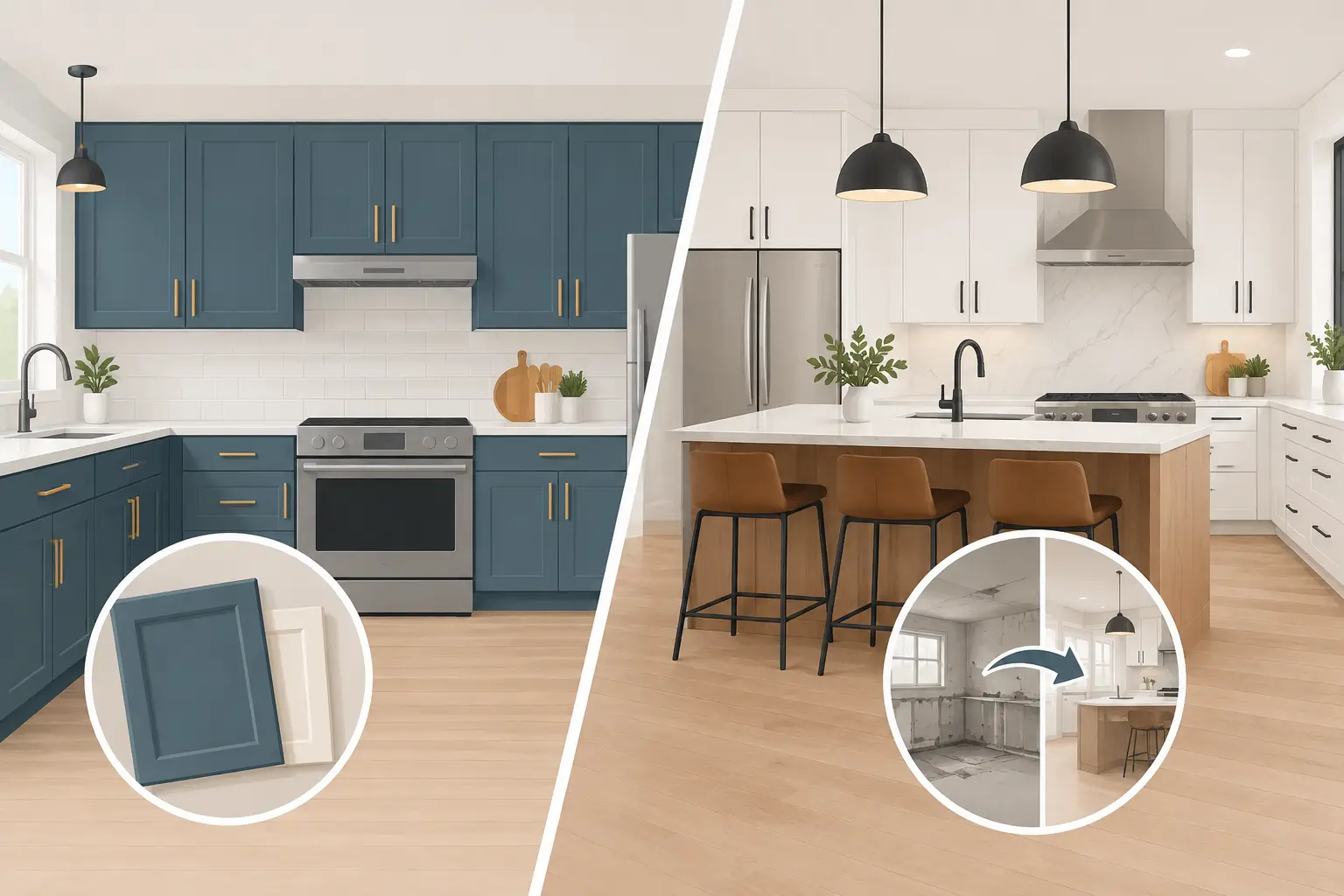
A kitchen can look past its best long before the cupboards have stopped doing their job. Faded doors, chipped worktops and dated handles can make the whole room feel tired, even when the cabinet units are solid and the layout still works well. That is why refacing versus kitchen replacement is not simply a question of old versus new. It is about choosing the level of change your home genuinely needs.
For many homeowners, replacing visible and hard-working elements offers a new look for the kitchen without starting again. For others, a complete replacement is the sensible route. The best choice comes from an honest assessment of what is behind the doors as well as what is in front of them.
What does kitchen refacing mean?
Kitchen refacing can mean slightly different things depending on the supplier. In practical terms, it is a refurbishment of an existing kitchen rather than a full removal. Sound cabinet units and their existing positions remain in place, while the elements that define the kitchen’s appearance and everyday feel are renewed.
This may include made-to-measure replacement cabinet doors and drawer fronts, new handles, plinths and end panels. It can also be the right time to replace a worn worktop, fit a more useful sink and tap, or introduce accessories that bring the finish together. A dated oak-effect kitchen, for example, can become a calm matt painted look or a more contemporary gloss design while retaining its original cupboard carcasses.
The word “refacing” sometimes suggests a thin cosmetic covering. A well-planned kitchen makeover can be much more substantial than that. New doors and drawer fronts change the parts you see and use every day, while a new worktop and hardware can transform the room’s style and function.
Refacing versus kitchen replacement: the key difference
A full kitchen replacement involves taking out the existing units, usually along with the worktops, doors and fittings, then installing new cabinets in a new or similar layout. This is often the right answer when the room needs structural changes or the current units have reached the end of their life.
Refacing works with what is already good. The cabinet boxes stay, so there is no need to remove units simply because their fronts no longer suit your taste. You can concentrate your budget on the changes that will make the most visible difference: door style, colour, worktop material, handles, sink and tap.
Neither route is automatically better. A complete replacement gives greater freedom to move appliances, alter cupboard sizes or create a different layout. Refacing is usually less disruptive and avoids replacing usable units, but it works best when the cabinet structure, hinges and arrangement are worth keeping.
Start with the layout, not the door colour
It is tempting to begin with the fun part: choosing between a shaker door, smooth matt finish or high-gloss look. Before that, ask whether the kitchen works for the way you live now.
Consider how easily you move between the fridge, sink and hob, whether there is enough storage, and whether doors and drawers open comfortably. Think about where food preparation actually happens and whether the worktop is large enough for family meals, baking or a busy weekday morning. If the layout remains practical, it is a strong sign that refurbishment deserves serious consideration.
Small improvements can make a retained layout feel more useful. New handles may be easier to grip. A deeper sink, better-positioned tap or more hard-wearing worktop can improve everyday tasks. Replacement drawer fronts can refresh storage without the upheaval of rebuilding the room around it.
If you need to move plumbing, change the position of major appliances, remove a wall, or add a large island where none existed before, replacement may give you the flexibility required. These changes can affect electrics, flooring and surrounding finishes too, so it is wise to see the whole project rather than judging it by the cabinets alone.
When kitchen refacing is a sensible choice
Refacing is particularly well suited to kitchens where the cupboard carcasses are firm, dry and properly aligned. Open a few doors and drawers. They should sit squarely, feel stable, and show no signs of swelling, splitting or persistent damp damage. The units do not have to look attractive – that is the point of changing the fronts – but they should provide a reliable base.
It also makes sense when you like the shape of the kitchen. Perhaps your galley layout is efficient, your corner cupboards work well, or the existing arrangement gives you all the storage you need. Replacing doors and drawer fronts to size allows the visible design to change without losing a layout that has already proved itself.
This route is often appealing when disruption matters. Full removal creates more trades, more decisions and more time without a functioning kitchen. Refacing still requires careful measuring and fitting, especially if worktops, sinks or appliances are involved, but the core room can remain intact. For households balancing work, children or limited renovation time, that difference can be significant.
Design choice is another reason. A classic shaker style can bring warmth to a traditional home, while slab doors in a muted matt colour can give a more streamlined finish. Lighter tones can lift a compact kitchen, and darker doors with a pale worktop can add contrast to a larger room. Samples matter here: a colour that looks right on a screen may feel very different beside your flooring, wall paint and natural light.
Signs a full kitchen replacement may be better
There are times when new doors cannot solve the underlying problem. If units are badly water-damaged, unstable, damaged by pests or made from deteriorating materials, fitting replacement fronts may not be a worthwhile investment. The same applies if drawers no longer run properly because the cabinet itself has failed.
A full replacement is also worth considering if storage is fundamentally inadequate. A kitchen with too few drawers, awkward corner space and no suitable place for appliances may continue to frustrate you whatever finish sits on the doors. In that situation, starting with a fresh plan can offer better long-term value.
Take a close look at the following areas before deciding:
- Cabinet sides, bases and backs for swelling, damp or movement.
- Hinges and drawer runners for damage that cannot be adjusted or renewed.
- The practicality of the current appliance, plumbing and preparation zones.
- Whether the room needs a change in layout rather than a change in appearance.
This is not a reason to assume the worst. Many older kitchens have perfectly serviceable units beneath dated fronts. It is simply a reason to inspect them properly before choosing the route that suits your home.
Cost, waste and disruption: look at the whole picture
A kitchen refurbishment can cost less than a complete replacement because it keeps the existing cabinet units and avoids some of the labour involved in stripping out and rebuilding the room. That does not mean every refacing project is identical in price. Door size, finish, the number of drawer fronts, new worktops and the choice of sink, tap and handles will all influence the final budget.
The useful comparison is not “cheap versus expensive”. It is what you receive for the money spent. If the units and layout are right, paying for new cabinets may add little practical benefit. Directing that budget towards quality doors, a durable worktop and fittings you enjoy using can create a more considered result.
There is a waste consideration too. Removing sound cabinets creates material that must be disposed of, while refurbishment retains what can still perform well. That is a sensible approach, provided it does not disguise problems that ought to be addressed. Keeping good units is practical, not a compromise, when they are genuinely in good condition.
Make the decision with real samples in front of you
Kitchen choices are easier when you can compare finishes side by side. Door samples reveal how a shaker frame catches the light, how a matt surface feels, and whether a gloss finish suits the room. Worktop samples help you judge warmth, texture and how a colour will sit against your existing floor and splashback.
For homeowners around St Neots and Little Paxton, visiting the Replacement Kitchen Doors To Size showroom is a useful first step. Bring a few photographs and measurements if you have them, along with a clear idea of what you would like to improve. Friendly advice from experienced kitchen specialists can help you separate a cosmetic update from changes that will make a real difference to daily use.
The right answer is the one that respects both your home and your plans for it. If the foundations of your kitchen are sound, new doors, worktops and fittings may be all that is needed to make the room feel like yours again.