When Should Kitchen Cabinets Be Replaced?
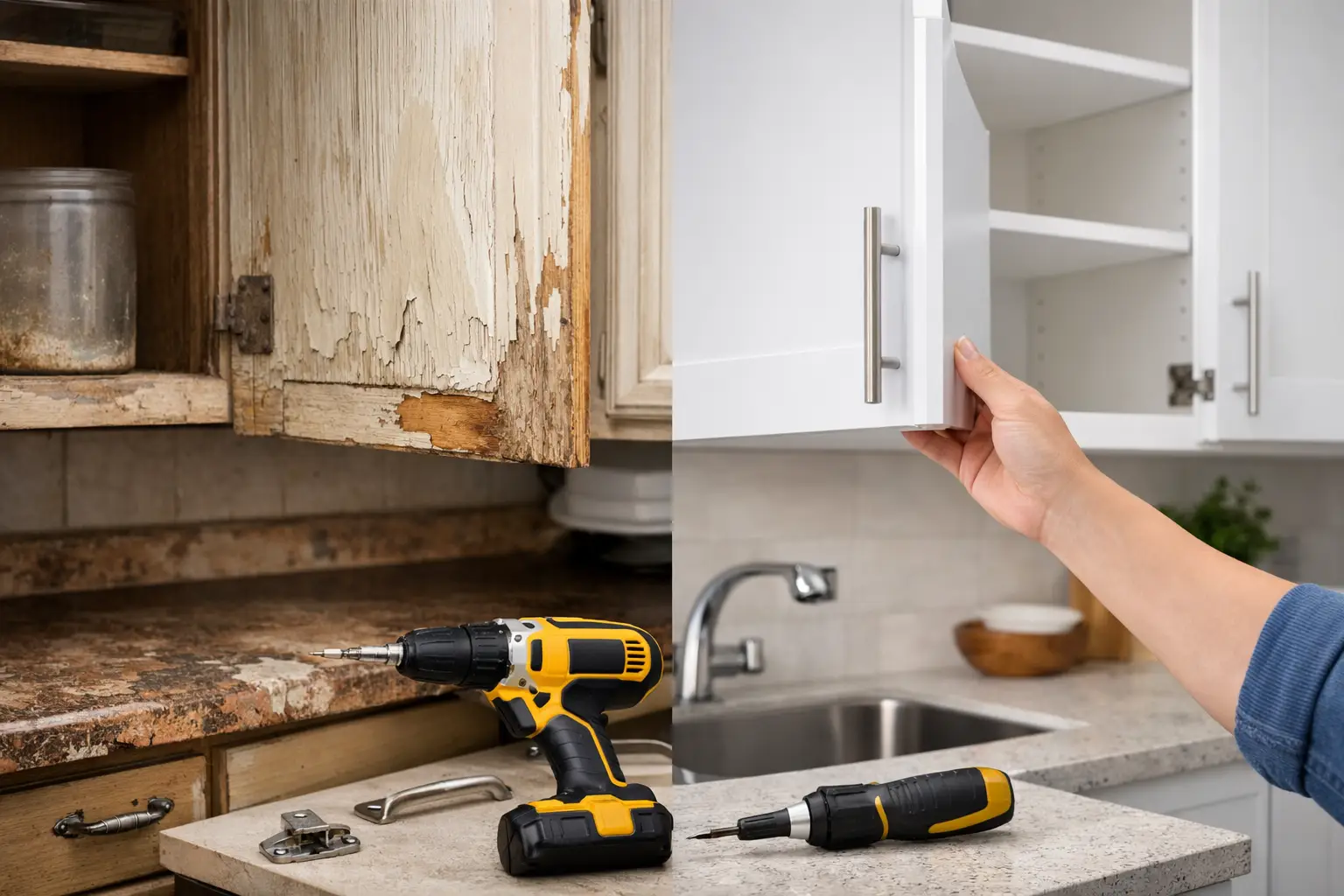
A kitchen can look past its best long before it stops being useful. If you still like the layout, the storage works, and the cabinets feel solid, the real question is not simply when should kitchen cabinets be replaced, but whether they need replacing at all.
That is where many homeowners get stuck. The doors look tired, the finish has worn away around the handles, and the worktop has seen better days. It is easy to assume the whole kitchen has reached the end of the road. In practice, some kitchens do need full cabinet replacement, but many can be refreshed very effectively by updating the parts you see and use every day.
When should kitchen cabinets be replaced fully?
Full cabinet replacement makes sense when the cabinet carcases themselves are no longer doing their job. If the units are swollen from water damage, badly warped, structurally weak or coming away from the wall, replacing doors alone will not solve the underlying problem. A new front on a failing cabinet is still a failing cabinet.
Age on its own is not the deciding factor. Some older kitchens are built surprisingly well and can last for many years with the right updates. Others may only be a decade or so old but have suffered from poor installation, heavy wear or repeated leaks around the sink and appliance areas.
One of the clearest signs is damage to the cabinet boxes. If the chipboard has blown around the base of units, the shelves are sagging badly, or the hinges can no longer hold securely because the material has crumbled, replacement is often the sensible route. The same applies if the cabinets were never fitted squarely and doors no longer align because the structure itself is out.
Layout is another reason. If your kitchen no longer works for the way you live, replacing the cabinets may be the better choice. Perhaps you want wider drawers instead of awkward corner cupboards, more practical storage, or space for integrated appliances that your current units simply cannot accommodate. In that case, the issue is function rather than appearance.
Signs your cabinets may not need replacing
There is a big difference between worn out and worn looking. Many kitchens appear old because the doors, drawer fronts, handles and worktops show the most visible wear. The cabinet boxes behind them can still be perfectly serviceable.
If the carcases are firm, level and dry, keeping them can save a great deal of disruption. New replacement doors can change the whole look of the room. Add updated handles, a fresh worktop, a new sink or tap, and the kitchen often feels transformed without altering the footprint.
This is especially appealing if you are happy with where everything is. If the cooker, sink and storage all sit in sensible places, a full rip-out can feel unnecessary. Keeping the existing layout also avoids some of the knock-on work that comes with a complete replacement, such as flooring repairs, plastering and electrical alterations.
Cosmetic problems versus structural problems
This is usually the simplest way to judge it. Cosmetic problems affect how the kitchen looks. Structural problems affect how it works.
Cosmetic issues include faded door finishes, chipped edges, dated colours, worn handles, scratched worktops and minor marks from everyday use. These can often be addressed without replacing the entire kitchen. In many cases, that approach gives homeowners the result they actually want – a cleaner, more modern, easier-to-live-with kitchen.
Structural issues are more serious. Water damage under the sink, loose cabinets, bowed shelves, failing fixings and units that have shifted out of line usually point towards replacement. If opening a cupboard door makes the whole unit wobble, it is time to look beyond a simple facelift.
The areas to inspect first
Start around the sink base unit, as this is where hidden damage often begins. Check the inside floor of the cupboard, the back panel and the lower edges of the sides. Swelling, soft spots and staining are warning signs.
Then look at the hinges. If they have pulled away repeatedly, or the screw holes no longer hold, the cabinet material may be breaking down. Finally, inspect the plinth area and any cabinets beside the dishwasher, where steam and leaks can quietly cause damage over time.
When replacing kitchen doors is the better answer
For many homes around St Neots, Huntingdon and the surrounding villages, the better question is not when should kitchen cabinets be replaced, but when should kitchen doors, drawer fronts and worktops be updated instead.
If your cabinet boxes are sound, replacing the fronts can be a practical middle ground. You keep the structure that already works, while changing the style, colour and finish of the kitchen. This suits homeowners who want a fresher look without the cost and upheaval of starting again.
It also allows more flexibility than people often expect. You can choose from modern slab doors, classic shaker styles, matt or gloss finishes, and made to measure options where needed. Once new handles, worktops and finishing touches are added, the result can feel much closer to a new kitchen than many imagine.
There is also the day-to-day benefit. A lighter door colour can brighten a darker room. Better handles can be easier to grip. A new worktop can make food preparation more pleasant. These are not dramatic changes on paper, but they can make a kitchen feel better to use every single day.
Cost, disruption and value
Budget matters, but so does hassle. Full cabinet replacement usually means more than just swapping units. It often brings extra fitting work, redecoration, and a longer period without a usable kitchen.
If your existing layout works well, paying for a complete replacement can be poor value. Much of the cost goes into removing and rebuilding parts of the kitchen that were not the real problem. A refresh using replacement doors, worktops and updated fixtures often puts the budget into the parts you notice most.
That does not mean full replacement is wrong. If the cabinets are genuinely failing, or the layout frustrates you every day, then patching things up can become a false economy. The key is being honest about whether the kitchen is tired, damaged or simply no longer fit for purpose.
How long should kitchen cabinets last?
There is no fixed lifespan that applies to every kitchen. Quality of installation, material choice, moisture levels and general use all make a difference. Well-fitted cabinets in a carefully maintained home can last decades. Poorer quality units, especially around wet areas, may show serious problems much sooner.
That is why visual age can be misleading. A kitchen from the early 2000s may still have strong cabinet boxes hidden behind dated doors. Equally, a newer kitchen may already be struggling if the materials were basic or the fitting was rushed.
A proper assessment looks at condition rather than year. Are the cabinets stable? Are they dry? Do the hinges hold? Does the layout still work? Those questions matter more than the date the kitchen was installed.
Seeing the options in person helps
One reason homeowners delay making a decision is that they picture only two choices – keep the tired kitchen, or replace the lot. In reality, there is often a useful middle option.
Seeing door samples, worktop finishes and handle styles in person makes that much easier to judge. Colours look different under real light than they do on a screen, and the feel of a finish matters more than many expect. For anyone weighing up whether to replace cabinets or simply update the visible parts, practical advice and side-by-side comparisons can save costly mistakes.
At a local showroom such as Replacement Kitchen Doors To Size in Little Paxton, it is easier to talk through what is worth keeping and what is not. That grounded approach suits homeowners who want to improve the kitchen they already have, rather than being pushed straight towards a full replacement.
A sensible way to decide
If the cabinet boxes are solid and the layout still suits your home, full replacement may be unnecessary. If the units are damaged, unstable or no longer practical, replacing them properly is usually the smarter move.
The best kitchens are not always the newest ones. Often, they are the ones where the right parts have been updated for the way the household actually lives. Before you write off the whole room, it is worth asking whether your kitchen needs rebuilding – or simply refreshing.