Best Layout for Galley Kitchen Spaces
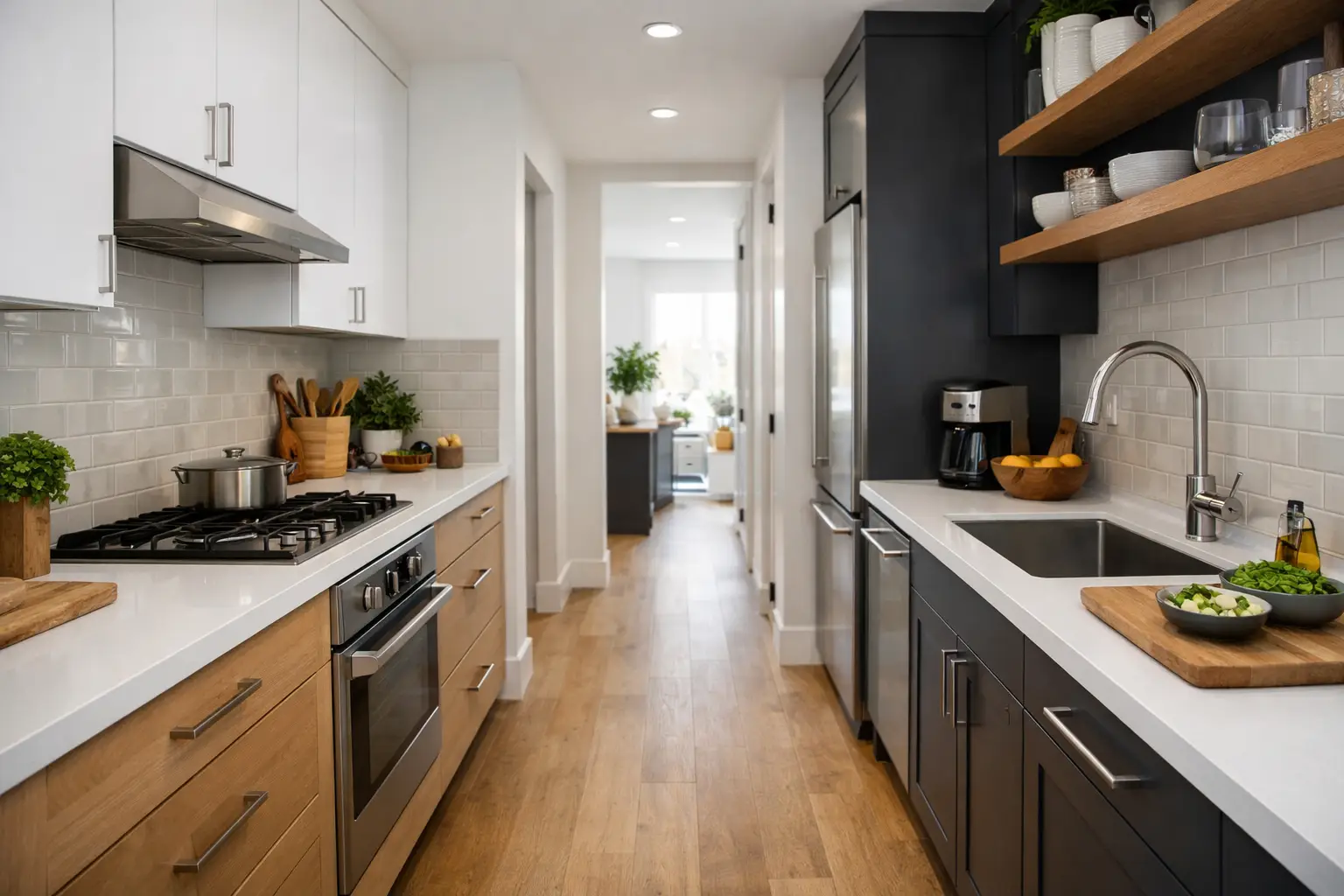
A galley kitchen can work brilliantly when every inch earns its keep. If you are weighing up the best layout for galley kitchen spaces, the answer is rarely about making it bigger. It is usually about improving movement, storage and sightlines so the kitchen you already have feels easier to use every day.
That matters because many galley kitchens are not actually badly planned. They are simply tired, cluttered or dated. For plenty of homeowners, especially those who already like where the sink, cooker and cupboards sit, a full rip-out is not the only route. Often, the smarter choice is to keep the basic layout and improve how it functions with better doors, worktops, handles, lighting and a few carefully judged design changes.
What is usually the best layout for a galley kitchen?
In most homes, the best galley kitchen layout is a two-run arrangement with clear, uninterrupted walking space down the middle and the main working areas spread sensibly across both sides. One side tends to handle cooking, the other washing and prep, although the exact split depends on where your plumbing, windows and doorways are.
The reason this works is simple. A galley kitchen is naturally efficient. You do not need to walk far between the fridge, sink and hob, and that can make cooking feel quicker and less tiring. The problem comes when the runs are too crowded, tall units are placed heavily at both ends, or doors and appliances clash when opened.
A good galley layout feels balanced rather than packed. It gives you enough worktop near the hob and sink, keeps the route through the room clear, and avoids creating bottlenecks. If two people use the kitchen at once, that central walkway becomes even more important.
The key features of a layout that works
The first priority is aisle width. Too narrow, and the room feels awkward every time someone opens the dishwasher or bends to reach a pan. Too wide, and the kitchen loses that efficient, compact feel that makes galley designs attractive in the first place. There is no single perfect measurement for every home, but you want enough room to move comfortably without stretching between work surfaces.
The second is worktop placement. In practical terms, the most useful layouts give you landing space beside the hob, beside the sink and near the fridge. That sounds basic, but it is often the difference between a kitchen that looks tidy and one that genuinely works. If the only clear surface is on the far side of the room, daily tasks become more awkward than they need to be.
Storage also needs to support the way you actually cook. Deep cupboards can swallow bulky pans, but they are less helpful for items you use every day unless they are well organised. Wall units add valuable capacity, yet too many can make a narrow room feel boxed in. In some galley kitchens, replacing a section of wall units with open space, lighter finishes or better lighting can make the room feel calmer without losing the usefulness of the layout.
One-wall versus two-wall galley kitchens
Some people describe a single run kitchen with a parallel island or breakfast bar as a galley layout, but the classic galley is two straight runs facing each other. Between the two, the traditional twin-run layout is usually the most efficient where space allows.
A one-wall arrangement can suit smaller homes or open-plan spaces, especially if you want the room to feel less enclosed. The trade-off is that you lose some of the compact working rhythm that galley kitchens are known for. More of your storage and appliance capacity has to fit along one line, which can mean less worktop or more compromise.
By contrast, a two-wall layout often gives better separation between cooking and cleaning zones. It also makes it easier to refresh an existing kitchen without moving everything. If your cabinets are sound and the layout is already practical, keeping the runs in place and updating the fronts and surfaces can be far more straightforward than starting again.
Where to put the sink, hob and fridge
The old kitchen triangle idea still has some value, but in a galley kitchen it needs a bit of common sense. You are not trying to force a perfect geometric rule into a narrow room. You are trying to avoid nuisance.
The sink usually works best with decent worktop on at least one side and, ideally, natural light if there is a window available. The hob needs usable space nearby for prep and for setting down hot pans. The fridge should be easy to reach without blocking the main cooking area every time someone grabs milk or opens the freezer drawer.
In many galley kitchens, placing the sink on one run and the hob on the other creates a practical split. It helps two people work without constantly crossing over one another. The fridge can sit toward one end, especially if that keeps it accessible without interrupting the main prep zone.
This is where existing layout matters. If your plumbing and extraction are already in sensible positions, moving them may add cost without adding much benefit. A fresh set of replacement doors, updated handles, a new worktop and improved lighting may achieve the result you want while keeping disruption down.
The best layout for galley kitchen storage
Storage in a galley kitchen should make the room feel calmer, not fuller. Tall housings can be very useful, particularly for ovens and integrated fridge freezers, but too many full-height units can make a narrow room feel closed in. A common fix is to group tall units at one end rather than scattering them along both sides.
Base units often do more of the heavy lifting in a galley kitchen than people realise. Wide drawers for pans, utensils and crockery can be easier to use than standard cupboards because you can see what you have without kneeling and reaching into the back. If your cabinet carcasses are still in good order, changing drawer fronts and doors can transform the look without changing the room’s footprint.
Wall units are a balancing act. They add storage, but they can also bring visual weight. Lighter colours, simple slab or shaker styles and well-chosen handles can help keep the room from feeling cramped. The aim is not just more storage. It is storage that lets the room breathe.
How finishes can improve the layout without moving units
People often talk about layout as though it is only about cabinet positions. In real homes, finishes play a big part in how a galley kitchen feels. A dark, dated door style, a heavy worktop pattern or poor lighting can make a perfectly decent layout seem smaller and less practical than it is.
Replacing kitchen doors can sharpen the whole room without changing the bones of the kitchen. Lighter finishes tend to help bounce light through a narrow space, while warm neutrals and soft greys can make the room feel cleaner and more current without being stark. If you prefer stronger colour, it often works best when balanced with simpler worktops and uncluttered walls.
Worktops matter too. In a galley kitchen, long uninterrupted lines help the room feel more ordered. Busy joins, awkward changes in level or too many contrasting materials can make the space feel fussy. A straightforward, well-fitted worktop often does more for the room than people expect.
Lighting and flooring make a bigger difference than you think
Galley kitchens are especially sensitive to poor lighting. If the room has one central fitting and little else, the work surfaces can end up in shadow even in daytime. Under-unit lighting, brighter task lighting and a sensible use of reflective finishes can all make the layout feel more usable.
Flooring also affects how the eye reads the room. A continuous floor with minimal visual interruption can make a galley kitchen feel longer and more open. Very busy patterns can shorten the space visually, while large-format designs often help create a cleaner look.
None of this means every galley kitchen should be pale and plain. It just means the choices should support the shape of the room rather than fight it.
When it is worth changing the layout
Sometimes the best layout for galley kitchen improvement is not the one you have now. If the cooker is jammed into a corner, the fridge blocks a doorway, or there is almost no worktop near the sink, then a rethink may be justified.
Even then, the smartest answer is often a modest adjustment rather than a complete redesign. Moving one appliance, changing a cupboard configuration or replacing a bulky unit with drawers may solve the main problem. For homeowners around St Neots who want practical advice rather than sales pressure, seeing samples and talking through options in person can make those decisions much easier.
If your existing kitchen cabinets are structurally sound, refreshing the fronts and surfaces while improving a few weak spots in the plan can be a sensible middle ground. It keeps what works, fixes what does not, and avoids turning a manageable update into a major building project.
A good galley kitchen should feel straightforward to live with. If the layout already does the hard work, you may not need a brand new kitchen at all – just better choices layered onto the one you have.