How to Plan Kitchen Workflow That Works
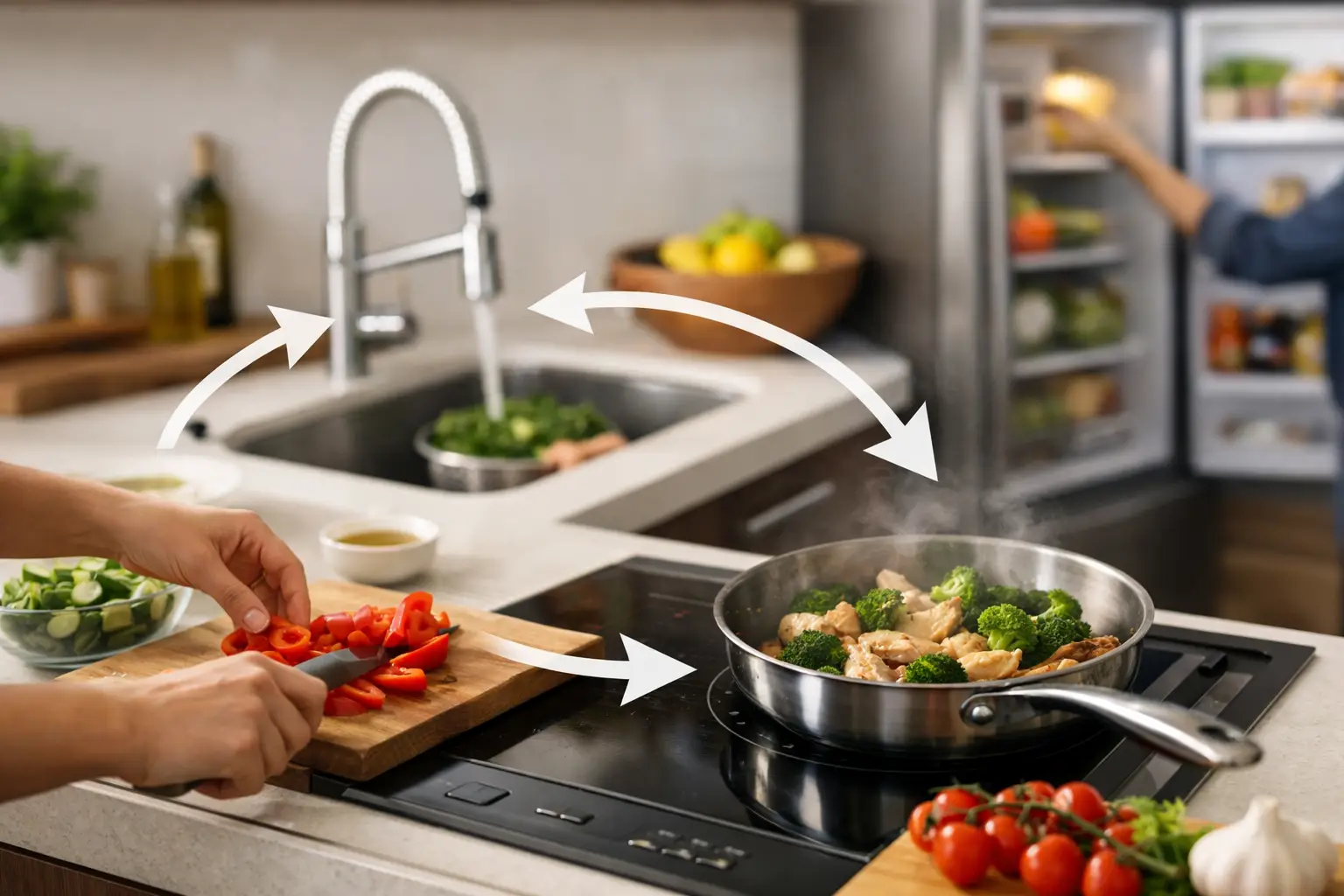
A kitchen can look beautiful on paper and still feel awkward the first time you make tea, unpack the shopping and try to get dinner on at the same time. That is usually a workflow problem, not a style problem. If you are wondering how to plan kitchen workflow, the best place to start is not with colours or door finishes, but with the way your household actually uses the room every day.
A well-planned kitchen should reduce wasted steps, ease congestion and make ordinary jobs feel simpler. That might mean moving the bin closer to the prep area, giving the dishwasher a better position, or making sure pans are stored where they are used. Good workflow is rarely about following one fixed rule. It is about building a layout around real habits, real space and the way your home runs.
What kitchen workflow really means
Kitchen workflow is the way you move between the main tasks in the room – storing food, preparing ingredients, cooking, serving and clearing up. In a kitchen that works well, these tasks connect naturally. In one that does not, you find yourself crossing the room repeatedly, opening the same cupboards twice, or competing for space with other people.
This is why layout matters so much. A family kitchen in St Neots will not be used in exactly the same way as a compact galley kitchen in a period terrace near Huntingdon, and neither should be planned in the same way. Some households need room for two people to cook together. Others want one efficient zone that lets everything happen within easy reach. The right answer depends on space, routine and priorities.
How to plan kitchen workflow from daily habits
Before you think about cabinets or appliances, pay attention to what already happens in your kitchen. Where do you drop the shopping? Where do you chop vegetables? Where do packed lunches get assembled? Where does clutter build up?
These patterns tell you far more than a showroom display ever can. If your kettle, mugs and tea bags are spread across three different places, that small irritation is part of your workflow. If your fridge door blocks the main route through the room when open, that matters too. Practical design starts by spotting these friction points and removing them.
It helps to think in zones rather than treating the kitchen as one large open area. Most kitchens work best when food storage sits in a sensible relationship to prep space, cooking appliances and cleaning areas. That does not mean every zone has to be separate. In smaller kitchens, one stretch of worktop may serve several functions. The key is making sure each job can happen without unnecessary movement.
Start with the five main kitchen zones
Most kitchens are easier to plan when broken into five working zones: consumables, non-consumables, cleaning, preparation and cooking. Consumables include the fridge, freezer and food cupboards. Non-consumables cover plates, glasses, cutlery and cookware. Cleaning centres around the sink, dishwasher and bin. Preparation needs enough uninterrupted worktop and access to knives, boards and utensils. Cooking is built around the hob, oven and pans.
When these zones are sensibly arranged, the room begins to flow. You take food out of storage, move to a prep area, cook nearby, then clear dishes into the cleaning zone without walking back and forth across the whole kitchen. That sequence sounds obvious, but many kitchens are laid out around available wall space rather than the order tasks actually happen.
One common mistake is creating a lovely long run of units with no thought to what belongs where. Another is placing the sink, hob and fridge too far apart in a large open-plan room. Space can be a luxury, but too much distance between key points can make everyday cooking feel surprisingly inefficient.
The classic work triangle still helps – up to a point
You may have heard of the kitchen work triangle, the idea that the sink, hob and fridge should form an efficient triangle. It is still useful, especially in smaller kitchens, because it encourages sensible spacing between the three busiest areas.
That said, it is not a rule to force into every design. Modern kitchens often include tall larder units, islands, integrated appliances and multi-use family spaces that go beyond the old triangle model. If you have a separate bank of ovens, or if your main prep space is on an island, the triangle becomes less important than the wider flow between zones.
A better way to use the principle is as a sense check. Are your main tasks connected without being cramped? Can two doors open at once without conflict? Is the route from fridge to worktop to hob straightforward? If the answer is yes, the workflow is probably on the right track.
Plan around the busiest moments, not the quiet ones
A kitchen rarely gets judged when one person is calmly making toast. It gets judged at 7.30 on a weekday morning, when someone is packing lunches, another person is unloading the dishwasher and the kettle is on. The same applies when guests are round, or when shopping bags arrive and need putting away quickly.
That is why the best workflow planning looks at peak use. Consider where people naturally pass through the room and whether key work areas sit in that path. If your hob is next to the main doorway or your island cuts off access to the fridge, the kitchen may feel crowded even if it is generous in size.
In family homes, it often helps to separate tasks where possible. A tea and breakfast point away from the main prep area can stop traffic building around the hob and sink. Likewise, placing the dishwasher near crockery storage saves repeated trips after meals. Small adjustments like these make the room calmer to use.
Storage should support the workflow, not fight it
Storage is often treated as a numbers game, but good storage is really about position. Deep pan drawers beside the hob are more useful than a large cupboard on the far side of the room. Cutlery belongs near the dishwasher or dining area. Bins are best placed close to food prep and clearing up. Everyday plates and glasses should be easy to reach without interrupting the main cook.
This is where tailored design makes a real difference. A household that cooks from scratch several nights a week needs different storage priorities from one that relies more on quick meals and entertaining. If baking is important, it makes sense to group trays, mixing bowls and ingredients together. If you buy in bulk, a larder arrangement may matter more than extra wall units.
Handleless kitchens, popular in many modern homes, can support good workflow as well, provided the layout is carefully considered. They create clean lines and can help a room feel less busy, but they still need practical opening space and sensible drawer positioning. Appearance should always be backed up by ease of use.
How to plan kitchen workflow in small spaces
Smaller kitchens need tighter thinking, but they can still work brilliantly. In fact, compact spaces often perform very well because everything is close to hand. The challenge is avoiding clashes between doors, appliances and people.
In a galley kitchen, keep the main run logical and avoid splitting related tasks too far apart. In an L-shaped layout, use the corner carefully and protect enough clear worktop near the sink or hob. If space is limited, integrated appliances and smart internal storage can reduce visual clutter and help the room feel more efficient.
Be realistic about what the kitchen needs to do. If there is no space for a large island, it is better to invest in stronger drawer storage and better worktop planning than to force in a feature that compromises movement. Good workflow in a modest kitchen usually comes from restraint, not squeezing in every trend.
Appliances, worktops and finishing details all affect flow
Workflow is not only about cabinet layout. Appliance choices matter too. A single oven under the counter suits some homes perfectly, while others benefit from raised ovens that reduce bending and free up prep space elsewhere. A boiling water tap can streamline hot drinks and cooking prep, but only if it sits in a position that makes daily use easier.
Worktop material also plays a part. Durable surfaces such as quartz are popular because they support busy family cooking and are easy to live with. Just as important is the amount and placement of worktop. Even a premium material will not improve workflow if the only prep space is too small or badly located.
Lighting deserves attention as well. Prep areas need clear task lighting, and darker corners can make a kitchen feel less usable than it really is. A room that functions well should feel straightforward to use at any time of day.
Why professional planning pays off
The reason many homeowners seek design advice is simple: workflow issues are easy to miss on a floorplan. Measurements may look fine, but real-life use is more subtle. You need to think about movement, reach, storage habits, family routines and those awkward moments when several jobs happen at once.
That is where an experienced kitchen designer can add real value. A good design service does more than draw attractive cabinetry. It asks how you live, where the bottlenecks are and what would genuinely make the room easier to use. For homeowners across Cambridgeshire and Bedfordshire, that practical approach often leads to better long-term results than choosing a layout from a standard brochure.
At The Kitchen Magician, that day-to-day usability is a key part of the design conversation, because a kitchen should not only look right when it is newly fitted. It should still feel easy, logical and enjoyable after years of family life.
If you are planning a new kitchen, pay close attention to the moments that currently frustrate you. The shortest walk, the easiest reach and the right storage in the right place can change the room more than any fashionable finish ever will.