How to Measure Replacement Kitchen Doors
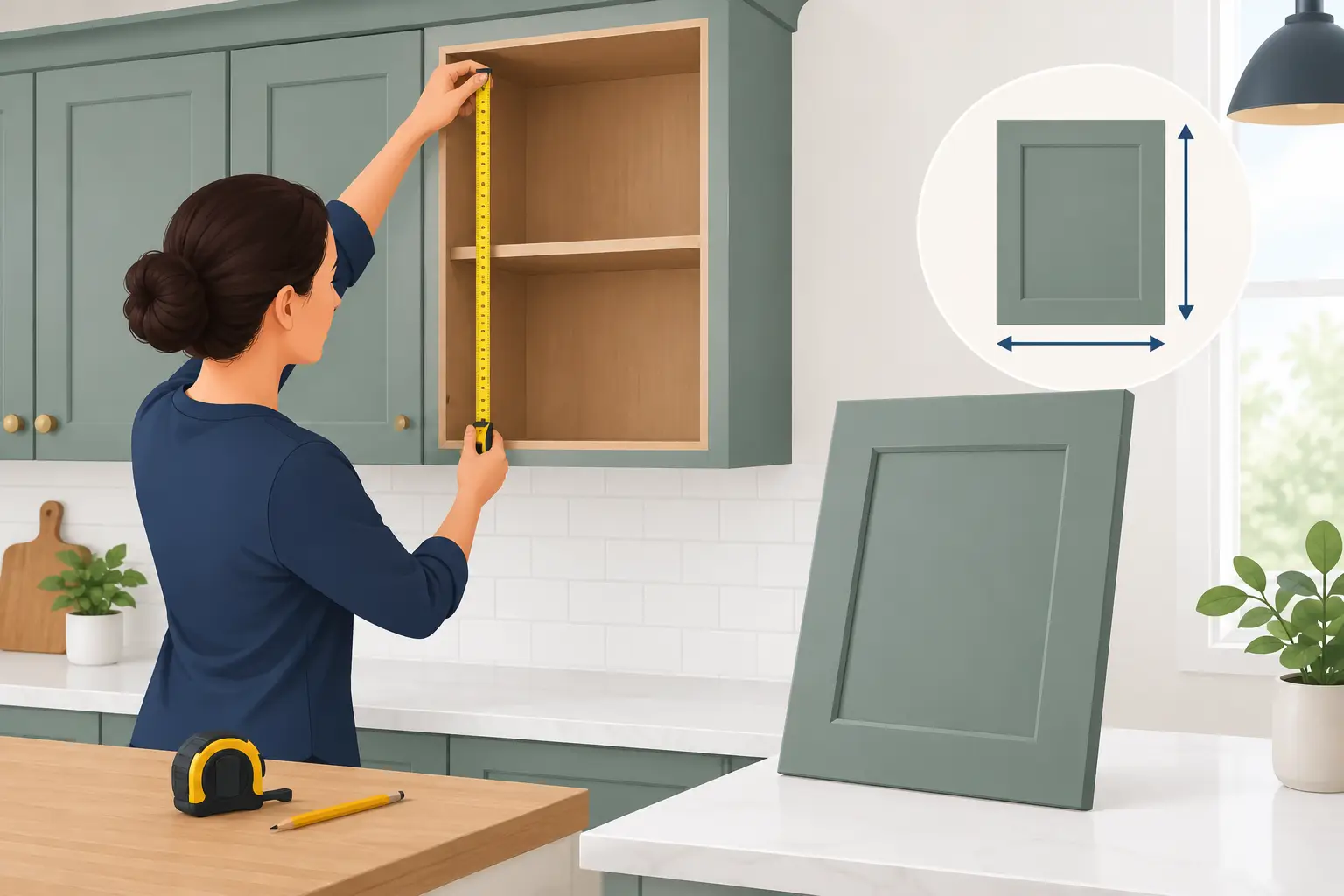
A replacement door that is a few millimetres too wide can catch on the unit beside it. One that is too short can leave an uneven gap that draws the eye every time you make a cup of tea. That is why knowing how to measure replacement kitchen doors properly is the starting point for a kitchen refresh that looks considered, rather than improvised.
The reassuring part is that, when your cabinets are sound and your layout still works, you are measuring the doors and drawer fronts you already have – not planning an entire new kitchen. Take your time, write each measurement down clearly and check it twice before ordering.
First, check that your existing units are worth keeping
Replacement doors are designed to transform the parts of the kitchen you see and use every day while retaining the cabinet carcasses behind them. Before measuring, open every door and drawer. Look for units that are secure, level and free from significant water damage, swelling or loose fixings.
A few worn hinges or tired drawer runners do not necessarily mean the units need replacing. These parts can often be renewed as part of a refurbishment. However, if a base unit is badly damaged or a wall cabinet has moved out of square, deal with that first. Accurate doors cannot disguise a cabinet that is no longer stable.
It is also worth deciding whether the present layout suits you. If it does, new doors, handles, worktops and accessories can give you a new look for your kitchen without starting again. If you plan to move appliances or alter cabinet positions, confirm those changes before taking final measurements.
What you need to measure replacement kitchen doors
You do not need specialist equipment, but accuracy matters. Use a good-quality steel tape measure marked in millimetres, a pencil, paper or spreadsheet, and your mobile phone to take reference photographs. A spirit level can be useful if you suspect the cabinets are uneven.
Measure in millimetres rather than centimetres. It avoids unnecessary conversions and is the standard format for made-to-measure kitchen doors. Keep one simple record for every front, noting its location as well as its size. For example, write “base unit left of oven” rather than simply “Door 6”.
If your kitchen has many similar doors, do not assume they are all identical. A difference of 5mm is easy to miss by eye but can affect the finished fit.
Measure the existing door, not the cabinet opening
This is the point that causes most mistakes. In most kitchens, the door sits over the front edge of the cabinet, known as an overlay. The door is therefore larger than the opening behind it.
For a like-for-like replacement, remove one existing door and measure the door itself. Measure its width and height at the widest points, then record the figures in millimetres. Measure each dimension twice. If the two readings differ, take a third measurement and inspect the door for wear, bowing or a chipped edge.
Do not base the new door size on the visible gap between doors or on the internal cabinet size. Those measurements can result in fronts that are too small and leave exposed cabinet edges.
Measuring standard hinged doors
Measure the height from the top edge to the bottom edge, then the width from one side edge to the other. Place the tape measure flat and straight against the face or back of the door, rather than holding it across a curved or raised profile.
For doors with decorative grooves, shaker frames or routed details, the overall outside dimensions still matter most. The design does not change the measurement you need to provide.
Record whether the door is fitted vertically or horizontally. A tall larder door and a wide wall-unit door may share a similar size, but the hinge positions and opening direction will be very different.
Measuring double-door cabinets
Measure each door separately. Even if the pair look equal, check both. The centre gap between them is usually created by the original door sizes and hinge adjustment, so it should not be added to either measurement.
If there is a narrow filler panel at one side, measure the panel separately. It is not a door, and it may need a different type of matching material or fitting method.
Measuring drawer fronts
Drawer fronts should also be measured as the individual front panel, not the drawer box behind it. Record width and height for every drawer front, including the shallow top drawers that can easily be overlooked.
Pay attention to whether the front is a separate panel fixed to a drawer box or part of the drawer itself. Most replacement projects involve separate fronts, but older kitchens can vary. A photograph of the drawer with the front open or removed can make it much easier to discuss the right option with a kitchen specialist.
Record hinge positions and door handing
The size of the door is only part of the job. Hinges need to line up with the existing cabinet fixing points unless you are changing the hinge arrangement.
With the door open, measure from the top edge of the door to the centre of the top hinge cup, and from the bottom edge to the centre of the bottom hinge cup. For doors with more than two hinges, record every position. Also note the diameter of the circular hinge cup if you are reusing existing hinge positions.
Then record the handing. Stand facing the cabinet: if the hinges are on the left, it is a left-hand door; if they are on the right, it is right-hand. This sounds simple, but it is worth writing down rather than relying on memory, especially where a run of cabinets includes both.
Some homeowners choose new hinges at the same time as new doors, particularly if old hinges have started to sag or no longer close softly. In that case, the available hinge options may affect the measurements and drilling details required. It is sensible to confirm this before placing an order.
Check for details that change the plan
Not every kitchen front is a straightforward cabinet door. Integrated fridge, freezer, dishwasher and washing-machine doors need particular care because they connect to appliance mechanisms as well as the cabinet. Measure the existing front, but also identify the appliance model and the fixing style before choosing a replacement.
Corner units, bi-fold doors, curved cabinets and lift-up wall doors may need a more individual approach. The same applies to any doors that have been trimmed in the past to clear a sloping floor, bulkhead or appliance. Do not copy a measurement blindly if the original door has been altered or is visibly damaged.
Handle choice is another decision to make early. If you are fitting new handles, you can usually choose fresh hole positions to suit the style. If you want to reuse handles, measure the distance between the centres of the two fixing holes, known as the handle centres. Single-knob handles need only one hole, but still benefit from consistent positioning across a run of doors.
Make a clear measuring schedule
A simple measuring schedule reduces confusion and makes it easier to compare options in the showroom. Give every front a number, then note its location, width, height, hinge side, hinge positions and any special comments.
For instance, a note might read: “D4, 715mm high x 397mm wide, right hand, two hinges, under left-hand worktop.” Add whether it is a base, wall or larder door, and whether it has a handle or knob. Photograph each cabinet with its number visible on a small piece of masking tape if your kitchen is complex.
This preparation is especially helpful if you are considering a mix of new doors, drawer fronts, end panels and worktops. Seeing the full picture makes it easier to choose a shaker, matt or gloss finish that works with the room, rather than selecting each item in isolation.
When to bring your measurements to the showroom
You can measure confidently at home, but you do not have to make every decision alone. Bring your schedule, photographs and, if practical, an existing handle to the Little Paxton showroom. Friendly advice from experienced kitchen specialists can help confirm door styles, hinge drilling, handle choices and the finishing touches that make the refurbishment feel complete.
It is particularly worthwhile to ask for guidance if your units are older, your doors have unusual hinge positions, or you are combining replacement doors with a new worktop, sink or tap. Samples are useful here: the warmth of a wood-effect finish, the sheen of a gloss door and the texture of a matt surface are far easier to judge in person.
Measure carefully, but do not rush your choices once the numbers are written down. The best replacement kitchen doors are not only the right size – they are the ones that make a sound, familiar kitchen feel like it belongs in your home again.