Kitchen Carcass Condition Guide for Refacing
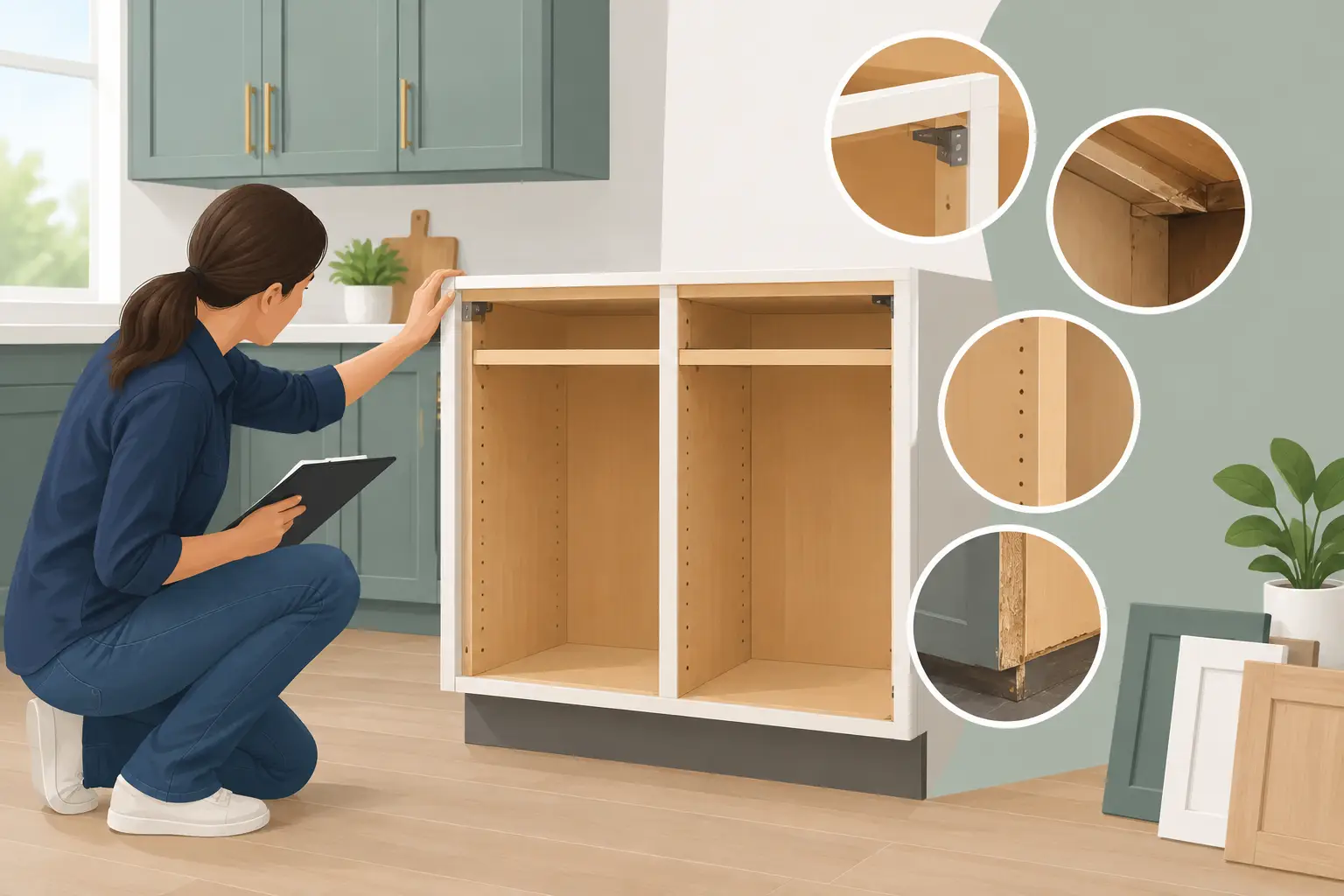
A kitchen can look far more tired than it really is. Peeling door fronts, dated handles and a scratched worktop may suggest a complete replacement is needed, yet the cabinet boxes behind them can still be doing an excellent job. This kitchen carcase condition guide helps you decide whether your existing units are suitable for a new look for your kitchen without starting again.
The key question is simple: are the parts you cannot normally see still sound, stable and worth keeping? If they are, made-to-measure replacement doors, drawer fronts, worktops and accessories can transform the room with far less disruption than removing every unit.
What is a kitchen carcase?
The carcase is the cabinet box itself: the sides, base, back, top rails and shelves that sit behind the doors and drawers. It does not include the door, drawer front, handle or worktop. In a fitted kitchen, the carcases carry the weight of storage, support the worktop and keep appliances and cupboards aligned.
Many older kitchens have sturdy carcases, even when the visible finish has fallen out of favour. A well-built cabinet made from decent board can last for many years if it has been protected from persistent moisture and has not been overloaded or badly altered.
Condition matters more than age. A 20-year-old cabinet that is dry, firm and level may be a better candidate for refurbishment than a much newer unit with swollen chipboard around the sink.
Kitchen carcase condition guide: five checks to make
You do not need to dismantle your kitchen to form a sensible first view. Empty a few cupboards, open and close everything, and use a torch to look into darker corners. Pay particular attention to the sink unit, the cabinets beside the dishwasher and washing machine, and any unit close to a leaking pipe.
1. Look for water damage and swelling
Water is the main reason a cabinet carcase becomes unsuitable for refacing. Check the base of the sink cabinet, both inside and underneath if accessible. Look for swollen edges, flaking surfaces, bubbling laminate, dark staining or a musty smell. Also inspect the back corners, where a slow leak can go unnoticed.
A small surface mark from an old spill is not necessarily a problem. The concern is board that has expanded, softened or crumbled. Once chipboard has swollen significantly, it rarely returns to its original strength. Fix any leak before making decisions about new doors or worktops.
The same applies around an integrated dishwasher. Steam and small drips can affect neighbouring units over time, particularly if edging has lifted. Localised damage may sometimes be repaired or one cabinet replaced, but widespread swelling is a sign that a more substantial rethink may be needed.
2. Test whether each cabinet is solid
With the doors open, gently press the sides, base and front edges of each unit. The cabinet should feel firm, with no movement where it meets the wall or adjacent units. Shelves should sit flat on their supports and not bow noticeably under everyday items.
A loose fixing or a missing shelf support is often a straightforward repair. More serious concerns include split side panels, crumbling screw holes and a cabinet that rocks when pressed. These issues can affect how securely replacement doors and hinges fit.
Do not confuse a loose door with a weak carcase. Hinges can wear, screws can work loose and door alignment can drift, especially in busy family kitchens. If the box is sound, these are usually exactly the sort of issues that can be addressed as part of a refurbishment.
3. Check the door and drawer fixing points
Replacement doors depend on reliable hinge positions. Look inside each cabinet where the hinge plates are fixed. The screws should grip properly, and the surrounding board should not be cracked, soft or enlarged from repeated tightening.
Open drawers fully and check that the runners are attached securely. A drawer that catches may simply need adjustment or replacement runners. However, if the cabinet sides have split or the runner fixings have pulled away from damaged board, that unit needs closer attention.
This check is particularly useful with older kitchens, where door sizes or hinge positions may not match current off-the-shelf options. Made-to-measure doors allow the visible parts to be tailored to the existing cabinets, but accurate measurements and sound fixing points are still essential.
4. Make sure the units are level and the layout still works
Stand back and look along the worktop line. Are there obvious dips, slopes or gaps between cabinets? Open a run of doors and see whether they clash, catch or sit unevenly. A few millimetres of adjustment is normal in an older kitchen. Major movement may point to poor fitting, uneven flooring or a cabinet that has deteriorated.
Then consider the layout itself. If the sink, hob, storage and preparation space work well for how you live, retaining the layout is often the sensible choice. New fronts, handles and a worktop can change the character of the room without moving plumbing, electrics or appliances.
If the layout causes daily frustration – perhaps there is no usable preparation space, too little storage, or awkward access around an appliance – a door replacement alone will not solve that. Refurbishment works best when the structure and arrangement are fundamentally right.
5. Inspect the cabinet interiors and backs
Inside cupboards, look for signs of mould, pest activity, deep staining or shelves that have permanently sagged. Check cabinet backs, especially in corner units and below worktops, as they help keep the whole structure square.
Cosmetic wear inside a cupboard is rarely a reason to replace a kitchen. Scuffs, faded shelf surfaces and old adhesive residue can often be cleaned, lined or simply left alone once the exterior has been updated. Structural damage is different: a detached back panel, severe bowing or rot at the base needs repair before new components are fitted.
When refurbishment is the sensible route
A kitchen update is usually a strong option when your cabinet boxes are dry, stable and securely fitted, but the room looks dated or no longer suits your taste. This is common with solid layouts that have simply reached the end of their style cycle.
You might keep the carcases and choose shaker doors for a more traditional feel, smooth matt fronts for a quieter modern scheme, or gloss finishes where you want light to bounce around a smaller room. A replacement worktop can make just as much difference as the doors, especially if the existing surface is marked, chipped or difficult to keep clean.
New handles, a sink and tap can improve day-to-day use as well as appearance. These choices should work together. For example, a pale matt door may suit a warm wood-effect worktop and brushed handle, while a darker door can look smart with a lighter surface and simple, modern hardware.
There is a practical benefit too. Keeping good carcases avoids throwing away useful units and reduces the upheaval of a full strip-out. It is not always the cheapest option in every situation, especially where several cabinets need rebuilding, but it can be a more considered use of your budget when the foundations are already sound.
Signs you should not ignore
Some problems should be investigated before you choose new doors. Persistent damp, widespread swelling, major structural movement, damaged wall fixings or evidence of an ongoing plumbing leak can all undermine a refurbishment. In these cases, repairing the cause comes first.
Likewise, do not cover up a poor layout merely because the doors are easy to change. If you are planning to move walls, relocate the sink or alter electrical circuits significantly, it may be worth reviewing the whole kitchen design rather than working around existing cabinets.
A mixed approach can also make sense. Perhaps most units are in good condition, but the sink cabinet has suffered water damage. Replacing or repairing that one area while retaining the rest may still allow for a coordinated update.
Take measurements before choosing replacement doors
Once you are confident the carcases are sound, measure each door and drawer front individually. Do not assume matching-looking doors are the same size. Note the width and height in millimetres, whether doors open left or right, and the position of existing hinge holes where relevant.
It is also useful to photograph the kitchen from several angles and make a note of anything that needs attention, such as a drawer runner, end panel or plinth. This gives you a clearer starting point when comparing styles and finishes.
For homeowners around St Neots and Little Paxton, seeing samples in person can take much of the uncertainty out of the process. At the showroom, you can compare door colours against worktop finishes, feel the difference between matt and gloss surfaces, and discuss whether your existing units are suitable for the update you have in mind.
A sound kitchen carcase is a useful starting point, not a compromise. Check what is worth keeping, repair what needs attention, and then choose the visible details that will make the kitchen feel right for the way you live now.