Worktop Materials That Suit Your Kitchen
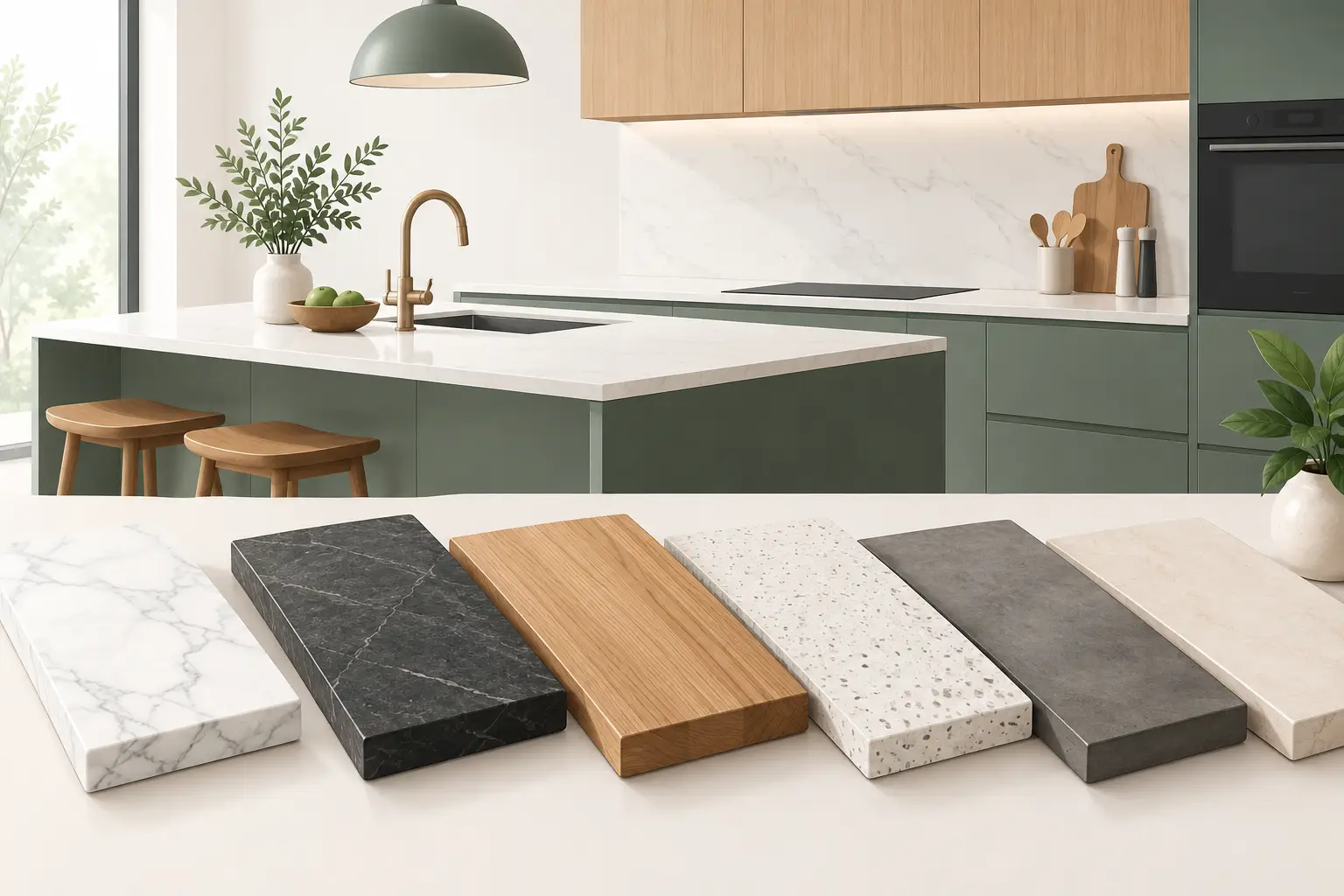
A tired worktop can make an otherwise sound kitchen feel older than it is. It may be marked around the sink, chipped at the edges or simply the wrong colour for the new cabinet doors you have chosen. The good news is that worktop materials can make a major difference to the look and everyday use of your kitchen without the cost and disruption of replacing every unit.
For many homeowners, the best choice is not the most expensive material or the latest trend. It is the one that suits how the kitchen is used, works with the existing layout and feels right alongside your chosen doors, handles, sink and tap. If your cabinets are in good condition, replacing the worktop is a sensible part of creating a new look for your kitchen without starting again.
Start with the kitchen you already have
Before comparing samples, look closely at the practical details. Is the current layout working for family meals, baking, quick breakfasts and clearing up? Are you keeping the same sink, hob and appliances, or changing any of these? A replacement worktop needs to accommodate the right cut-outs, thickness and edge details, so these decisions help narrow the options.
It is also worth considering the cabinet units beneath. Most sound kitchen cabinets are well able to take a new laminate worktop, while heavier surfaces may need a check of the unit condition and support. Long runs, breakfast bars and joins deserve particular attention. A material can look excellent in a small sample but behave differently across a large L-shaped kitchen or around a corner.
The style of your replacement doors matters too. A soft white or sage shaker door can take a warm wood-effect surface beautifully, while matt black, navy or cashmere doors often look striking with a pale stone-inspired design. Gloss doors can suit a cleaner, simpler worktop pattern, so the room does not feel too busy. Seeing these combinations together is usually more useful than making decisions from photographs alone.
Worktop materials and their day-to-day differences
Laminate: flexible, attractive and good value
Laminate remains one of the most popular worktop materials for a reason. Modern designs offer convincing stone, marble, concrete and timber looks, alongside plain colours and subtle textures. It is a practical choice for homeowners who want a substantial visual change while keeping spending focused on the parts of the kitchen they will see and use every day.
A good-quality laminate surface is easy to clean and comfortable under hand. It does not require sealing, and it offers plenty of scope to coordinate with replacement doors. It is especially useful where you want a continuous look across a worktop run, breakfast bar or utility area without moving into the price range of natural stone.
There are trade-offs. Laminate is not a chopping surface, and hot pans should not be placed directly onto it. Water should be wiped away promptly around joints, cut-outs and the sink, as prolonged moisture can damage the core beneath the surface. Choosing careful fitting and treating the edges well makes a real difference to how it performs over time.
Solid wood: warmth with a little more care
Solid wood brings warmth and character that is difficult to copy exactly. Oak and other timber worktops can soften a kitchen with painted or matt doors, and they work particularly well in homes where the kitchen is part of a relaxed living space rather than a purely functional room.
Wood does ask more of you. It needs regular oiling to keep it protected, and standing water near the sink needs dealing with quickly. It can pick up marks and develop a lived-in appearance over time, which some people enjoy and others would rather avoid. If you prefer a surface that stays uniform with minimal maintenance, laminate or a stone-effect option may be the better fit.
A useful compromise is to use wood in one place, such as a breakfast bar or a short section for preparation, and choose a more water-resistant surface around the sink. This can add texture without committing the whole kitchen to the maintenance routine.
Compact laminate: slim, modern and hard-wearing
Compact laminate has a solid, dense construction and is often chosen for its thinner, contemporary profile. It can create a crisp, modern finish, particularly with handleless, slab-fronted or simple matt replacement doors. Unlike standard laminate, it has a coloured or patterned core rather than a chipboard centre, which gives it good resistance to moisture.
This makes compact laminate appealing for busy kitchens where spillages are part of daily life. It is still sensible to use trivets for hot cookware and boards for chopping, but it is a durable and low-maintenance option. Its distinctive slim edge is a style choice in itself, so it is worth checking that it complements the proportions of your doors and any existing tiling or splashbacks.
Quartz and stone-look surfaces: polished and substantial
Quartz worktops offer a polished, premium feel with a wide choice of colours and patterns. They can suit a kitchen refresh where the doors and layout are being retained but the aim is a more refined finish. Their non-porous surface is easy to wipe down, and the material is valued for its resistance to staining in normal kitchen use.
However, quartz is heavier and generally costs more than laminate options. It also requires professional measuring and fitting after cabinets are in place. That does not rule it out for a refurbishment, but it means the project needs a little more planning. If your existing units are sound and you want a long-lasting focal point, it can be money well spent. If the priority is achieving a smart, coordinated update at a more modest budget, a quality laminate design may deliver the result you want.
Natural stone has its own appeal, with variation that makes every piece individual. It can also require sealing and more careful ongoing maintenance depending on the stone chosen. For some homes, that natural character is the point. For others, a lower-maintenance stone-effect surface gives a similar design direction with fewer practical concerns.
Choose colour and pattern for the whole room
The worktop should not be treated as an isolated purchase. It sits between the cabinet doors below, wall finishes above and the sink area at the centre of daily activity. A small sample can appear darker or lighter once it is surrounded by your kitchen’s natural light, particularly in north-facing rooms or kitchens with limited windows.
Pale worktops can lift darker doors and make a compact kitchen feel more open. They may show tea, coffee or crumbs more readily, though smooth finishes are straightforward to wipe clean. Darker surfaces can create contrast and look smart with pale cabinetry, but very dark plain finishes sometimes show dust, water spots and fingerprints. A gentle pattern or texture can be more forgiving in a busy family kitchen.
Wood effects add warmth but vary widely, from pale Scandinavian-style oak to deeper rustic grain. Marble-inspired designs can look elegant with simple door styles, although a strong veining pattern needs room to breathe. If your door finish, flooring or splashback already has plenty of movement, a quieter worktop often creates a more balanced result.
Do not overlook edges, sinks and practical joins
The edge profile helps determine whether a worktop looks traditional, contemporary or somewhere between the two. A thicker-looking square edge can give laminate a substantial appearance, while a slim compact laminate edge feels cleaner and more modern. These details are best chosen beside door and handle samples, rather than as an afterthought.
Your sink choice also affects the surface. A draining board, an undermounted style and a Belfast sink all make different visual and fitting demands. Think about where you put wet dishes, how much preparation space you need and whether you prefer a sink that blends in or becomes a feature. The same applies to taps: a bold black or brushed metal tap can tie the room together when it echoes your handles or appliances.
Joins are unavoidable in many kitchens, but good planning can make them less noticeable. Positioning them away from the most visible preparation area where possible, and selecting a pattern that disguises them, can improve the finished look. It is another reason to measure carefully and discuss the layout before ordering.
See the materials before you decide
A worktop is touched, cleaned and used several times a day, so it is worth comparing real samples rather than relying on a screen. At the Little Paxton showroom, you can hold worktop materials against door colours, consider handles and look at sink and tap finishes together. Friendly advice from experienced kitchen specialists can help you separate a surface that merely looks good from one that genuinely suits your home.
Bring a photograph of your current kitchen, approximate measurements and a few ideas about the colours you like. The right worktop should make the kitchen easier to live with as well as more enjoyable to look at – a practical change that can make your existing space feel properly renewed.