Quartz Worktops Pros and Cons Explained
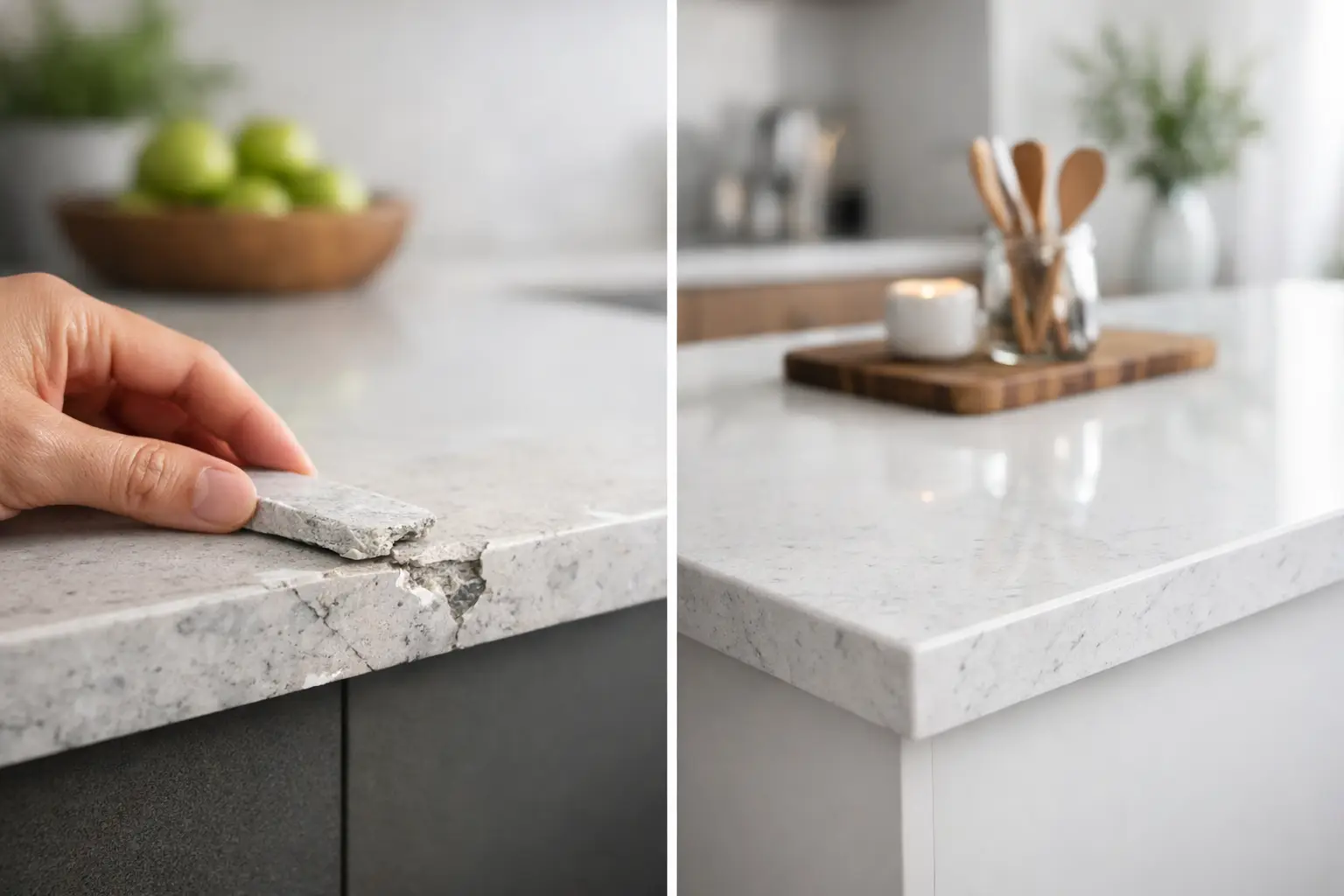
If you are planning a new kitchen, your worktop choice quickly becomes one of the biggest decisions in the room. It affects how the kitchen looks, how it feels to use every day and how well it stands up to family life. When homeowners ask about quartz worktops pros and cons, they are usually trying to balance appearance, practicality and budget rather than simply picking the most fashionable finish.
Quartz has become a popular option for good reason. It offers a smart, consistent look, it is hard-wearing and it suits everything from classic shaker kitchens to clean, handleless designs. Even so, it is not automatically the right choice for every home, and the best decision often comes down to how you cook, how much maintenance you want and what sort of finish matters most to you.
Quartz worktops pros and cons at a glance
The strongest argument in favour of quartz is that it gives you a premium look without some of the compromises that come with natural stone. Because it is engineered from natural quartz combined with resin and pigments, the surface is dense, uniform and designed for everyday kitchen use. That means fewer surprises in pattern, easier cleaning and very good resistance to staining.
The main drawbacks are usually cost and heat sensitivity. Quartz sits at the more premium end of the market, and while it is durable, it is not indestructible. A hot pan taken straight from the hob or oven can damage the resin in the surface, so a little care is still needed.
Why so many homeowners choose quartz
For many households, quartz strikes a very workable balance between style and practicality. It gives a polished, high-end finish, but it also copes well with busy kitchens where surfaces are used constantly.
It is low maintenance
One of the biggest day-to-day advantages is how easy quartz is to live with. Unlike some natural stones, it does not need regular sealing. A wipe with warm water and a mild cleaner is usually enough to keep it looking good.
That matters more than people sometimes expect. A worktop can look wonderful in a showroom, but if it needs specialist care or frequent treatment, the appeal can wear thin once real life gets in the way. For busy households in St Neots, Huntingdon and nearby villages, low maintenance is often a major plus rather than a small extra benefit.
It resists stains well
Quartz is non-porous, which helps it resist common kitchen spills such as tea, coffee, oil and sauces. In a family kitchen, that can make a genuine difference. You are less likely to find that a rushed breakfast or a spilled glass of squash leaves a lasting mark.
This is especially useful if the kitchen is used heavily throughout the day rather than just for occasional cooking. A surface that forgives normal mess is often a better long-term investment than one that demands constant caution.
It offers design consistency
Natural materials have variation, and for some people that is the whole point. For others, it can be a source of uncertainty. Quartz gives a more controlled and consistent appearance, which is ideal if you want a clean, balanced look across long runs of worktop, islands or matching upstands.
That consistency works particularly well in modern kitchen schemes. If you want pale tones, dramatic dark surfaces or marble-effect patterns without too much unpredictability, quartz gives you more control over the finished result.
It is strong and hard-wearing
Quartz is well suited to everyday knocks, chopping board movement, small appliances and the general wear that comes with regular use. It feels solid, substantial and built for a kitchen that is meant to be lived in.
No worktop is completely immune to damage, but quartz generally performs very well over time when it is properly fitted and sensibly used. For homeowners planning a long-term kitchen rather than a quick cosmetic update, that durability is a real advantage.
Where quartz may not be the perfect fit
The phrase quartz worktops pros and cons only really helps if the cons are treated honestly. Quartz is an excellent material in many kitchens, but there are situations where another surface may suit you better.
It is not the cheapest option
Quartz is an investment product. The material itself, templating, fabrication and installation all contribute to the overall cost. If you are renovating on a tight budget, laminate or certain timber options may free up more money for cabinetry, appliances or layout changes.
That does not mean quartz is poor value. In many cases it offers strong long-term value because of its lifespan and appearance. But upfront cost does matter, especially if your project includes several moving parts.
Heat can be a problem
This is one of the most important practical points. Quartz is heat resistant to a degree, but it is not as tolerant of direct, intense heat as some people assume. The resins used in the material can be affected by very hot cookware, leading to discolouration or damage.
In simple terms, you still need trivets or heat pads. If you are the sort of cook who regularly puts roasting tins and saucepans straight onto the nearest surface, quartz may require more habit changes than you expect.
Repairs are possible, but not always invisible
Quartz is durable, yet chips can still happen, particularly on edges or corners if something heavy hits the surface. Minor repairs can often be carried out, but they are not always completely undetectable.
This is worth bearing in mind in households with lots of hard use, or where worktop edges are likely to take repeated knocks from cookware, stools or busy family traffic.
It can look less natural than stone
Some quartz designs do an excellent job of imitating marble or granite, but engineered consistency can still look different from the depth and movement of a genuine natural slab. If you love variation, veining that feels one of a kind or a more organic character, you may prefer natural stone despite its extra maintenance.
Neither option is better in every case. It depends whether you value predictability and ease, or individuality and natural variation.
Is quartz right for your kitchen?
The answer usually comes down to how your kitchen is used. If you want a surface that looks smart, stays easy to clean and fits a busy household, quartz is often a very strong choice. It suits family kitchens, open-plan spaces and homes where people want a premium finish without taking on too much upkeep.
If your priority is achieving the lowest possible project cost, or you are drawn to the raw individuality of natural stone, quartz may not be the obvious winner. Likewise, if your cooking style is hard on surfaces and you know heat protection will be ignored, it is worth discussing alternatives before you commit.
A good kitchen design is never just about picking the most popular material. It is about choosing the one that works with your layout, your habits and the look you want to achieve. In some homes, quartz becomes the practical centrepiece that ties everything together. In others, a different worktop may create a better overall balance.
What to think about before you decide
It helps to look beyond a small sample. A colour or pattern can behave very differently across a full island or long run of cabinets. Light levels matter too. A quartz surface that feels bright and fresh in a showroom may read cooler or darker in your kitchen depending on natural light, cupboard colour and flooring.
Edge profile, sink choice and splashback details also influence the final result. A worktop is not a standalone purchase. It needs to work with the rest of the room, and that is where experienced guidance can save costly second thoughts. At The Kitchen Magician, this is often where the conversation becomes most useful – not simply whether quartz is good, but whether it is right for the way your household actually lives.
If you are weighing up quartz worktops pros and cons, the best next step is usually to see full-size displays, compare finishes properly and ask practical questions about how you use your kitchen. The right worktop should do more than look impressive on day one. It should still feel like the right decision on an ordinary Tuesday evening, when dinner is on, the washing up is waiting and the kitchen is doing the job it was designed for.