Best Kitchen Cabinet Upgrades for a Fresh Look
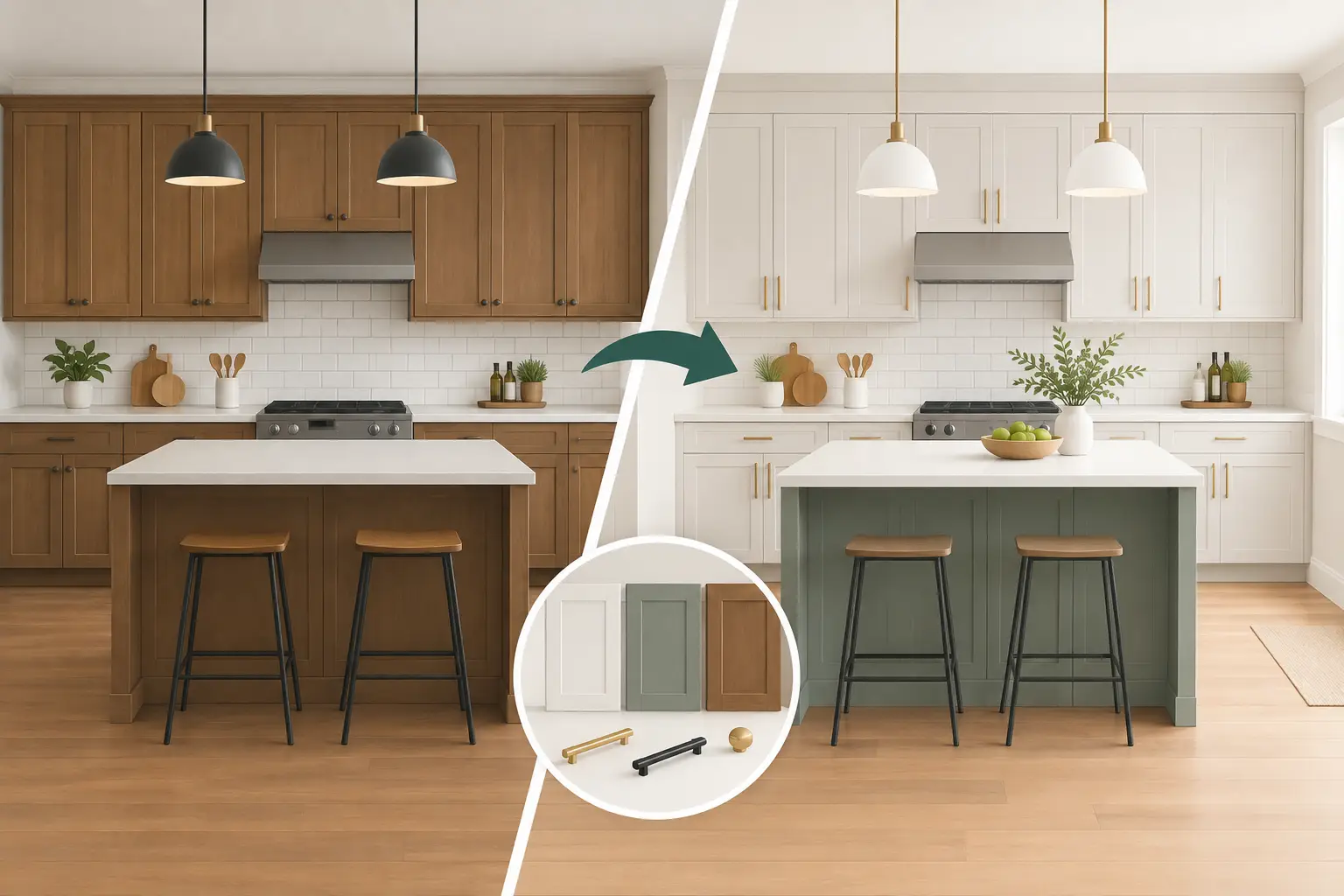
A kitchen can feel dated long before its cabinets stop doing their job. If the units are solid, the layout still suits your household and the cupboard interiors are in reasonable condition, the best kitchen cabinet upgrades are usually the ones that refresh what you see and use every day – without pulling out a perfectly workable kitchen.
For many homeowners, that means keeping the cabinet carcasses in place and concentrating their budget on replacement doors, drawer fronts, worktops, handles and the areas around the sink. It is a practical route to a new look for your kitchen without starting again, with far less mess and disruption than a full refit.
Start with the cabinet units you already have
Before choosing colours or styles, assess the foundations. Open and close the doors, check that the cabinets are firmly fixed to the wall, look for water damage beneath the sink and consider whether the current layout makes cooking, storage and clearing up reasonably easy. Sound units with a layout that works are excellent candidates for refurbishment.
Replacement cabinet doors will not correct bowed cabinets, serious moisture damage or a kitchen that simply does not provide enough storage. Equally, moving plumbing, altering walls or changing the position of appliances may make a full redesign more appropriate. But when the structure is sound, retaining it avoids replacing components that still have years of service left in them.
This first decision keeps the project focused. Rather than paying for a new kitchen because the doors look tired, you can choose the visible improvements that will make the greatest difference.
The best kitchen cabinet upgrades to prioritise
Made-to-measure replacement doors and drawer fronts
New doors and drawer fronts have the biggest visual impact because they cover most of the kitchen. They can turn dated timber-effect fronts into a calm matt finish, bring a traditional room up to date with a painted shaker style, or create a cleaner contemporary look with simple slab doors.
Made-to-measure sizing matters. Cabinet doors need consistent gaps, correctly positioned hinges and proportions that suit the existing cabinets. Off-the-shelf doors can appear tempting, but a near fit is not the same as a neat fit. Measuring carefully also allows you to update unusual-sized cupboards, tall units and drawer banks as part of one coordinated scheme.
Style should reflect both the room and how long you expect to live with the choice. Shaker doors bring detail and warmth to period homes and family kitchens. Smooth matt doors are forgiving of fingerprints and work well in relaxed contemporary spaces. Gloss can add light to a darker kitchen, although it tends to show marks more readily and may need more frequent wiping.
Colour deserves just as much thought. Soft whites, warm greys, muted greens and deep blues can all work beautifully, but the amount of natural light, wall colour and flooring should guide the final choice. Seeing real samples in a showroom is often more useful than making a decision from a screen, where undertones can be misleading.
New handles for an immediate improvement
Handles are modest in size but high in impact. Replacing old, worn or overly decorative handles can make refreshed doors look more considered, while retaining existing handles may be the right decision if they are good quality and suit the new finish.
The practical details are worth checking. Existing drilling centres may limit which handles can be fitted without leaving holes to fill, and long bar handles can change the feel of a narrow drawer or small door. Cup handles suit many shaker kitchens, while slim bars, knobs or discreet edge pulls can give plainer door styles a more modern finish.
Think about daily use as well as appearance. A handle should feel comfortable when hands are wet or busy, and the finish should sit well alongside taps, appliances and lighting. Matching every metal is not essential, but an intentional mix will look better than a collection of unrelated finishes.
A replacement worktop to complete the transformation
A new worktop often makes the difference between a kitchen that looks partially updated and one that feels properly renewed. It frames the cabinet doors, provides a hard-working surface and affects how light moves around the room.
Laminate offers a broad range of stone, wood and concrete-inspired looks at a sensible price point. It is a strong choice for many busy households, though edges and joins need careful fitting to prevent water getting in. Solid wood brings warmth but asks for regular maintenance. Stone-effect and compact surfaces can deliver a more premium feel, but cost, fitting requirements and the condition of the supporting units should be considered first.
Avoid choosing the worktop in isolation. Take a door sample with you when comparing options, then view them together in different light. A worktop that looks neutral on its own may appear unexpectedly cool, yellow or busy next to the chosen door colour.
Upgrade the sink and tap where it matters most
The sink area is one of the busiest parts of the kitchen, so it deserves more than a cosmetic decision. A deeper bowl, a useful drainer arrangement or a more practical tap can improve everyday routines far more than a decorative change elsewhere.
If you regularly wash large roasting tins, a larger single bowl may be more useful than a compact one-and-a-half bowl design. If worktop space is at a premium, an undermount or inset option should be chosen around the material and fitting method of the new worktop. A pull-out spray tap can help with rinsing and cleaning, while a simple mixer tap may be the most reliable, straightforward choice for another household.
Make sure the sink, tap and worktop are specified together. Their compatibility, cut-out requirements and the position of existing plumbing all affect what is possible without unnecessary extra work.
Improve how the cabinets work, not only how they look
Good refurbishment has a functional side. A kitchen may look smart with new doors yet still frustrate you if pans are hard to reach or drawers are cluttered. Small upgrades can make existing cabinet space work much harder.
Consider drawer organisers for cutlery and utensils, pull-out storage in awkward base cupboards, internal bins where space allows, or better shelves for frequently used food and cookware. Soft-close hinges and drawer runners can also improve the feel of older cabinetry, although they need to be compatible with the cabinet construction and door weight.
There is no need to add every available accessory. Begin with the irritation you notice most often: the cupboard where tins disappear, the overflowing drawer, or the bin that is always in the way. Solving one or two genuine problems usually produces a more satisfying result than adding storage features simply because they are fashionable.
Plan the finishes as one scheme
The strongest kitchen updates feel joined up. That does not mean every element must match exactly, but doors, worktops, handles, splashbacks, sinks and taps should be considered as a group. A rich blue door can be lifted by a pale stone-effect worktop and brushed metal hardware; a warm neutral shaker door may suit a timber-look top and softer lighting.
Samples help prevent expensive surprises. Place door and worktop samples near the floor, wall colour and appliances, then look at them in morning daylight and evening artificial light. This is particularly valuable in kitchens with limited natural light, where dark doors may feel more dominant than expected.
For homeowners near St Neots, a visit to the Little Paxton showroom offers the chance to compare finishes properly, open different door styles and talk through what will fit existing units. Friendly advice from experienced kitchen specialists can be especially helpful where measurements, hinge positions or worktop choices are uncertain.
Set a budget around the changes you will notice
Refurbishment lets you spend where it counts. If the current worktop is worn, stained or damaged, doors and worktops may deserve the larger share of the budget. If the worktop is still in excellent condition, replacement doors, drawer fronts and new handles can create a substantial change for less.
Remember to allow for measuring, fitting, hinges, handles, worktop cutting and any plumbing work around a new sink or tap. A cheaper component is not always the economical choice if it compromises fit, durability or the finished appearance. The aim is not to replace everything. It is to make sensible improvements that will continue to look good and work well after the initial excitement has passed.
A thoughtful cabinet upgrade should make the kitchen more pleasant every time you make breakfast, pack lunches or sit down with a cup of tea. Start with what already works, choose the elements that genuinely need renewing, and give yourself time to see the materials in person before deciding.