Replacement Kitchen Drawer Fronts That Fit
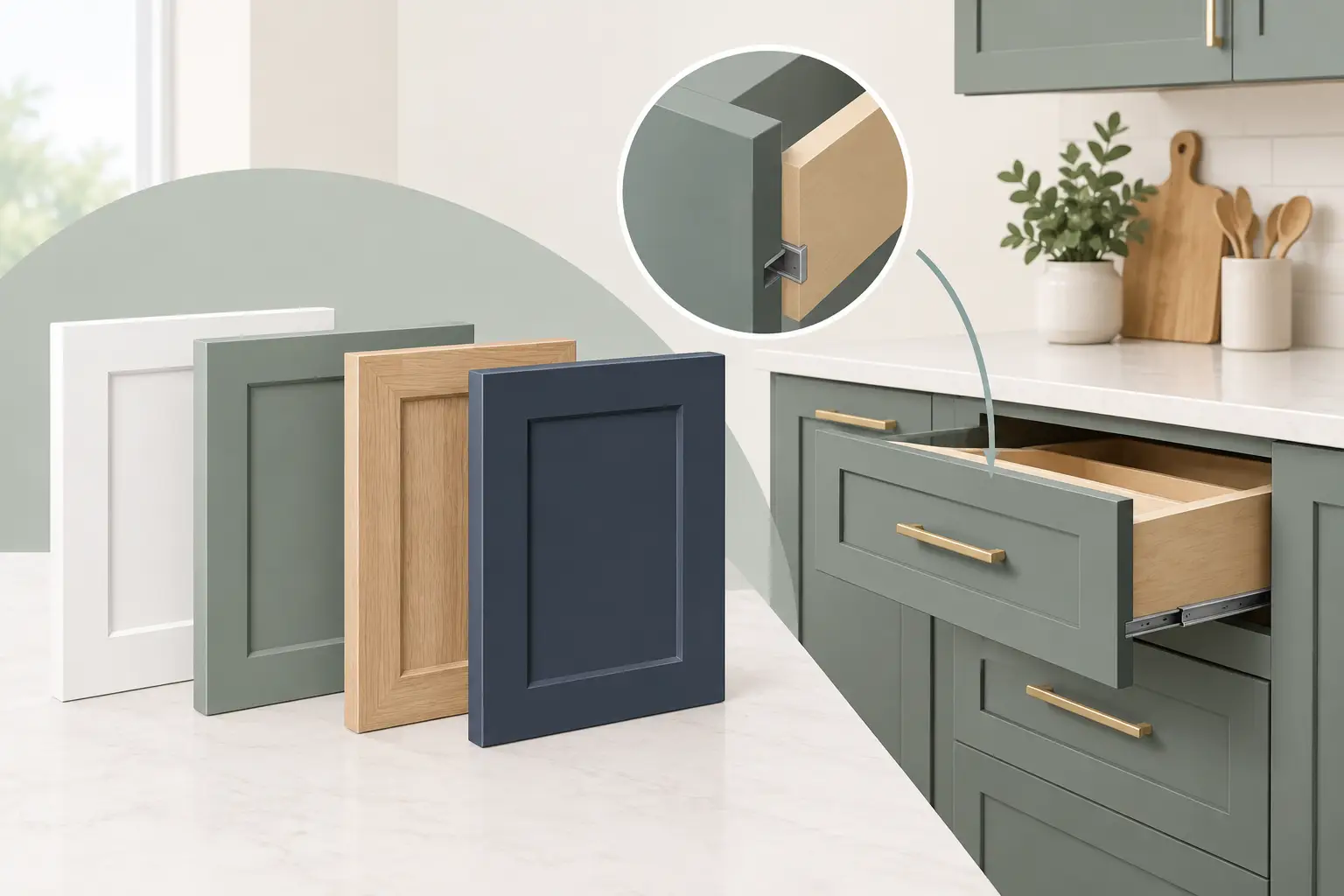
A chipped drawer edge, faded finish or dated handle can make an otherwise serviceable kitchen feel older than it is. Replacement kitchen drawer fronts offer a focused way to change that. If your cabinet units are sound and the layout still works for your household, new fronts can bring a new look to your kitchen without starting again.
This is not simply a cosmetic decision. Drawer fronts are the parts you touch every day, and their size, alignment, handle position and finish all affect how the room looks and feels. Choosing them carefully helps you achieve a considered update rather than a collection of parts that almost match.
When replacement kitchen drawer fronts are the right choice
Replacing drawer fronts makes particular sense when the drawer boxes and runners still open smoothly, the cabinet carcasses are stable, and you are happy with where everything is. A tired vinyl wrap, worn laminate or a colour that no longer suits the rest of your home does not automatically mean the whole kitchen needs to be removed.
It can also be the sensible answer after minor damage. Perhaps a drawer front has swollen after a spill near the sink, been scratched by a pet, or simply taken the brunt of family life. Replacing one or several fronts may restore a more consistent finish, although matching an older colour exactly can be difficult. In that situation, replacing all visible drawer and door fronts usually creates the better result.
There are limits. New fronts cannot correct a unit that is water-damaged, badly out of level or structurally loose. Likewise, if drawer runners are failing, address the working mechanism before concentrating on the finish. A kitchen refurbishment works best when the foundations are worth keeping.
Start with the layout you already have
Before looking at colours and styles, take a practical view of how the kitchen is used. Do the pan drawers hold enough? Is the cutlery drawer in the right place? Are handles catching on neighbouring doors? A replacement-front project is a good opportunity to resolve small frustrations, particularly if you are also changing handles, worktops or the sink area.
For many homes, however, the existing arrangement remains perfectly useful. Keeping it avoids the disruption of moving plumbing, electrics and appliances. Your budget can then go towards the visible details that have the greatest impact: drawer fronts, cabinet doors, worktops, handles and finishing accessories.
Measure the front, not just the drawer
Made-to-measure drawer fronts need accurate information. The visible front is not necessarily the same size as the drawer box behind it, so measure the existing front itself. Measure its width and height in millimetres, checking more than one point if the front has swollen or warped. Record the thickness too, especially if you want new handles or are matching neighbouring doors.
You will also need to consider the fixing holes on the back. Their position matters because the front must attach securely to the drawer box. Take clear notes and photographs before removing anything. If you are replacing several fronts, label each one as it comes off. What appears to be a run of identical drawers can include small differences in height, hole placement or spacing.
Allowing for the gaps between fronts is equally important. Those narrow, even reveals are what make a kitchen look properly fitted. Ordering a front based on an estimated opening size, rather than measuring the existing front, can lead to uneven lines or rubbing drawers.
If measuring feels uncertain, it is worth bringing your measurements and photographs to a showroom conversation. Friendly advice from experienced kitchen specialists can prevent a small measuring error becoming an expensive annoyance.
Check whether your fronts are separate or joined
Most kitchens have individual drawer fronts fixed to individual drawer boxes. Some designs, especially beneath built-in appliances or around corner solutions, can be less straightforward. You may have a false front, a deep drawer front attached to an internal drawer, or a decorative panel that spans more than one element.
Do not assume every horizontal line is a functioning drawer. Open each section and inspect it before ordering. This is one of the occasions where seeing the kitchen details in person, with photographs to hand, makes choosing the right replacement much easier.
Choose a style that suits the room
The style of your new drawer fronts should work with the doors around them. For a full kitchen refresh, this gives you freedom to choose a completely different look. Shaker-style fronts bring definition and work well in period homes, country-inspired schemes and modern spaces that need a little warmth. A simple matt slab front offers a quieter, contemporary finish, while gloss can brighten a darker or more compact kitchen by reflecting light.
Colour changes the feel of the room just as much as the door profile. Pale neutral shades can make a busy family kitchen feel calmer. Deep blue, green or charcoal fronts add character, particularly when balanced with lighter worktops or walls. Timber-effect finishes introduce warmth without asking you to redesign the entire space.
There is no single right choice. A high-gloss surface may be ideal for someone who wants a clean, light-reflecting look, but fingerprints can be more visible in a household with young children. Matt finishes are often forgiving day to day, although their texture and shade are best judged in real life rather than from a small screen image.
Treat handles as part of the design
Changing drawer fronts without considering the handles can leave an update feeling incomplete. Handles influence both appearance and everyday comfort. Slim bar handles suit clean-lined slab doors, cup handles complement a classic kitchen, and knobs can work well on smaller drawers where a long pull would feel out of proportion.
Think about the drilling position before ordering. New handles do not always use the same centres as the old ones, which may leave unwanted holes. Choosing a handle with compatible fixing centres can simplify the job. Alternatively, new fronts give you a clean surface and the freedom to position new hardware where it feels most natural to use.
Handleless looks are another option, but they need careful planning. Integrated rails, grip profiles and push-to-open systems have different practical requirements. They can look beautifully streamlined, yet a traditional handle may be easier to grip for some households. The best choice is the one that feels right when you open and close it, not simply the one that looks best in a photograph.
Match the update across the kitchen
A single new drawer front can be a practical repair. For a deliberate makeover, consider the whole visual line of the kitchen. Drawer fronts sit alongside base cabinet doors, end panels, plinths and worktops, so differences in tone can become obvious quickly.
Replacing doors and drawer fronts together provides the most unified result. Adding a replacement worktop can take the transformation further, particularly where an old surface has scratches, burns or a dated pattern. New taps, a sink and well-chosen handles can then tie the room together without the upheaval of a complete refit.
This approach also gives you useful control over spending. You can retain what is working, improve the parts you see and use most, and phase other changes if needed. It is a practical way to refresh a kitchen that still has good years ahead of it.
See finishes before you decide
A front that looks warm grey online may appear cooler under your kitchen lighting. A timber effect may be more textured than expected. Samples, full-size displays and real handles make a genuine difference to a decision you will live with every day.
At the Little Paxton showroom, Replacement Kitchen Doors To Size can help you compare door styles, colours, finishes, worktops and hardware in person. Bringing a few photographs, rough measurements and an idea of what you would like to improve gives the conversation a useful starting point. You do not need to arrive with every answer – that is what local, practical guidance is for.
A carefully chosen drawer front can make the first coffee of the day feel a little more orderly and the whole kitchen more like your own. Start with what still works, then take the time to see the materials, ask questions and choose the details you will be happy to use every day.