Laminate Versus Quartz Worktops: Which Fits?
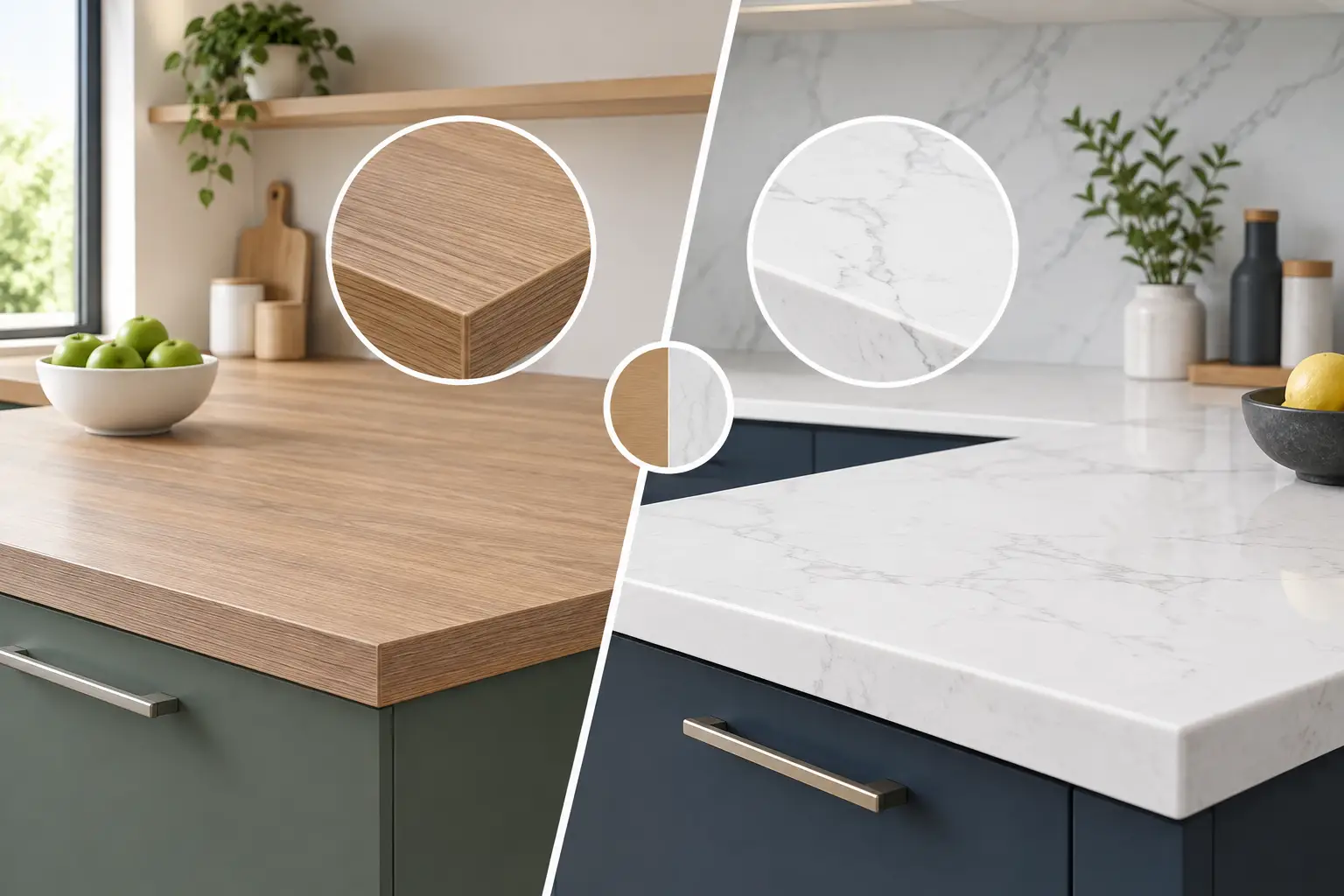
A worktop can make a perfectly sound kitchen feel either newly finished or still stuck in the past. When comparing laminate versus quartz worktops, the right choice is rarely just about which one looks best on a small sample. It comes down to how you use the room, what you want to spend, and whether a practical kitchen refresh needs to happen without turning into a full renovation.
For many homeowners, replacing tired doors and a worn worktop is enough to create a new look for the kitchen without starting again. Both laminate and quartz can work beautifully with made-to-measure replacement doors, but they offer very different benefits.
Start with the kitchen you already have
If your cabinets are structurally sound and the layout still works for family life, there is no need to remove everything simply to achieve a major update. New cabinet fronts, handles and worktops can change the character of the room while avoiding much of the cost, waste and disruption of a complete refit.
At this stage, think beyond colour. Consider where you prepare food, whether children use the kitchen for homework or snacks, how much hot cookware lands on the surface, and how often spills are likely. A worktop has to suit everyday habits as well as the door style you have in mind.
Laminate is often the sensible choice where value and a broad design range lead the decision. Quartz is generally chosen when a more substantial, stone-like finish and long-term durability justify a higher initial outlay.
Laminate versus quartz worktops: the main differences
Cost and budget flexibility
Laminate worktops are usually the more budget-friendly option. They can give a kitchen a convincing wood, stone, concrete or marble-inspired appearance at a fraction of the price of real stone surfaces. That leaves more room in the budget for replacement doors, a new sink, taps or the finishing details that bring the whole scheme together.
Quartz costs more because it is a premium engineered surface, typically supplied and fitted to precise measurements. The higher price can be worthwhile for homeowners planning to stay put for many years, or for those who want the feel and visual weight of a solid surface worktop.
The best value is not always the lowest upfront figure. A laminate worktop may be exactly right for a rental property, a first refresh before selling, or a kitchen where you would rather invest in several coordinated improvements. Quartz may feel like better value where daily use is heavy and a higher-specification finish is a priority.
Appearance and design choice
Modern laminate has moved well beyond the thin, shiny patterns many people remember from older kitchens. There are convincing textured woodgrains, soft matt stone effects, pale marble looks and darker industrial finishes. Some designs also have matching upstands and edging details, helping the worktop look more considered from every angle.
This range makes laminate particularly easy to pair with different door styles. A light oak effect can soften a painted shaker kitchen, while a pale stone laminate works neatly with modern matt doors. For a stronger contrast, dark slate or black worktops can give white, cashmere or light grey cabinetry a sharper outline.
Quartz has a more consistent depth and a naturally solid appearance. It is available in understated whites, warm neutrals, concrete-inspired greys and bolder veined designs. Its polished, honed or lightly textured finishes can make a refurbished kitchen feel more luxurious, particularly alongside simple slab doors or a refined shaker style.
Samples matter here. A worktop that looks warm under showroom lighting can appear cooler in a north-facing kitchen, while a bold vein may be more noticeable across a long run of units than it is on a small piece. Seeing door and worktop samples together is the safest way to judge the combination.
Durability in real family kitchens
Quartz is hard-wearing and non-porous, so it does not usually need sealing. It stands up well to staining from everyday food preparation and offers excellent resistance to scratches. That said, it is not indestructible. Heavy impacts on an edge can cause damage, and very hot pans should not be placed directly on the surface. A trivet is still a good habit.
Laminate is also durable when treated with reasonable care, but its limits are different. It can cope well with normal cooking, cleaning and food preparation, yet it is more vulnerable to heat, deep scratches and water getting into damaged joints or exposed edges. Always use a chopping board and heat protection, and wipe up standing water promptly, especially around the sink.
For a busy family kitchen, either material can work. Quartz offers more reassurance against stains and everyday wear, while laminate rewards a little more care with a lower purchase cost and plenty of design freedom.
Cleaning and maintenance
Both options are straightforward to live with. For laminate, a soft cloth, warm water and mild detergent are generally enough. Avoid abrasive scouring pads and harsh chemicals, which can dull or damage the finish over time. Keeping the worktop dry around cut-outs and joints is part of good routine care.
Quartz is similarly simple to clean with warm soapy water and a non-abrasive cloth. Because the surface is non-porous, it is especially practical for people who like a low-fuss worktop after cooking. Strong chemicals and abrasive products are still best avoided, even on a premium surface.
Neither choice needs a complicated cleaning regime. The key difference is that quartz gives you more tolerance for daily spills, while laminate needs greater attention to heat and moisture.
Fitting, joins and kitchen details
The way a worktop is fitted affects the final result as much as the material itself. Laminate worktops are supplied in standard lengths and can be cut to suit the existing layout. Joins will normally be visible, although careful planning and fitting can make them discreet. This makes laminate a flexible option when refreshing a kitchen in stages.
Quartz is normally templated after cabinets are in place, then fabricated to suit the exact room. It has joins too, but these can be less obvious depending on the colour and pattern selected. The process takes more planning and requires accurate preparation, but the result can feel highly tailored.
Think about your sink choice at the same time. An inset sink works with both materials. Undermounted sinks are commonly associated with quartz because the solid surface creates a neat edge around the cut-out, though the suitable options depend on the specific product and installation. Drainer grooves, upstands and splashbacks can also influence cost and the overall look.
When laminate is likely to be the better choice
Laminate is a strong option if you want a noticeable kitchen transformation while keeping spending controlled. It suits homeowners who would rather update doors, handles, sink and taps as part of one balanced project than put most of the budget into the worktop alone.
It is also useful where you want a particular look without committing to the price of stone. A warm timber effect, pale marble appearance or contemporary concrete finish can completely change dated cabinets. With thoughtful colour choices and good care, laminate can look smart for many years.
Choose laminate with realistic expectations: protect it from direct heat, do not cut on it, and keep sink-area joints dry. For many homes, those are small compromises for the value it offers.
When quartz is worth considering
Quartz is often the right fit when the worktop is intended to be a standout feature. If you are choosing simple replacement doors and want the surface to provide the sense of quality, depth and visual interest, quartz can do that exceptionally well.
It can also suit keen cooks and busy households that want a highly stain-resistant, low-maintenance surface. The initial investment is greater, but the material’s durability and polished appearance can make it a satisfying long-term choice.
Before deciding, make sure it fits the wider refurbishment plan. A quartz worktop should complement the door finish, hardware and wall colour rather than compete with them. A heavily veined design may be stunning with plain matt doors, for example, but feel too busy beside detailed cabinetry or patterned flooring.
Make the decision with full-size samples
The most useful question is not, “Which worktop is best?” It is, “Which worktop is best for this kitchen, this budget and the way we live?” Laminate can make a careful, cost-conscious refurbishment look fresh and current. Quartz can add a premium finishing touch with impressive everyday performance.
Bring a photo and a few measurements of your existing kitchen when you visit the Little Paxton showroom. Comparing door, worktop, handle and sink samples in person makes it easier to see what belongs together, and friendly advice from experienced kitchen specialists can help you choose a surface you will be happy to use every day.