How to Choose a Kitchen Sink and Tap That Fits
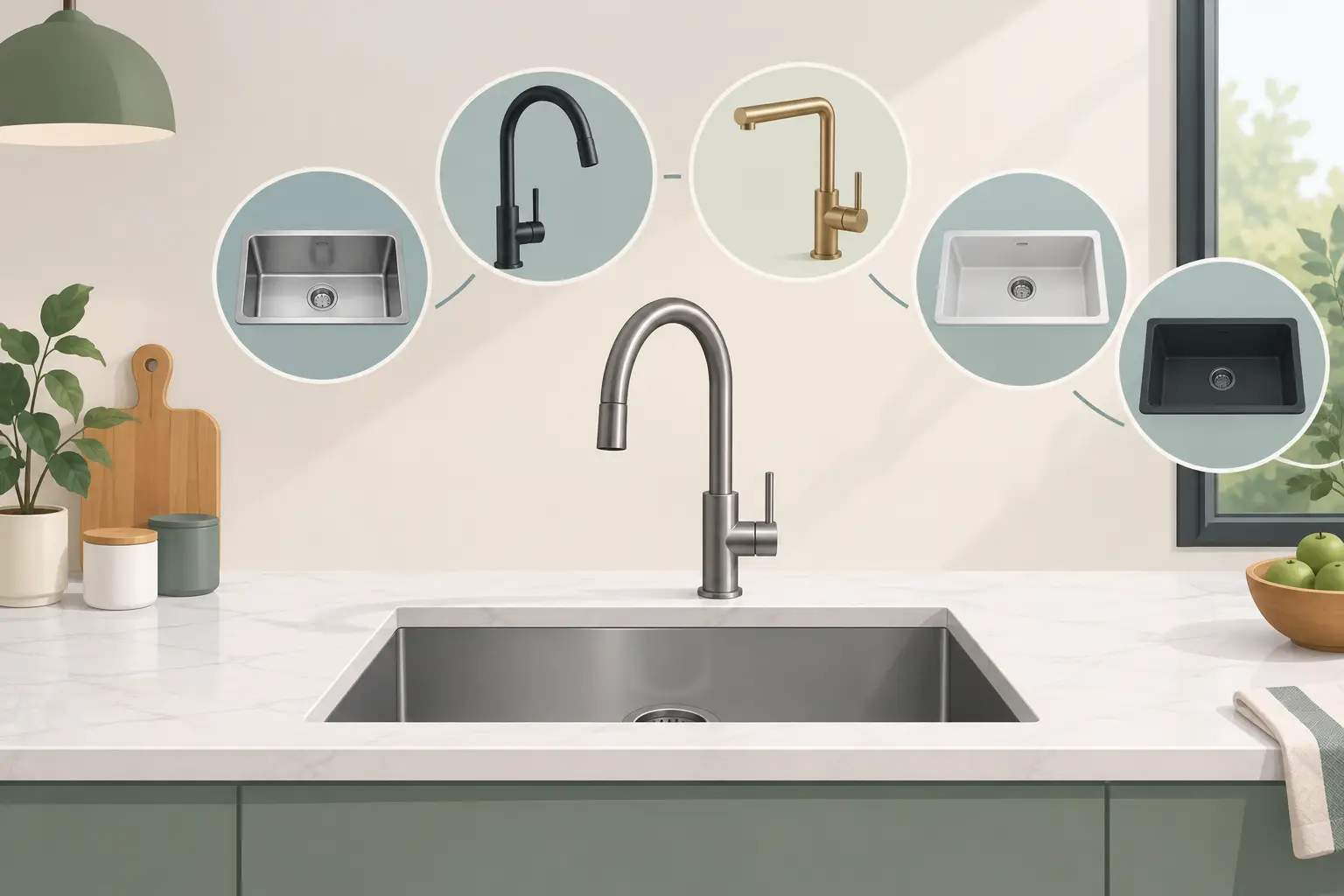
A sink and tap may take up only one section of the worktop, but they are used more than almost any other part of the kitchen. When you choose a kitchen sink and tap for a refurbishment, the right pairing can make washing up easier, improve food preparation and give tired worktops a more considered finish. The wrong one can leave you short of bowl space, battling splashes or wishing you had checked the cupboard below first.
If your existing kitchen units are sound and the layout works for your household, replacing the sink and tap is a sensible part of a wider update. Alongside new doors, drawer fronts, handles and worktops, these practical details can give you a new look for your kitchen without starting again.
Start with the space you already have
Before comparing colours, materials or tap styles, look closely at the current sink area. Measure the width and depth of the available worktop, then check the base unit underneath. A sink is not selected by its visible size alone: its bowl depth, waste fittings and clips all need room within the cabinet.
The size of the cabinet is particularly useful as a starting point. A larger double-bowl sink may look ideal, but it needs a suitably wide base unit and can reduce usable space below for a bin or cleaning products. In a compact kitchen, a generous single bowl is often more useful than two narrow bowls that struggle to hold a roasting tin or large pan.
Also consider where the sink sits in relation to the hob, dishwasher and food preparation area. If your layout is staying as it is, this is a chance to improve how it feels to use every day. A deeper bowl may suit a busy family kitchen, while a drainer on the preferred side can make a noticeable difference if you regularly hand-wash dishes.
Check the tap hole arrangement
Your existing worktop and sink may have one tap hole, two holes or a tap mounted directly through the worktop. This affects what can be fitted without extra alteration. Most modern mixer taps use a single hole, but traditional bridge designs and some specialist taps have different requirements.
It is also worth checking the water pressure in your home before falling for a particular tap design. Some taps need higher pressure than others to perform well. A tap that looks smart in a showroom should still provide a comfortable, reliable flow at home.
Choose a kitchen sink and tap around your routine
The best choice depends less on what is currently fashionable and more on how your household uses the kitchen. Think through an ordinary weekday: breakfast dishes, filling a saucepan, rinsing vegetables, cleaning baking trays and dealing with mugs that appear beside the sink all day.
A single-bowl sink with a drainer is a straightforward choice for many homes. It gives you a useful main bowl and a practical area for draining dishes, without asking for a large amount of worktop. If you have a dishwasher and rarely leave dishes out, you may prefer a bowl-only sink to create a cleaner, more minimal run of worktop.
One-and-a-half-bowl and double-bowl sinks are helpful where there is enough room. The smaller second bowl can be used for rinsing vegetables or emptying drinks while the main bowl is occupied. However, do not assume two bowls are automatically better. If the main bowl becomes too small for your cookware, the compromise can become frustrating quickly.
For the tap, height and reach matter as much as appearance. A high-arched spout makes filling tall jugs and pans easier, but check that it will not spray over a shallow bowl. A pull-out spray tap is useful for rinsing produce and cleaning the sink corners, particularly with a larger or undermount-style bowl. It does add moving parts, though, so a simple mixer tap may be the better long-term choice for someone who prefers uncomplicated fittings.
Pick a sink material that suits the worktop
Your sink and worktop should feel like they belong together, but they also need to suit the level of care you are happy to give them.
Stainless steel remains popular because it is practical, hygienic and works with almost any kitchen style. A brushed finish tends to hide water marks and light scratching better than a highly polished surface. It is a good all-round choice for households that want a clean, unfussy look, although thinner steel can sound noisier when pans are placed in the bowl.
Composite sinks, often available in black, grey, cream and stone-inspired shades, create a more substantial look. They work especially well with matt doors, shaker styles and natural-look worktops. Their darker colours can be forgiving of everyday marks, but limescale may show more clearly in hard-water areas, so regular cleaning still matters.
Ceramic sinks have a classic appeal and suit more traditional kitchens beautifully. They are hard-wearing and easy to wipe down, but they are heavy and need appropriate support. A dropped pan can also chip the surface, so they are best chosen with a clear understanding of the trade-off between character and care.
The fitting style changes the finished look too. A top-mounted sink has a visible edge around the worktop cut-out and is a familiar, practical option. An undermounted sink sits beneath the worktop for a neat, contemporary line, but it is generally better suited to solid surfaces rather than standard laminate worktops. If you are changing the worktop at the same time, it is easier to consider both decisions together.
Match the tap finish without making it too precious
Chrome remains a versatile choice. It reflects light, complements stainless steel and fits almost every door colour, from fresh white gloss to painted-style shaker fronts. Brushed steel or nickel has a softer appearance and can be more forgiving of fingerprints and water spotting.
Black taps can add definition to a pale worktop or tie in neatly with black handles and appliances. They are particularly effective in modern matt kitchens, but their finish should be chosen carefully. A black tap can become a striking feature, so it needs to work with the rest of the room rather than feel like an isolated trend.
Brass and warm metallic finishes bring character to navy, green, cream or timber-effect kitchens. They can look excellent with coordinating handles, but exact colour matching between different manufacturers is not always possible. Aim for complementary warm tones rather than expecting every metal surface to be identical.
A useful rule is to choose one leading finish, then repeat it once or twice. For example, a brushed tap might sit comfortably with brushed handles and a stainless steel appliance, while a black tap may be echoed in cabinet handles or lighting. Too many competing finishes can make a refreshed kitchen feel less settled.
Do not overlook the practical details
A good-looking tap should be comfortable to operate with wet or messy hands. Lever handles are usually easy to use, while crosshead handles offer a more traditional feel but may take longer to turn. If children or older family members use the kitchen regularly, simple controls are often the most practical option.
Look at the spout’s swivel range as well. A swivelling tap is valuable with a double bowl, allowing you to direct the water where it is needed. In a small kitchen with a single bowl close to a wall, a limited swivel may prevent the tap from knocking against a splashback or window ledge.
Think about cleaning before you buy. Deep grooves, heavily textured finishes and awkward gaps around the tap base can collect grime. A design with smooth, accessible surfaces is easier to keep looking good. This matters even more around a sink, where water marks, soap and food preparation are part of daily life.
Finally, budget for the complete job rather than the sink or tap alone. Waste kits, plumbing adjustments, new worktop cut-outs and fitting all influence the final cost. Spending a little more on the option that fits properly and suits your routine can be better value than choosing the cheapest item and having to work around its limitations for years.
See the combination before you decide
Photographs are useful for inspiration, but sink materials and tap finishes are much easier to judge in person. Chrome, brushed steel, black composite and ceramic all reflect light differently, while the scale of a bowl or drainer is difficult to judge from a screen.
At the Little Paxton showroom, you can compare options alongside replacement doors, handles and worktop samples, rather than choosing each item in isolation. Friendly advice from experienced kitchen specialists can also help you check that a preferred style works with your existing unit sizes, layout and the way you use the room.
A kitchen refurbishment works best when every choice has a purpose. Take measurements, bring a few photographs of your current kitchen and focus on the moments that frustrate you now. The sink and tap that solve those small daily problems will continue to feel like the right choice long after the newness has settled in.