Worktop Trends for a Smarter Kitchen Update
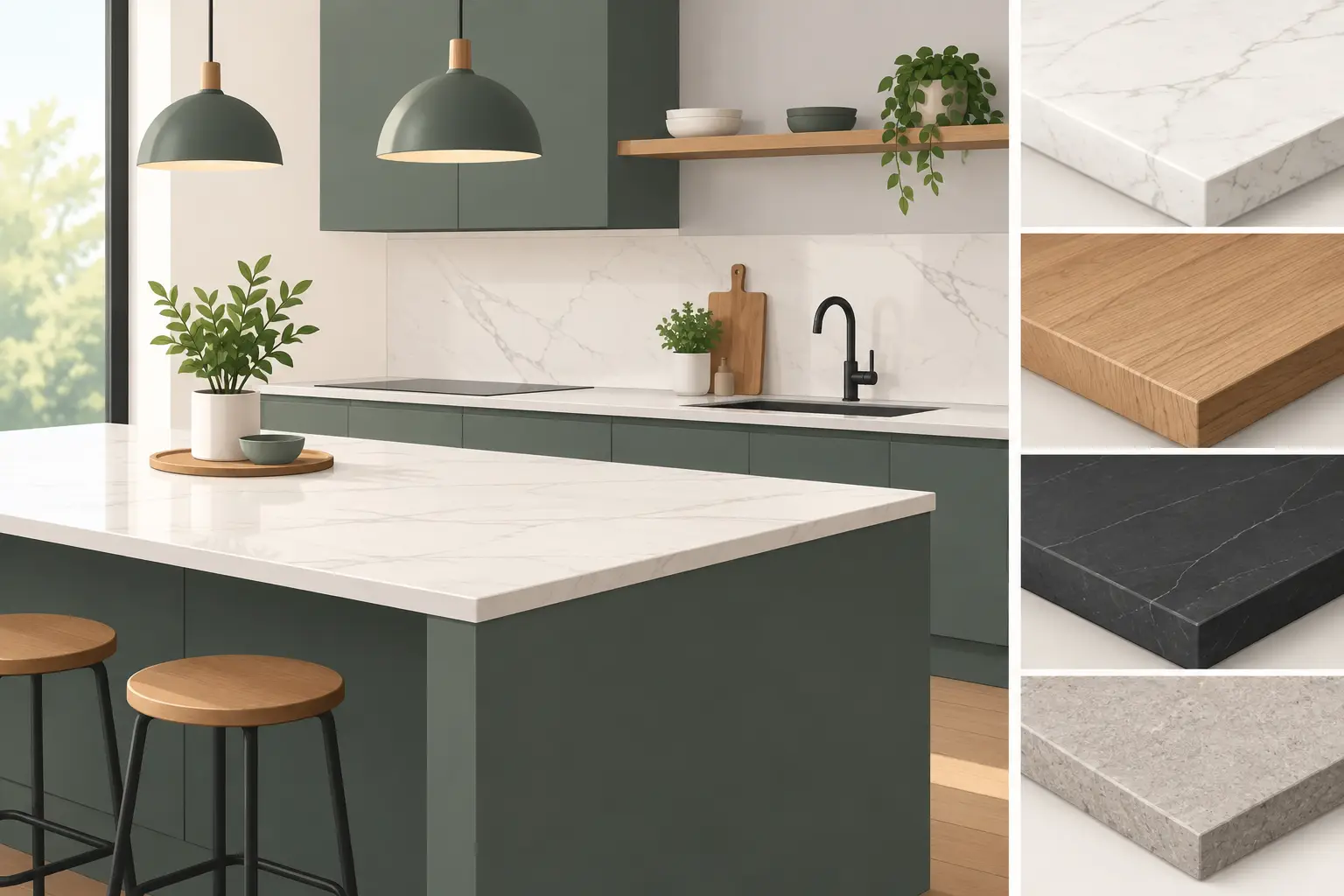
A worktop can make an older kitchen feel new again, even when the cabinets beneath it are still doing their job perfectly well. Current worktop trends are less about chasing a short-lived fashion and more about choosing surfaces that bring warmth, practicality and a finish that suits how your household actually uses the room.
For homeowners around St Neots and Little Paxton, replacing a tired worktop is often one of the most effective parts of a kitchen refurbishment. Pair it with made-to-measure replacement doors, updated handles and a new sink or tap, and you can achieve a considered new look for your kitchen without starting again.
Worktop trends are becoming warmer and more practical
For years, bright white and high-gloss finishes dominated many kitchen displays. They still have their place, particularly in compact kitchens where a light, clean look is the aim. But the move now is towards kitchens with more depth, texture and contrast.
Warm wood effects, soft stone patterns and muted neutral colours are popular because they work comfortably with the door styles homeowners are choosing. Think cashmere, sage, deep blue, warm grey and matt white cabinet doors rather than one uniform, clinical finish. A worktop does not need to be the loudest element in the room, but it should help all the other choices sit together.
The best trend to follow is one that makes sense in your own kitchen. A busy family kitchen needs a forgiving, easy-clean surface. A smaller kitchen may benefit from a paler worktop that reflects light. If you are updating a period property, a warmer woodgrain or gently veined stone look can feel more at home than a very stark finish.
Stone looks without the cold feel
Natural-looking stone remains a strong choice, but the preferred look is often softer than the dramatic black-and-white marble patterns seen a few years ago. Subtle veining, pale concrete effects, sandy beige tones and warm greys give a kitchen character without making it feel overly formal.
These finishes suit both modern slab doors and traditional shaker designs. A pale stone-effect worktop can lift navy or forest-green doors, while a mid-grey surface can provide a useful anchor for lighter cabinets. If your existing kitchen layout is sound but the worktop is chipped, stained or simply dated, this type of surface can make the whole run of units look more intentional.
There is a practical side to consider. Very pale, plain surfaces may show tea, turmeric or everyday marks more readily, while very dark worktops can highlight dust, water spots and crumbs. A softly patterned finish is often the sensible middle ground: it has visual interest and is a little more forgiving between cleans.
Veining should complement, not compete
Large, bold veins can look striking on a sample, but a long run of worktop or a kitchen with several corners gives that pattern far more presence. If you have patterned floor tiles, busy splashbacks or richly grained doors, a quieter worktop will usually create a calmer result.
Bring a door sample, paint swatch or even a photograph of your kitchen when comparing finishes. Looking at materials together is much more reliable than choosing each element in isolation.
Wood-effect worktops bring back warmth
Wood-effect worktops are firmly back in favour, especially in kitchens where homeowners want a relaxed, welcoming feel. The newer styles tend to be more natural and less orange than older wood finishes, with oak, walnut and lighter Scandinavian-inspired tones all proving popular.
A wood effect is particularly effective when you are refreshing plain matt doors. It prevents an all-one-colour kitchen from feeling flat and can connect the kitchen to timber flooring, open shelving or dining furniture nearby. It also works well in a utility room, where a practical surface can still feel considered.
The balance matters. Dark wood can add welcome depth to a large, bright kitchen, but it may make a narrow room feel enclosed if used with dark doors and limited natural light. Lighter oak-style finishes are often a safer choice in smaller spaces, particularly when teamed with cream, white or soft green cabinet fronts.
If you prefer the appearance of real timber, remember that it asks more of you. Solid wood needs regular care and can be affected by standing water, heat and everyday wear. A good-quality wood-effect alternative can give the visual warmth many households want with a lower-maintenance routine.
Matt surfaces suit everyday living
Matt kitchen doors continue to be popular, and the worktop choices around them are following suit. Rather than a highly reflective surface, many homeowners now prefer a low-sheen finish that feels softer and more contemporary.
A matt or lightly textured worktop can be a good partner for handleless-style doors, shaker doors with simple knobs, or replacement fronts in calm neutral colours. It helps create a kitchen that feels settled rather than overly glossy.
That said, a matt finish is not automatically the best answer for every home. Some dark matt surfaces show fingerprints or greasy marks, especially around a hob or where children often make snacks. Ask to see a larger sample and feel its texture. A surface that looks excellent under showroom lighting should also be one you will be happy to wipe down after breakfast, homework and evening meals.
Thickness, edges and upstands matter more than people expect
The overall look of a worktop is shaped by more than its colour. Thickness and edge detail can alter the character of the kitchen considerably. Slimmer profiles tend to give a cleaner, more modern appearance, while a thicker worktop can add visual weight and suit a more traditional style.
Edge profiles deserve attention too. A square edge often works well in contemporary kitchens, whereas a rounded or shaped detail can soften the look. Neither is universally better. It depends on the door style, handles and age of the property.
Upstands are another worthwhile decision. A matching upstand creates a neat transition between the worktop and wall, helping protect the area from splashes. In some kitchens, this may be all that is needed. In others, a tiled or glass splashback above the worktop adds more contrast and personality. Avoid choosing both a heavily patterned worktop and an equally busy splashback unless you are confident the room can carry it.
Plan the worktop around how you use the kitchen
Trends are useful for inspiration, but the practical details should lead the final choice. Consider where you prepare food, whether the sink area gets heavy use, and how much uninterrupted worktop space you genuinely need. Replacing the surface is also an ideal opportunity to rethink a shallow drainer, an awkward sink position or a tap that no longer suits the way you work.
A new sink and tap can transform the usefulness of the worktop area. For example, a deeper bowl may suit a family that cooks frequently, while a boiling-water or pull-out spray tap may be attractive for households looking to make everyday tasks easier. The important point is to check that the chosen worktop and fittings work together, including cut-outs, drainage and the space behind the sink.
It is also worth thinking ahead. A surface chosen only because it is fashionable this season may not feel right after the novelty fades. Aim for a finish you can imagine living with for years, then bring personality through handles, paint, accessories and smaller decorative details that are easier to change later.
See worktop colours and textures in person
Photographs are useful, but they cannot show how a worktop feels, how its pattern repeats across a longer length or how it sits beside a particular door colour. Natural daylight also changes the appearance of warm greys, cream tones and wood grains considerably.
At the Little Paxton showroom, you can compare worktop samples with replacement doors, handles, sinks and taps in one place, with friendly advice from experienced kitchen specialists. That makes it easier to choose a combination that suits your existing units, your budget and the way your home is used.
A well-chosen worktop does more than follow a trend. It gives your kitchen a hardworking surface, ties the room together and makes every cabinet beneath it feel worth keeping.