Ceramic Versus Stainless Sinks: Which Suits You?
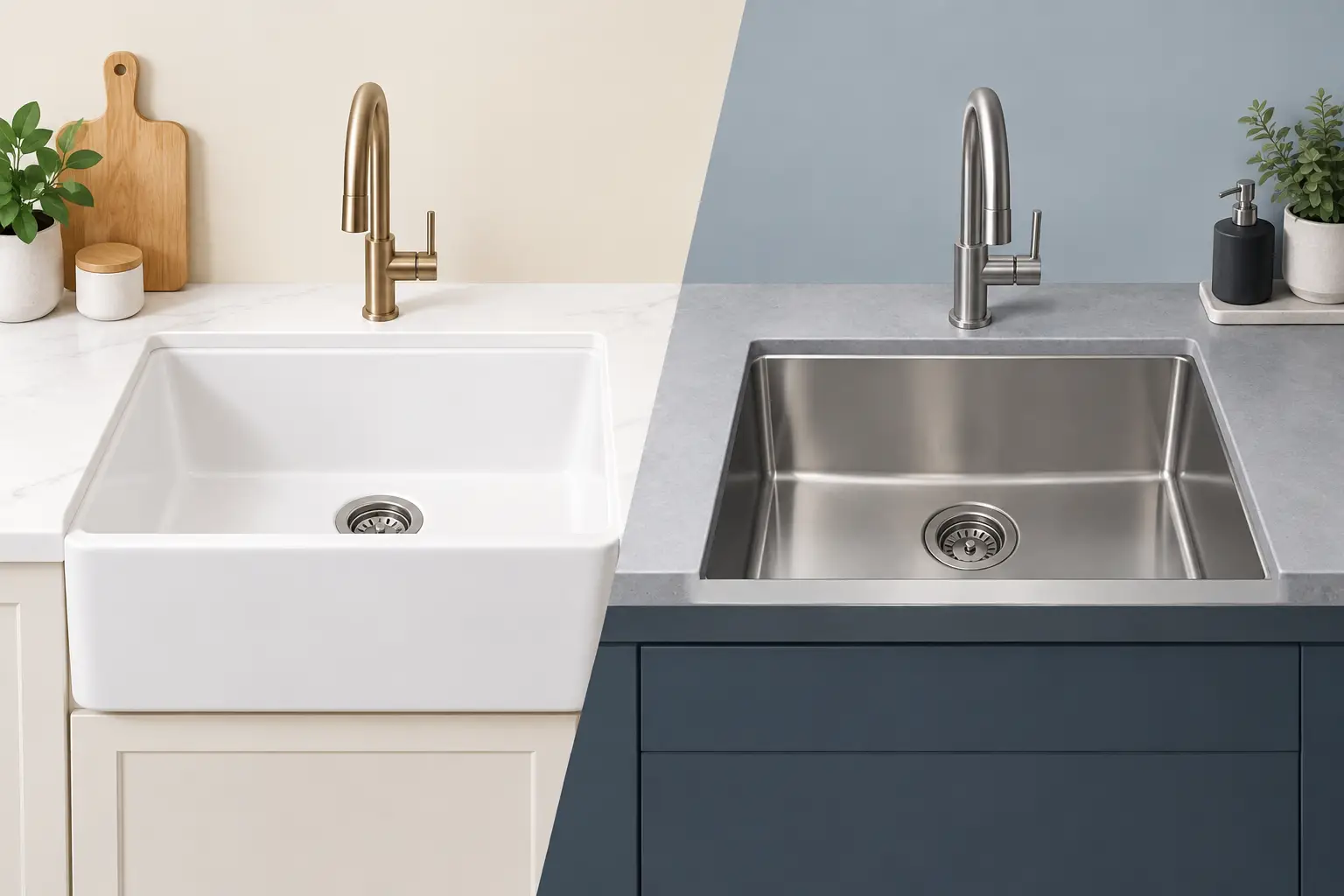
A sink is used more than almost any other part of the kitchen, yet it is often chosen late in the process. When comparing ceramic versus stainless sinks, the right answer is not simply about appearance. It depends on how you use the room, the worktop you are fitting, how much day-to-day maintenance you are happy with, and the character you want a new look for your kitchen without starting again to achieve.
For a kitchen refresh, a replacement sink can make a surprisingly big difference. Alongside new made-to-measure doors, handles and worktops, it helps turn a practical but dated room into one that feels considered and enjoyable to use. Here is how ceramic and stainless steel sinks compare in real homes.
Ceramic versus stainless sinks: the main difference
Ceramic sinks have a solid, traditional presence. Usually made from fireclay or a similar ceramic material with a hard glazed surface, they are particularly associated with Belfast and butler-style designs, although there are modern inset and undermounted versions too. Their smooth, glossy finish and substantial weight make them a natural partner for shaker doors, timber-effect worktops and kitchens with a classic or country-inspired feel.
Stainless steel sinks are lighter, more streamlined and often more flexible in shape and size. They work especially well in contemporary kitchens, utility rooms and busy family spaces. A brushed or satin stainless finish can sit quietly alongside matt doors, gloss fronts, laminate worktops or stone-effect surfaces without competing for attention.
Neither material is automatically better. Ceramic generally makes more of a visual statement, while stainless steel tends to prioritise easy everyday practicality. The best choice is the one that suits your existing layout and the way your household uses the kitchen.
Choosing for the look of your kitchen
If you are updating cabinet doors rather than replacing every unit, the sink should help connect the new finishes with what remains in place. A ceramic sink can add warmth and permanence to a refurbishment, particularly when paired with painted-style shaker doors, cup handles or a traditional bridge tap. White is the familiar choice, but softer off-white shades can look less stark beside warmer worktops and cream, taupe or green door colours.
A stainless steel sink gives a cleaner, more understated finish. It is a sensible choice if you are choosing handleless-style doors, simple bar handles, grey or white matt fronts, or a worktop with a crisp contemporary pattern. It can also be useful where there are several metal details to coordinate, such as chrome taps, appliances and handles.
Think about proportion as well as material. A deep ceramic Belfast sink can become the focal point of a run of base units, but it needs enough visual space around it. In a compact kitchen, a neatly proportioned stainless steel bowl and drainer may keep the worktop looking more open. A larger single bowl is useful for roasting tins and oven trays, while a one-and-a-half bowl arrangement can make rinsing vegetables and washing up easier at the same time.
Everyday use, cleaning and durability
Ceramic is hard-wearing, heat-resistant and simple to wipe clean. The non-porous glaze resists staining well, which is reassuring if the sink sees plenty of tea, coffee, sauces and family meal preparation. It also tends to be quieter than steel when pans and crockery are placed in it.
The trade-off is that ceramic can chip if a heavy pan, casserole dish or sharp object hits an edge with force. Small marks are not inevitable, but the material is less forgiving of hard impacts than steel. It can also show dark scuffs from metal pans or cutlery. These are usually surface marks rather than damage and can often be removed with a suitable non-abrasive cleaner, but they are worth expecting in a well-used sink.
Stainless steel is exceptionally practical for busy kitchens. It will not chip, it copes well with heat, and it is unlikely to be damaged by everyday knocks. A good-quality sink with a sensible steel thickness also feels firmer and produces less noise than a very thin budget model. If durability is your main priority, stainless steel has a strong case.
Its main weakness is appearance between cleans. Water marks, limescale and fingerprints can be more noticeable, especially in hard-water areas. Drying it after use keeps it looking smart, but that may not suit every household. Avoid harsh scouring pads on either material: they can dull ceramic glaze and scratch stainless steel.
Installation needs should shape the decision
This is where a lovely-looking sink can become the wrong sink. Ceramic models are considerably heavier than stainless steel and may require additional support within the base unit. A Belfast or farmhouse-style design can also need a specific cabinet arrangement and careful worktop cutting. That does not rule it out in a refurbishment, but it should be planned before ordering doors, worktops and the sink itself.
Stainless steel is lighter and available in a wide range of inset, undermount and flush-fit formats. This makes it a flexible option when retaining existing units. If your current sink size and plumbing position work well, selecting a replacement with compatible dimensions can help keep the project straightforward and avoid unnecessary disruption.
The worktop matters too. An inset sink can work with many laminate, solid-surface and stone worktops. Undermounted designs need a suitable waterproof worktop material and professional fitting, as the cut edge will be exposed to regular moisture. With laminate worktops in particular, accurate sealing around the sink is essential to protect the core from water damage.
Before falling in love with a particular style, check the cabinet width, bowl depth, tap-hole arrangement and waste position. It is also sensible to consider whether your chosen tap will have enough room behind the sink, especially below a window. These small checks make a replacement feel like an upgrade rather than a compromise.
Cost: look beyond the price tag
Stainless steel sinks are available at many price points, from basic practical models to heavier-gauge designs with refined edges and integrated drainage. This gives them an advantage when a kitchen update has a carefully managed budget. They can deliver a fresh, clean result without taking too much away from spending on the doors or worktop that will change the room most visibly.
Ceramic sinks often cost more to buy and fit, particularly larger Belfast styles. Their weight, the support they may require and the worktop detailing can add to installation costs. However, they can also provide a high-end, lasting look that suits the right kitchen beautifully. If the sink is central to the design you have in mind, it may be worth allowing for it from the start rather than trying to make it fit later.
Value is not simply about selecting the lowest-priced option. A sink that suits your cooking habits, feels right with the new door style and is fitted correctly will serve you well for years.
Which sink works best for your household?
Choose ceramic if you want a feature sink with a softer, more traditional feel, prefer a quieter washing-up area, and are happy to take a little care with heavy cookware. It is particularly effective in kitchens where the aim is to create warmth and character through replacement shaker doors, classic handles and a tactile worktop finish.
Choose stainless steel if you need a hard-working sink that can handle constant use, want a lighter and more contemporary look, or are retaining existing units with limited scope for structural alterations. It is also a sensible option for utility rooms, rental properties and family kitchens where resilience matters more than a statement finish.
There is room for personal preference here. Some homeowners love the familiar shine and practical nature of steel, while others feel a ceramic sink gives the kitchen the solid, homely finish they have been missing. Samples and showroom displays are useful because photographs rarely show the true scale, surface texture or colour of a material.
When you are planning replacement doors, worktops, taps and a sink together, bring a few photographs and rough measurements to the Little Paxton showroom. Friendly advice from experienced kitchen specialists can help you compare finishes in person and choose a sink that works with your existing kitchen, not against it.