Selecting Replacement Door Hinges for Kitchens
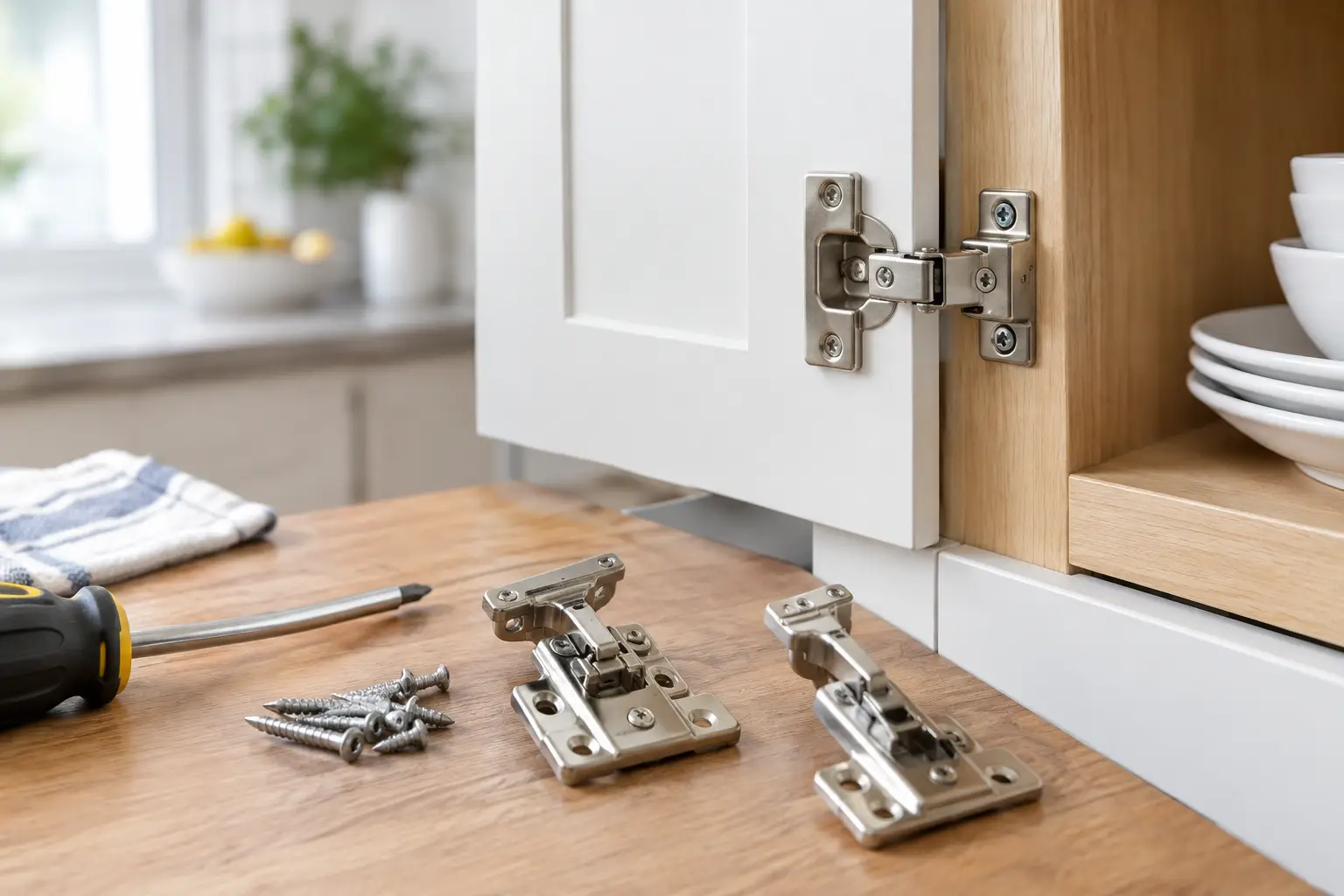
A kitchen door that catches, hangs unevenly or will not stay closed can make an otherwise good kitchen feel worn out. Selecting replacement door hinges starts with identifying what is already fitted, rather than choosing by appearance alone. The right hinge can restore smooth movement and neat gaps around your doors, helping your refreshed kitchen look properly finished.
For homeowners keeping their existing cabinets and updating doors, hinges deserve as much attention as the door style, colour and handles. A new door can only sit as well as the hinge and mounting plate behind it. The good news is that most modern kitchen cabinets use familiar concealed hinge systems, and a few careful measurements usually narrow down the options quickly.
Start with the hinge already on the cabinet
Take one door off and look at the hinge from both sides before ordering anything. In most fitted kitchens, you will find a concealed cup hinge: a round metal cup set into the back of the door, connected to a hinged arm that clips or screws onto a mounting plate inside the cabinet.
The most common cup size is 35mm, but do not assume this without measuring. Measure across the circular hole in the back of the door, then check the distance from the edge of the door to the edge of that hole. This position is often called the cup setback or bore distance. A replacement hinge with the right cup diameter but the wrong setback may not allow the door to close neatly.
Also note how the hinge attaches. Some have screws driven through the hinge cup, while others use a press-in fixing. The mounting plate may clip on, slide on or screw directly to the cabinet side. Photographing the hinge and plate before removing them is useful, particularly if several hinges look similar but are fitted in slightly different positions.
Do not overlook the mounting plate
The mounting plate is the small piece fixed to the cabinet carcass. It sets the hinge position and affects where the door sits when closed. In some cases, you can keep an existing plate and fit a compatible replacement hinge. In others, replacing the hinge and plate together is the more reliable choice.
This matters when fitting replacement kitchen doors. A plate that worked adequately with an old, thinner door may not give the right clearance for a new door, especially where cabinets meet at a corner or beside a wall. Matching hinge and plate from the same system avoids unnecessary guesswork.
Choose the correct door position
The most important part of selecting replacement door hinges is understanding how the door sits over the cabinet when it is shut. This is known as the door application. It affects the shape of the hinge arm and the plate you need.
A full-overlay door covers most of the cabinet side panel. This is common where each cabinet has its own separate door. A half-overlay door is used when two doors share the same cabinet side, with each covering part of it. An inset door sits inside the cabinet opening rather than over the front edge.
These arrangements can look quite alike once fitted, but their hinges are not interchangeable. Fitting a full-overlay hinge to an inset door, for example, can leave a large gap or prevent the door from closing. If you are unsure, close the door and look at its relationship with the cabinet side. A simple measurement of how much the door overlays the panel gives a useful starting point.
Corner units and bi-fold doors often need specialist hinges. They may use wider opening angles, angled mounting plates or a paired hinge arrangement. It is worth treating these as a separate job rather than trying to make a standard hinge work where it was never intended to.
Think about opening angle and daily use
A standard kitchen hinge commonly opens to around 110 degrees, which is suitable for most base and wall cabinets. However, the best opening angle depends on what is beside the cabinet.
A wider-angle hinge can make it easier to reach into a corner cabinet, pull-out storage area or cupboard near an appliance. Yet wider opening is not automatically better. If a door opens into a nearby wall, window ledge, handle or another cabinet, it may need a restricted hinge or a limiting clip to prevent damage.
Consider how the kitchen is used at its busiest. A door beneath a worktop may only need a standard opening, while a tall larder cupboard or cabinet beside an integrated appliance may benefit from more clearance. This is one reason seeing the options and discussing your cabinet layout in person can be more useful than ordering hinges based on a photograph online.
Soft-close hinges are a practical upgrade
Soft-close hinges use an integrated damper to slow the door in its final few centimetres. They reduce banging, protect the cabinet and give replacement doors a more considered feel. For many kitchen makeovers, they are a worthwhile improvement without changing the kitchen layout.
There are trade-offs. Very light, narrow or shallow doors may not have enough weight for every soft-close mechanism to operate consistently. Conversely, large, heavy doors may need more hinges or a hinge designed for the extra load. Some systems allow the soft-close action to be adjusted or deactivated, which can help achieve a smoother close.
If you are refreshing a family kitchen, soft-close hinges can also be kinder on doors over time. They will not compensate for loose cabinet panels or worn screw holes, though, so deal with those issues before fitting new doors.
Check door size, weight and hinge quantity
A small cabinet door may need two hinges, whereas a tall or heavy door can require three, four or more. The exact number depends on the door height, width, thickness, material and weight. A wide solid-style door, for instance, puts more strain on its hinges than a small lightweight door with a simple flat finish.
Using too few hinges is a false economy. The door may drop over time, the gaps can become uneven and the hinge screws can work loose. When replacing doors, it is sensible to assess every cabinet rather than copying the number of hinges on a tired existing door. Older kitchens are sometimes under-hinged by modern standards.
Pay attention to the condition of the cabinet side where the mounting plate is fixed. If screw holes are enlarged, a repair plate can provide a secure new fixing point. If the cabinet material is swollen from water damage, particularly under a sink, the area may need more substantial repair before any hinge will hold well.
Adjustment is what creates a neat finish
Modern concealed hinges normally offer adjustment in three directions. Side-to-side adjustment evens the gap between doors. Height adjustment aligns the top and bottom edges. Depth adjustment moves the door closer to or further from the cabinet.
These adjustments are not merely for fine tuning. They allow replacement doors to sit evenly across a run of cabinets where the original carcasses may have shifted slightly over the years. Aim for consistent gaps, doors that do not rub, and fronts that sit level with neighbouring drawer fronts.
Adjust one pair of doors at a time, beginning with the cabinets most visible from the kitchen entrance. Make small changes and close the door after each adjustment. It is easier to see the result from a step back than when you are standing directly in front of the cabinet.
Bring measurements and a sample when choosing hinges
If you are planning new kitchen doors but keeping your cabinets, bring an old hinge, mounting plate and a few clear measurements with you. The door thickness, cup diameter, cup setback, cabinet type and whether the door overlays or sits inside the unit all help identify a suitable option.
At the Replacement Kitchen Doors To Size showroom near St Neots, you can compare door samples alongside handles, worktops and finishing details, then talk through the practical fittings that make the finished kitchen work well. This is particularly helpful for homes in Little Paxton, Huntingdon, Sandy, Bedford and the surrounding villages where homeowners want to retain a layout that already suits them.
A hinge is a small component, but it has a visible effect every time you open a cupboard. Taking the time to match it properly means your replacement doors will close cleanly, line up well and continue to feel good to use long after the kitchen refresh is complete.