Cabinet Materials Guide for Kitchen Door Updates
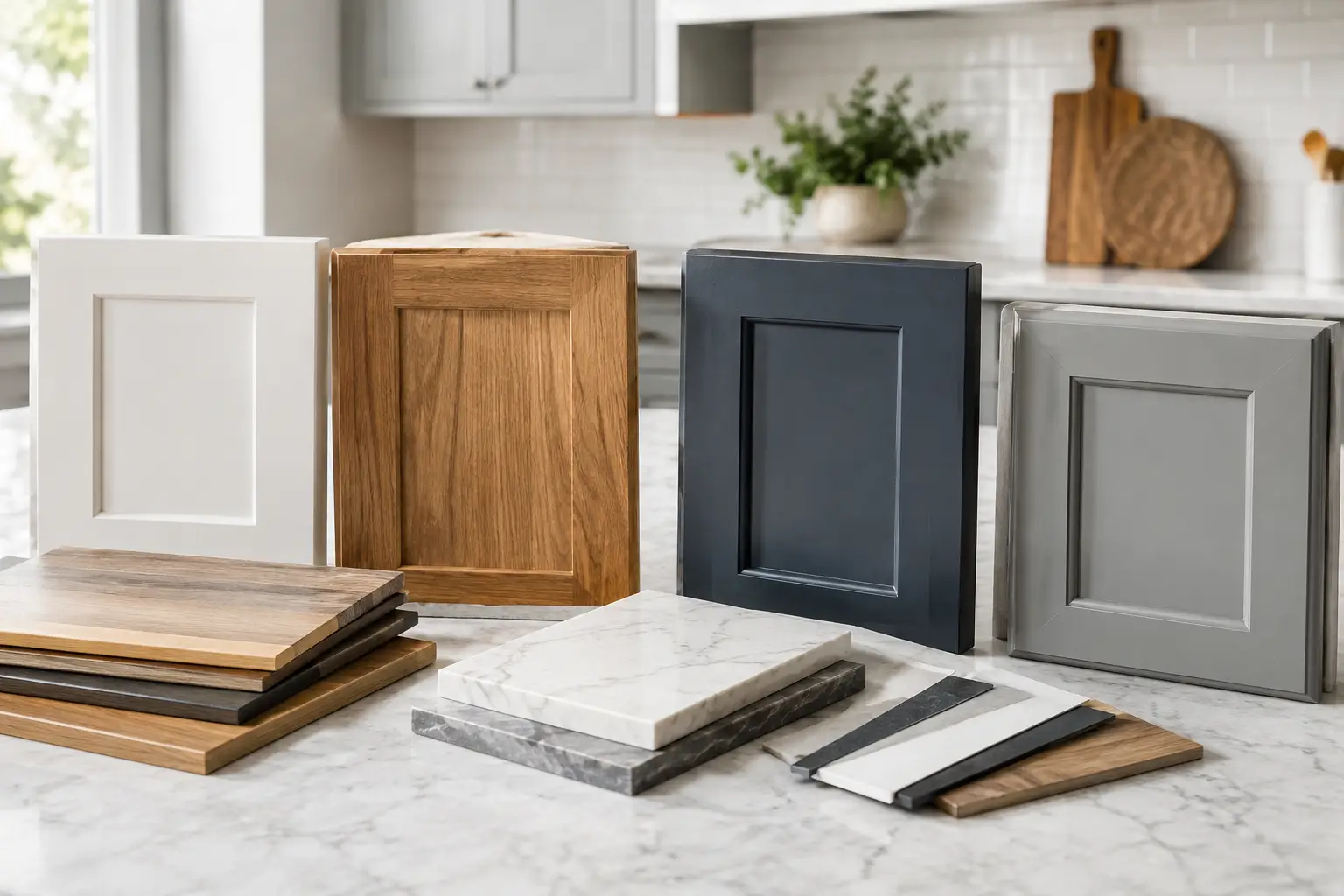
A kitchen can feel dated long before its cupboards stop being useful. If the layout still works, changing the doors, drawer fronts and visible finishes can make a meaningful difference without the disruption of removing the whole kitchen. This cabinet materials guide explains what sits behind the names on sample boards, so you can choose a finish that suits how your household uses the room.
The first useful distinction is between the cabinet carcasses and the doors. In many kitchen makeovers, the existing cabinets remain in place because they are sound, well laid out and still practical. The material choice is then mainly about replacement doors and drawer fronts, where the surface finish, edging and core all affect the look, feel, cleaning and long-term wear.
Cabinet materials guide: start with daily use
There is no single best material for every kitchen. A quiet household with careful cooks may be happy with a painted matt finish, while a busy family kitchen may benefit from a more forgiving door surface that wipes clean quickly. Think about where the kettle sits, how close doors are to the oven, whether children or pets are regularly in the kitchen, and how much natural light reaches the room.
It also helps to be realistic about the condition of the existing units. Replacement doors can transform tired cabinets, but they cannot correct swollen or badly damaged carcasses. A local showroom consultation gives you the chance to discuss the kitchen as it is, rather than choosing a door from a photograph and hoping it will suit.
MFC and melamine-faced doors
Melamine-faced chipboard, often shortened to MFC, is a common and practical option. It has a chipboard core with a tough decorative melamine surface, available in a wide range of plain colours, wood effects and textured finishes. It is familiar in many modern kitchens because it offers good value and a consistent appearance.
MFC doors are generally easy to wipe down and suit homeowners who want a straightforward, low-maintenance update. The quality of the edging matters, particularly near sinks, dishwashers and kettles where regular moisture can find its way into an exposed joint. A well-made, properly edged door will stand up far better than a cheaper alternative with vulnerable edges.
This material is especially worth considering when you want a convincing oak, ash or walnut-style finish without the cost or maintenance associated with real timber. It is also a sensible choice for utility rooms, rental properties or family kitchens where durability matters more than a hand-painted look.
MDF doors with a vinyl finish
Medium-density fibreboard, or MDF, provides a smooth and stable base for many replacement kitchen doors. When it is wrapped in vinyl or foil, the result can be a neat, affordable door with a wide choice of colours and styles. Shaker designs, slab doors and more detailed profiles are all possible because MDF can be machined accurately before it is finished.
Vinyl-wrapped doors are easy to clean and can offer a consistent finish across doors, panels and drawer fronts. They work particularly well for homeowners who want a traditional Shaker-style kitchen in a modern neutral colour, or a simple handleless look with no visible timber grain.
As with any wrapped finish, quality matters around heat and moisture. Very high heat, poorly positioned appliances and persistent steam can affect weaker finishes over time. It is worth discussing the position of ovens, kettles and extractors when comparing samples. Good fitting and sensible ventilation are part of making the right material last.
Painted MDF for a tailored look
Painted MDF doors have a different character. They tend to offer a more refined, furniture-like finish, especially in Shaker and in-frame-inspired styles. Because the surface is painted rather than printed or wrapped, the colour range can be broader and the finish can feel more considered in a period property or a kitchen where you want softer tones.
The trade-off is that painted doors need a little more care. They are durable for normal kitchen use, but sharp knocks may show more readily than on a heavily textured laminate. Small marks can sometimes be touched up, which is useful, although the best approach is still gentle cleaning with a soft cloth rather than abrasive products.
Painted MDF is a strong option if you are refreshing an older kitchen in St Neots, Huntingdon or one of the surrounding villages and want to bring in a classic colour without changing a layout that already works well. Pair it with new handles, a worktop and better lighting, and the change can be striking.
Laminate and acrylic-style finishes
Laminate surfaces are valued for their hard-wearing, easy-clean qualities. They can recreate woodgrain, concrete, stone and plain matt colours, making them useful for contemporary kitchens and practical households. Modern laminate does not have to look basic: better-quality options have texture, depth and a more convincing feel than many people expect.
Gloss acrylic-style doors create a crisp, reflective surface that can help a smaller or darker kitchen feel brighter. They are particularly effective in a simple slab design, often with discreet handles or a handleless rail. Fingerprints and smears are more visible on gloss than on textured matt finishes, however, so they suit people who do not mind regular wiping.
Matt laminate and super-matt finishes are often more forgiving for day-to-day use. Dark colours can look smart, but they may show dust, flour and splash marks more than a mid-tone grey, green or warm neutral. Seeing a full-size sample in different light is much more useful than judging a colour on a phone screen.
Real wood and wood veneer
Real wood doors bring natural variation, grain and warmth that manufactured finishes cannot fully copy. They can be painted, stained or oiled, and are often chosen for more traditional kitchen styles. Wood veneer gives a similar visual effect using a thin layer of real timber over a stable board, usually at a lower cost than solid wood.
Both options need sensible care around water and heat. Timber naturally moves slightly with changes in humidity, while veneer should be protected from chipped edges and prolonged damp. For the right kitchen, though, the character is hard to beat. A wood finish can also work beautifully alongside painted doors, such as oak-effect wall units with a soft painted base colour.
Choosing the right finish for your kitchen refresh
Start with the practical decisions: the door style you prefer, the amount of cleaning you are comfortable with, the light in the room and your budget for the full update. Then compare material samples beside your current worktop, flooring and wall colour. What looks bright white under showroom lighting may appear cooler at home, while a dark door can feel elegant in a large room but heavy in a compact kitchen.
Do not overlook the finishing details. New handles can make a simple MFC or vinyl door look sharper, while a replacement worktop may have more visual impact than moving from one door material to another. Sinks, taps, end panels, plinths and cornices should also be chosen as part of the same scheme, not as an afterthought.
For homeowners who want clear, face-to-face advice, Replacement Kitchen Doors To Size at The Conservatory Village in Little Paxton offers the opportunity to compare door samples properly and talk through what will work with the units you already have. Taking a few photographs and basic measurements of your kitchen can make that conversation even more productive.
A good material choice is not about selecting the most expensive sample. It is about choosing doors that fit your kitchen, your routine and the life you want from the refresh. When the existing layout is worth keeping, the right doors and finishes can make it feel like a kitchen you chose again.