Bedroom Door Replacement and Bathroom Doors Too
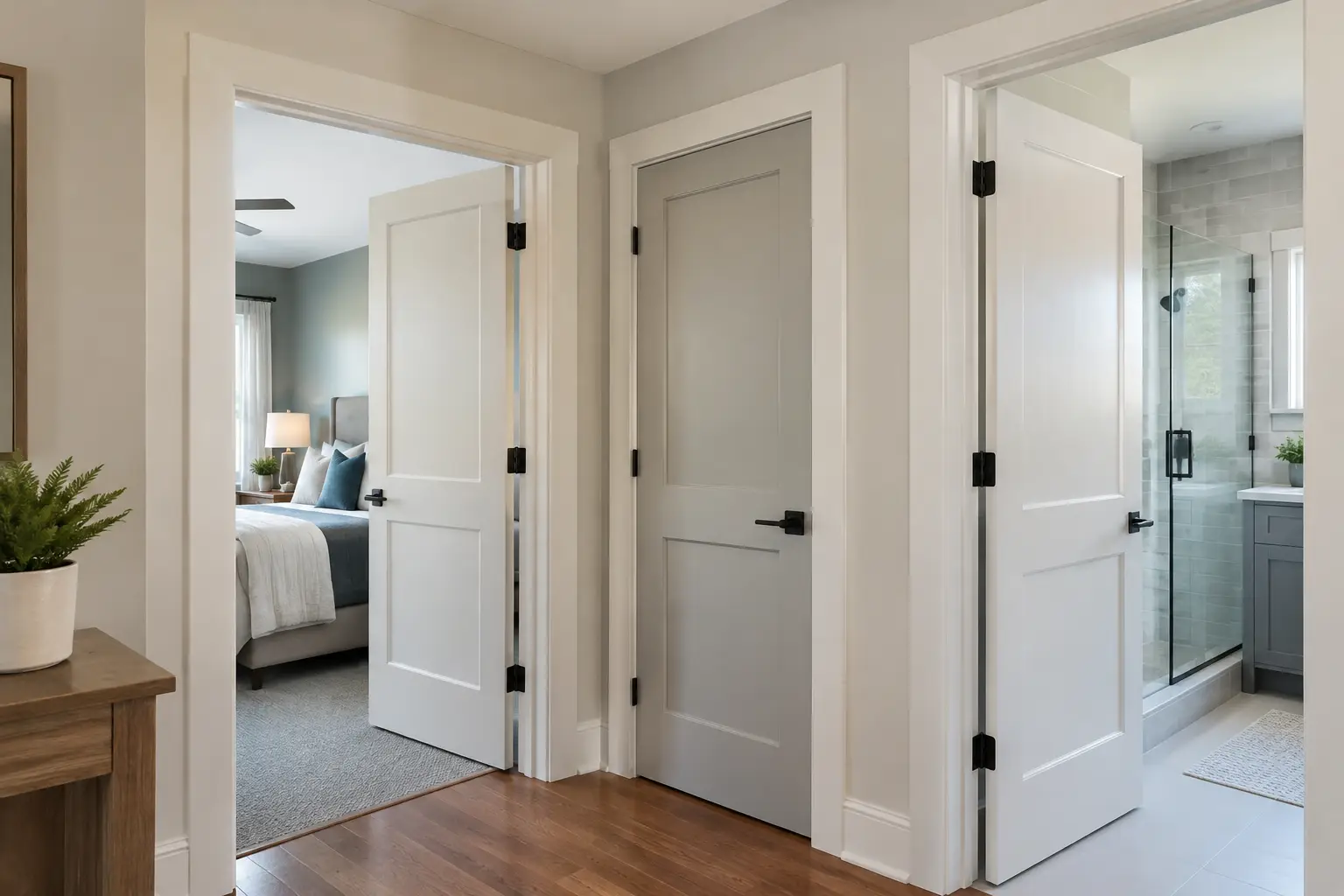
A bedroom door replacement and bathroom doors too can make a surprising difference to how a home feels. Worn edges, dated panels, swollen finishes and mismatched handles are small details, but they are seen every day. Before choosing anything, though, it helps to be clear about what needs replacing: internal room doors, cupboard doors, or both.
That distinction matters because the measuring, materials and fitting requirements are very different. It also prevents a common mistake: choosing a finish that looks good in isolation but does not suit the way the room is used.
Start by deciding which doors you mean
Internal bedroom and bathroom doors sit within door frames and need to open, close and latch properly. They are usually replaced to improve privacy, update the style of a hallway or landing, or deal with damaged and tired doors. Bathroom doors need particular thought because of steam and changing moisture levels.
Bedroom furniture doors are different again. These are the doors on fitted wardrobes, bedside units or built-in storage. Bathroom cabinet doors are usually fitted to vanity units or storage cupboards, where splash resistance and easy cleaning are priorities.
If you are also considering a kitchen refresh, replacement kitchen doors can be an especially cost-conscious route when the existing cabinets are sound and the layout still works. Rather than removing usable units, you can update the visible fronts, handles, worktop and finishing details to create a much fresher room.
Choosing internal doors for bedrooms and bathrooms
When replacing internal doors, begin with the practical details rather than the colour. Measure the existing door carefully, including its height, width and thickness. Check whether it is hinged on the left or right, whether the frame is square, and how much clearance is available above carpets or flooring.
Older properties around St Neots, Huntingdon and the surrounding villages can be less straightforward than they first appear. Door openings may not be standard sizes, frames may have moved slightly over time, and one room may have different dimensions from the next. A made-to-measure option can be worthwhile where a standard door would need excessive trimming or leave uneven gaps.
For bedrooms, the choice often comes down to style, light and sound. A solid or solid-core door generally feels more substantial and can reduce everyday noise better than a lightweight hollow door. Panelled doors suit many traditional homes, while simple shaker-style or flush designs work well in more modern settings. Glazed doors can bring more light into a darker landing, although they are not usually the first choice where privacy is the priority.
Bathrooms need a little more care. A door should cope with humid air, but it should also have suitable ventilation around the room and a finish that can be wiped clean. A good-quality painted or properly sealed door can work well, provided the bathroom is adequately ventilated. Repeated steam exposure can cause problems if edges, cut-outs and drilled areas are not sealed correctly during fitting.
Keep the style connected, not identical
Replacing bedroom doors and bathroom doors at the same time gives you an opportunity to make hallways and upstairs spaces feel more considered. That does not mean every room needs to be exactly the same.
You may prefer matching door designs throughout the house, with different handles for bathrooms and bedrooms. Alternatively, a bathroom might suit a plainer, more moisture-tolerant finish while bedrooms use a warmer painted or wood-effect look. The key is to repeat a few elements – perhaps the same handle finish, panel pattern or paint tone – so the choices feel intentional.
Handle selection has a bigger effect than many homeowners expect. Polished chrome remains a practical choice in bathrooms because it is easy to clean and works with many taps and accessories. Matt black can look smart against pale doors, but it tends to show fingerprints more readily. Brushed nickel offers a softer, less reflective middle ground and can work particularly well in homes where chrome feels too bright.
Bedroom furniture and bathroom cabinets need different materials
If the project involves wardrobe fronts or bathroom cabinet doors rather than internal room doors, focus on the condition of the cabinets first. Hinges, carcasses and fixings need to be secure before new doors are fitted. Fresh fronts will not solve a cabinet that is badly damaged, out of level or affected by water ingress.
For bedroom furniture, colour and finish are often the main decisions. Light neutral shades can help a compact bedroom feel calmer and less crowded. Wood effects add warmth, while deeper colours can give built-in storage more presence in a larger room. Consider how the doors will look in both natural daylight and evening lighting before committing to a shade.
Bathroom cabinets need surfaces that are practical around splashes, toothpaste, cosmetics and regular cleaning. Smooth finishes are generally easier to wipe down than deeply textured ones. Pay attention to exposed edges around basins and handles, as these are the places most likely to encounter moisture. Good fitting and sensible ventilation are as important as the door material itself.
Do not overlook the kitchen while planning a wider refresh
A whole-home update often begins with one tired room and quickly reveals other areas that could benefit from attention. If you are looking at bedroom storage or bathroom cabinetry, it may be worth taking a fresh look at the kitchen too.
Many homeowners do not need a full kitchen replacement. If the cabinets are sturdy, the layout supports everyday cooking, and storage broadly works, replacing the doors and drawer fronts can change the appearance without the disruption of removing everything. New handles, a worktop, sink or tap can then bring the rest of the room up to date.
This approach is particularly useful when the kitchen feels dated but still functions well. It lets you spend money on the parts you see and use most, while retaining the parts that are already doing their job. The trade-off is that it is not the right solution for cabinets that are failing, a layout that causes daily frustration, or a kitchen with serious water damage. In those situations, broader changes may be needed.
See finishes properly before making a final choice
Photographs are useful for ideas, but they cannot show the true texture of a door, the depth of a colour or how a handle feels in the hand. This is where seeing samples in person becomes valuable. You can compare a painted-style finish with a woodgrain effect, place worktop samples alongside doors, and judge whether a colour works with your flooring and wall tiles.
For homeowners near Little Paxton, a visit to Replacement Kitchen Doors To Size at The Conservatory Village gives you the chance to talk through replacement kitchen door options in a relaxed setting. Bring a few photographs and rough measurements if you have them. They do not need to be perfect at this stage, but they can help make the conversation more useful.
It is also sensible to take a sample home where possible, or at least view it near a window in the showroom. Artificial lighting can alter the appearance of greys, whites and greens considerably. A warm white may look welcoming in one room but slightly cream beside a cooler bathroom tile or bright white skirting board.
Plan the work in the right order
Where several rooms are being updated, timing can save unnecessary rework. Complete any plastering, electrical changes, tiling and flooring before final door fitting where possible. Newly fitted doors can be damaged by trades moving materials through the house, while changes to floor height can affect the clearance needed at the bottom of an internal door.
For kitchen doors, make sure any planned appliance, worktop, sink or tap changes are considered at the outset. These details influence door clearances, handle positions and the overall finish. It is easier to create a coordinated result when the choices are made together, even if the installation happens in stages.
A home does not need to be stripped back and rebuilt to feel renewed. Careful door replacement, sensible materials and finishes chosen in person can improve the rooms you use every day while keeping the work practical and manageable.