Shaker Versus Slab Doors: Which Suits Your Kitchen?
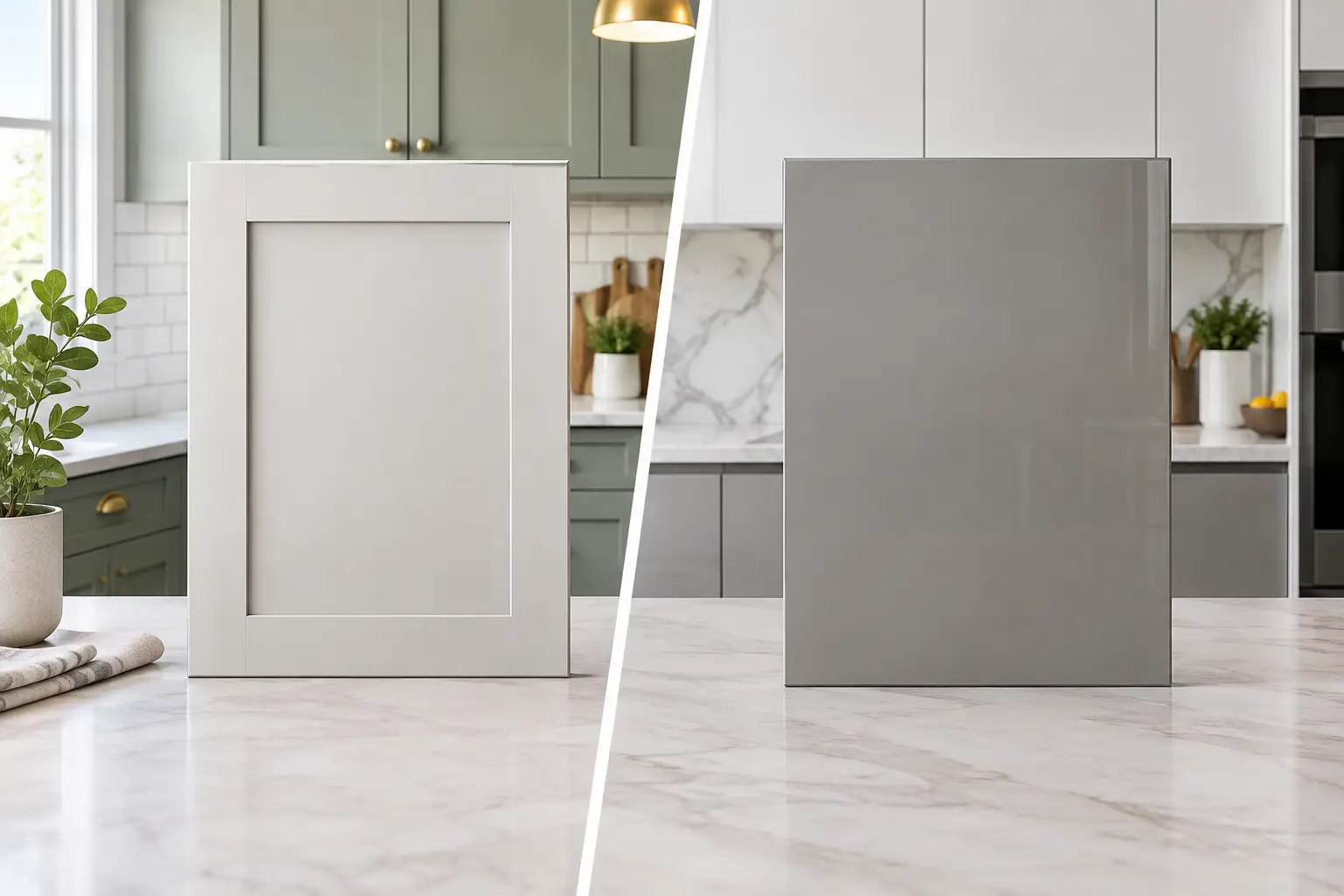
If you are choosing replacement kitchen fronts, the question of shaker versus slab doors usually comes down to more than whether you prefer a framed or flat look. The right choice needs to suit the age of your home, the light in the room, how the kitchen is used and the finish you want to live with every day. Both styles can transform sound existing cabinets, so there is no need to change a layout that already works well.
What is the difference between shaker and slab doors?
A shaker door has a simple recessed centre panel with a visible frame around it. It is a familiar, versatile style that can look traditional, country-inspired or smartly contemporary depending on the colour, handles and worktop chosen. The detailing gives the kitchen more depth and character without becoming overly ornate.
A slab door is completely flat across the front. Sometimes called a smooth or handleless-style door, it creates a cleaner, more pared-back appearance. Slab doors work particularly well in modern homes, smaller kitchens and rooms where you want the cabinetry to feel quiet rather than busy.
Neither is automatically better. A shaker door brings shape and definition, while a slab door puts more emphasis on colour, texture and the lines of the kitchen itself.
Shaker versus slab doors: choosing the right look
Start with the room rather than a trend photograph. If your kitchen has period features, timber flooring, a Belfast-style sink or a warm, lived-in feel, shaker doors can sit naturally within the space. A painted shaker front in soft grey, sage green, cream or navy can feel established without looking old-fashioned. Pair it with cup handles or knobs for a more classic feel, or slim bar handles for a fresher update.
Slab doors are often the better fit where the room has clean architectural lines, large-format flooring or a contemporary extension. They can make cabinetry appear less prominent, especially in a pale matt finish. A darker slab door can also look striking, but it benefits from good lighting and a worktop that provides some contrast.
That said, the style of the house should not dictate every decision. A simple shaker door can work beautifully in a newer property, and a matt slab door can bring welcome calm to an older home. The key is to choose a finish that connects with the rest of the room rather than treating the doors in isolation.
How each door style works in everyday life
Kitchen doors are handled constantly, so practical details matter. Slab doors have an advantage when it comes to wiping down because there are no framed edges or recessed corners. A quick wipe is usually all that is needed after cooking, particularly on a smooth matt or gloss surface.
Shaker doors need a little more attention around the inner frame, where dust and cooking residue can gather. This is not difficult to manage, but it is worth considering in a busy family kitchen or a home where the hob is used heavily. A good-quality finish and regular gentle cleaning will keep either style looking its best.
Fingerprints are another consideration. Gloss slab doors can show marks more readily, especially in darker colours, while matt finishes often disguise them better. Shaker doors in mid-tone painted colours can be forgiving too. The best way to judge this is to handle full-size samples in person, rather than relying on a small image on a screen.
Colour, finish and handles make a major difference
The same door style can look completely different once colour and hardware are chosen. A white shaker kitchen with chrome knobs has a very different character from a black shaker kitchen with brass handles and a pale stone-effect worktop. Likewise, a slab door in warm cashmere can feel softer and more welcoming than a bright white gloss finish.
For shaker doors, handles tend to be an important part of the final look. Knobs, cup pulls and bar handles each change the balance of the design. They also offer an easy opportunity to update the kitchen further without replacing cabinetry.
Slab doors give you more freedom to keep the front uncluttered. You may prefer a simple long handle, a discreet edge pull or a handleless rail system. Handleless designs look neat, but they should be tried before ordering. What looks elegant needs to feel comfortable when opening a heavy drawer or a cupboard used several times a day.
Textured finishes can also influence the decision. Woodgrain slab doors can add warmth while retaining clean lines. A shaker door in a wood-effect finish can create a more traditional look, although a painted effect is often chosen where homeowners want a softer, more tailored result.
Think about proportions, light and the size of your kitchen
Door style affects how busy a kitchen feels. In a compact room with lots of wall units, slab doors can make the space seem calmer because there are fewer visual lines. Light colours, integrated appliances and simple handles can help the room feel more open.
Shaker doors can still work well in a smaller kitchen, particularly if you choose a pale finish and avoid too many competing details. The framed pattern adds interest, but a strong worktop pattern, decorative splashback and statement handles all together may make a small room feel crowded.
In a larger kitchen, either choice can work. Shaker doors can add welcome texture to a big open-plan space, while slab doors can give an extension or kitchen-diner a crisp, architectural feel. Two-tone schemes are also possible with both styles. For example, darker base units and lighter wall units can help ground the room without making it feel heavy.
Cost and replacement door suitability
It is tempting to assume that slab doors will always cost less because they are simpler in appearance. In practice, price depends on the material, finish, door size, edging, hardware and whether you need standard or made-to-measure fronts. A well-made slab door in a premium finish may cost more than a straightforward shaker option.
The more useful question is whether your existing cabinets are worth keeping. If the units are solid, the hinges can be adjusted or replaced where needed, and the layout still suits how you cook and live, replacement doors can be a sensible route to a major visual change. You can also refresh drawer fronts, end panels, plinths, handles and worktops to create a more complete result.
This approach lets you spend money where it will make the most difference. A tired kitchen can often be brought up to date with new fronts and a carefully chosen worktop, rather than the disruption and expense of removing perfectly serviceable cabinets.
See shaker and slab samples before you decide
Photos are useful for gathering ideas, but they cannot show how a finish responds to daylight, how a door feels to open or whether a colour works alongside your flooring. Seeing samples together also makes it easier to spot combinations that may not have occurred to you, such as a modern slab door with a warmer oak-effect worktop, or a classic shaker front with contemporary black handles.
At the Replacement Kitchen Doors To Size showroom near St Neots, you can compare styles, colours and finishes at a sensible pace and talk through what will fit your existing units. Bringing a few measurements, photographs of the room and a sample of your flooring or worktop can make that conversation even more useful.
The best choice is the one that makes your current kitchen feel more like yours, while continuing to work hard for everyday life. Before settling on a colour or style, take the time to open the doors, compare the finishes in natural light and picture the room after breakfast, dinner and a busy weekend – not just when it is newly cleaned and empty.