Kitchen Door Handles Replacement Made Simple
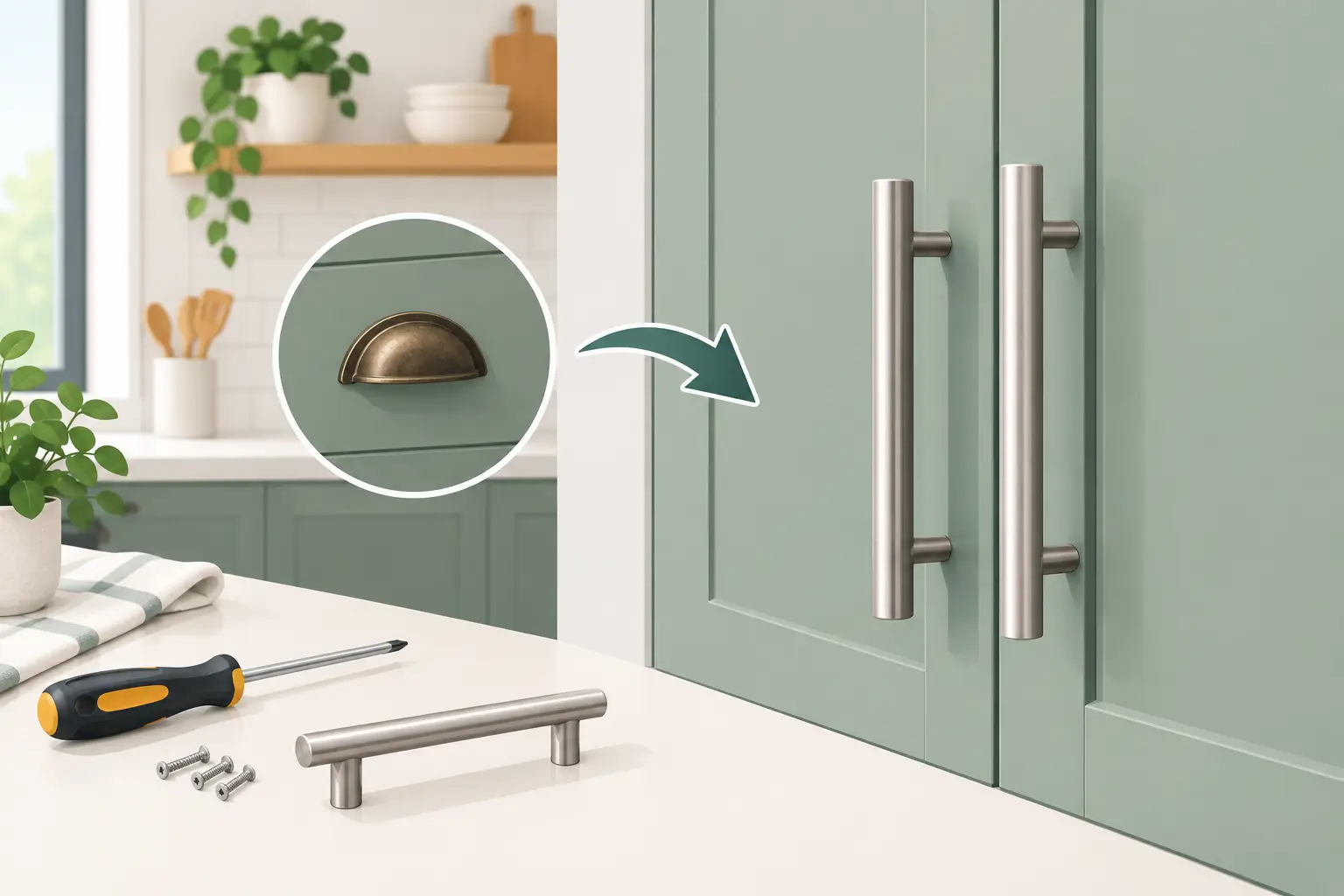
A handle that feels loose, looks dated or catches on a sleeve can make an otherwise sound kitchen feel older than it is. Kitchen door handles replacement is one of the quickest ways to improve the look and everyday feel of your cabinets, particularly when the units themselves are still sturdy and the layout works well.
For homeowners around St Neots and Little Paxton, it can be a sensible first step in a wider kitchen refresh. New handles bring fresh detail to existing doors, or provide the finishing touch when you are fitting made-to-measure replacement doors and drawer fronts. The right choice makes opening cupboards easier, ties the room together and gives tired cabinetry a more considered finish without starting again.
Start with the holes you already have
The most practical question is not which handle you like best. It is whether it will fit your existing doors without leaving visible holes behind.
Most cabinet handles are measured by their fixing centres: the distance between the centres of the two screw holes. Common sizes include 96mm, 128mm, 160mm and 192mm, but kitchens vary, especially where doors were fitted some years ago. Take a tape measure or ruler and measure accurately from the centre of one hole to the centre of the other. Do this on more than one door, as an earlier repair or replacement may mean they are not all identical.
If you choose a new handle with the same fixing centres, fitting is usually straightforward. The old handle comes off, the new one uses the existing holes, and the visible face of the door stays neat. This is often the best route for a simple weekend update.
Choosing a different size is still possible, but needs more thought. A longer handle may cover the old holes, depending on its shape and backplate. A shorter or differently positioned handle can leave marks that are hard to disguise, particularly on gloss, vinyl-wrapped or pale painted doors. In that situation, replacement cabinet doors may offer a cleaner result than filling and touching up every front.
Check screw length as well as spacing
Handle screws pass through the door from the inside, so their length needs to suit the door thickness. A screw that is too short will not grip properly; one that is too long can protrude through the handle or prevent it sitting flush. Many handles are supplied with standard screws, but doors can be thicker than expected and drawer fronts are often different again.
Before fitting every handle, try one first. It is a small precaution that avoids tightening a whole set only to find the screws need trimming or replacing.
Match the handle to the way your kitchen is used
A handle should look right, but it also has a job to do several times a day. Consider how it feels in your hand, whether it gives enough clearance for fingers, and how easily it can be cleaned.
Bar handles are a dependable choice for busy family kitchens. Their straightforward shape suits many door styles, they are easy to grip and they work well on wider drawers. Slim bar handles give a contemporary look, while chunkier versions can feel more substantial on a shaker kitchen.
Cup handles are usually fitted to drawers and bring a more traditional, furniture-like character. They suit classic shaker doors particularly well, although their recessed form can collect crumbs and need a little more cleaning. Knobs are compact and versatile, often used on doors with cup handles on drawers. They are a good option for smaller cabinets, but a very small knob can be less comfortable for someone with reduced hand strength.
Profile or edge pulls create a cleaner, more minimal appearance because they sit along the top or side of the door. They can look excellent on matt slab doors, but comfort varies by design. It is worth handling a sample before deciding, especially if the kitchen is used by children, older relatives or anyone who finds a firm grip easier than a narrow recess.
Kitchen door handles replacement: choosing a finish
Finish has a strong effect on the final look, even when the doors remain unchanged. It can either quietly complement the room or become a deliberate design detail.
Brushed stainless steel and brushed nickel are forgiving everyday choices. Their soft sheen works with white, grey, woodgrain and many coloured doors, and they tend not to show fingerprints as readily as polished finishes. Chrome is brighter and more reflective, pairing naturally with chrome taps and modern gloss doors, but it can need more frequent wiping to keep it looking its best.
Matt black handles add definition to pale, timber-effect or muted green cabinet doors. They are popular because they create a clear contrast, though they work best when repeated elsewhere in the room, perhaps in a tap, light fitting or shelf bracket. Without another dark detail, they can look slightly disconnected.
Brass and antique bronze bring warmth, particularly to navy, deep green, cream and painted shaker-style doors. The trade-off is that tone matters. A warm brass handle may clash with a cool chrome tap, while an aged finish can feel out of place in a very sleek, high-gloss kitchen. You do not need every metal surface to match exactly, but the overall mix should look intentional.
The most reliable way to judge a finish is in your own kitchen light. Daylight, under-cabinet lighting and the colour of your worktop can all change how a sample appears. Visiting a showroom gives you the chance to place handles against door colours and worktop finishes rather than selecting from a small online image.
Get the proportions right on doors and drawers
A handle can be the correct fixing size and still look wrong if its proportions do not suit the cabinet front. Long horizontal handles tend to balance wide drawers well. On tall doors, vertical handles usually make access easier and can emphasise the height of the cabinetry. Smaller doors may look better with a modest bar handle or a knob rather than an oversized pull.
There is no single rule for handle length. A very long handle can create a modern, linear look, while a shorter one can feel more traditional. What matters is consistency. Use the same handle range throughout, then vary the length where needed for drawer width, keeping the finish and shape coordinated.
Before drilling new holes, mark positions with low-tack masking tape and stand back. Check that adjoining handles line up, drawer pulls sit at a comfortable height, and integrated appliances will still open freely. A simple drilling jig is useful when fitting several new handles because it keeps the spacing repeatable and reduces the chance of a costly misaligned hole.
When handles alone are not enough
New handles can make a remarkable difference, but they cannot hide swollen door edges, peeling vinyl, deep scratches or dated profiles that no longer suit your home. If your cabinets are solid and the layout still serves your household, replacing the doors and drawer fronts alongside the handles can give you a much more complete result.
This approach retains the existing units while renewing the parts you see and touch every day. A fresh shaker, matt or gloss door style, a coordinating worktop and carefully chosen handles can change the character of the room without the disruption of removing a whole kitchen. It also makes it easier to choose hardware that genuinely suits the new doors, rather than trying to make a modern handle work with a worn finish.
At Replacement Kitchen Doors To Size in Little Paxton, you can compare handle styles with door samples, worktops, sinks and taps in person. Friendly advice from experienced kitchen specialists can help you check measurements, weigh up finishes and build a new look for your kitchen without starting again.
A few fitting details that protect the finish
Once you have selected your handles, take your time with installation. Clean the door fronts first so grit does not rub beneath the new fittings. Use a hand screwdriver for the final tightening rather than overtightening with a drill, particularly on foil-wrapped or painted doors. Tighten until secure, then stop: excessive pressure can mark the surface or strip the screw hole.
Keep the old handles until the job is complete. They can be useful for checking screw sizes or for a spare cabinet in a utility room. Finally, open every door and drawer fully. A handle that looks perfect can still knock against a wall, appliance handle or neighbouring cabinet when the door swings.
A well-chosen handle is a small detail with a daily impact. Bring a photo, a measurement and, if possible, one old handle to the Little Paxton showroom, and choosing the next one becomes a practical, enjoyable part of your kitchen update.