Induction Hob Reviews: What Homeowners Should Check
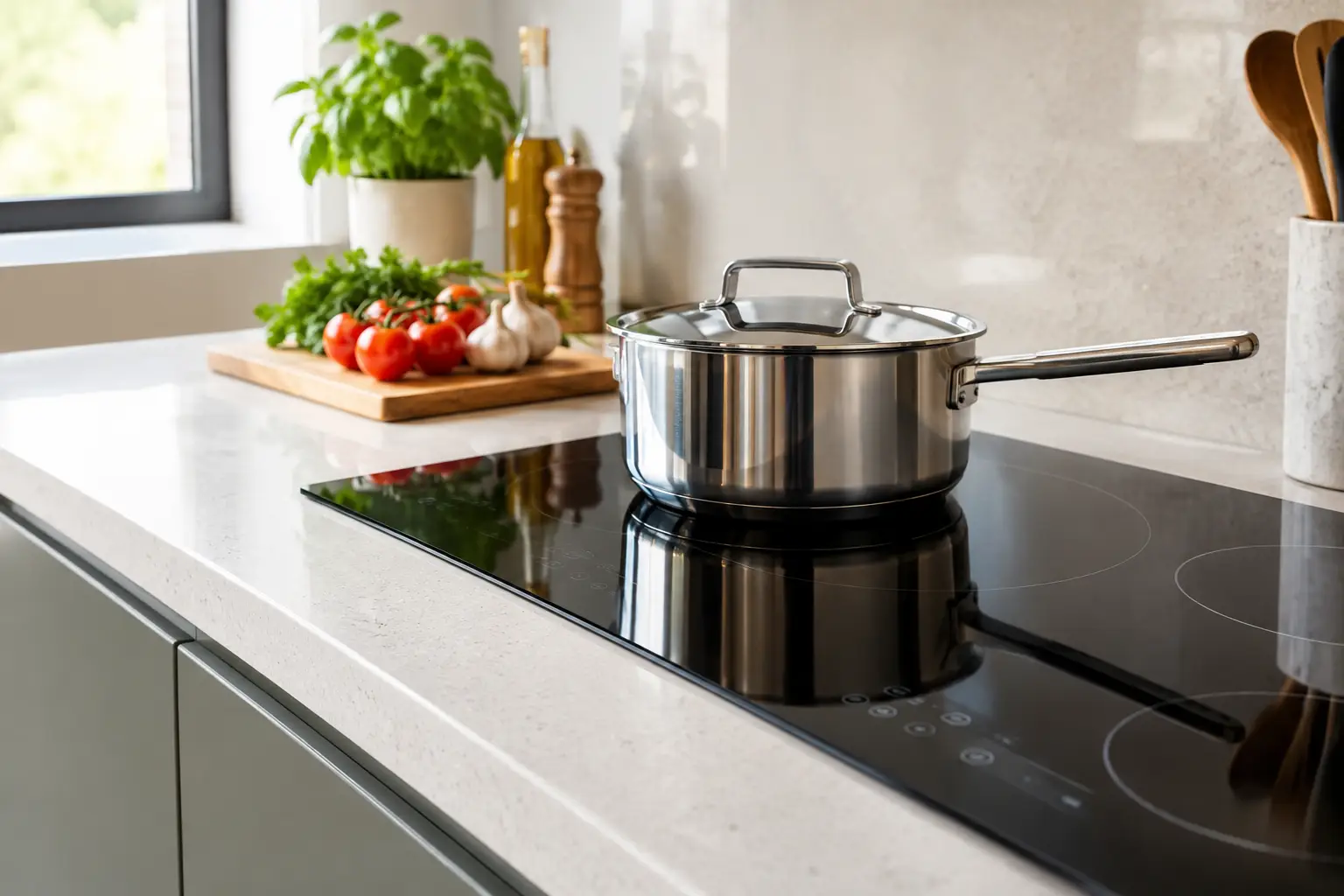
A new hob can make a surprisingly big difference to a kitchen that otherwise works well. If you are reading induction hob reviews while planning replacement doors, a worktop update or new handles, it helps to look beyond star ratings. The right hob needs to suit the way you cook, the pans you own, the worktop you choose and the electrics already in place.
Induction is popular for good reason. It is quick to heat, simple to wipe clean and can give a cleaner, more contemporary look than a gas or ceramic hob. But not every induction hob feels the same to use. Reviews are most useful when you know which comments matter for your own kitchen.
Induction hob reviews: the details worth checking
A five-star review saying a hob is “easy to use” is encouraging, but it does not tell you whether it will suit a busy family kitchen in St Neots, a compact galley kitchen in Sandy, or a more open plan space with a large island. Look for repeated comments about day-to-day use rather than one-off praise or complaints.
The most revealing reviews usually explain what the buyer cooks, how often they use the hob and whether they replaced gas, ceramic or an older induction model. Someone who only boils pasta a few times a week will judge a hob differently from someone preparing several pans at once every evening.
Pay close attention to comments on the controls. Many induction hobs use touch sliders or plus and minus buttons. A slider can be quick when moving from a gentle simmer to a high heat, while separate buttons may feel clearer for some people. Reviews can highlight whether controls are responsive with damp fingers, easy to see in bright light and simple to operate without accidentally changing another zone.
Noise is another point that is easy to overlook in a showroom and easy to notice at home. Induction hobs can make a faint hum, clicking sound or fan noise, especially on higher settings or when several zones are in use. This is normally not a fault. However, reviews can help distinguish normal operating sounds from a fan that users find intrusive in a quiet, open-plan room.
Do not judge a hob by the headline rating alone
A low score may be caused by delivery, packaging or an installation issue rather than the appliance itself. Equally, an early positive review cannot say much about reliability over several years. Read a spread of recent and older reviews, then look for themes.
If several owners mention that the markings wear away, the glass scratches easily or a particular control is awkward, take notice. If one person says the hob cracked but dozens of other reviews do not mention durability, it may be an isolated problem. Context matters more than a single dramatic comment.
Choose the hob around how you cook
The best induction hob is not necessarily the one with the most functions. It is the one that makes ordinary meals easier without making the kitchen harder to use.
A standard four-zone hob suits many households, but check the position and size of each zone. Two large pans placed side by side can feel cramped on some 60cm models. If you regularly use a wide frying pan, a stockpot and a saucepan together, look for reviews that mention real pan spacing rather than simply the number of zones.
Flexible zones are useful when you cook with a griddle, fish kettle or large casserole dish. They allow two zones to work as one longer cooking area. This can be helpful, but it is worth checking whether the flexible zone heats evenly and whether it still performs well with smaller pans. It depends on what you genuinely cook with, not just what looks impressive on a specification sheet.
A wider 75cm or 80cm hob gives more room, although it may require a larger worktop cut-out and different cabinetry beneath. If you are refreshing existing units rather than replacing the whole kitchen, this needs checking before you fall in love with a particular model. A sensible choice that fits properly is far better than forcing an appliance into a layout that was never designed for it.
Useful features, without paying for things you will not use
Power boost is one feature many homeowners appreciate. It delivers extra heat for quickly boiling water or searing food, then returns the zone to its normal power. Reviews can reveal whether it is genuinely effective and whether using boost on one zone limits power available to others.
A timer is helpful, particularly if it can switch a zone off rather than simply sound an alarm. A pause function can also be handy when the doorbell rings or you need to deal with a child, although it is not essential for everyone. Some hobs offer automatic pan detection, keep-warm settings and links to compatible extractor hoods. These are convenient additions, but they should not distract from clear controls, good zone layout and reliable performance.
Check your pans before changing to induction
Induction works through magnetic contact between the hob and the pan. Cast iron and many stainless-steel pans are suitable, while aluminium, copper and glass pans may not be unless they have an induction-compatible base. A simple magnet test can offer an initial guide: if a magnet sticks firmly to the base, the pan should usually work.
That said, compatibility is not the whole story. Thin-based pans may make more noise or heat less evenly than heavier quality pans. Some reviewers blame the hob when the issue is actually the cookware. If your favourite pans are older or have slightly warped bases, allow for the possibility that replacing a few pieces may improve the experience.
Also consider the base size. A very small pan on a large zone may not be detected, while a pan base that is much wider than the marked area may not heat evenly. Good induction hob reviews often mention the cookware used, which makes them more valuable than general comments alone.
Fitting matters as much as the appliance
An induction hob may look like a straightforward swap, but the fitting details deserve proper attention. Most models need a suitable electrical supply and must be installed by a qualified electrician. The required load varies, and some hobs can be configured to limit their power where the existing supply makes that necessary. A power limit can be practical, but may affect how many zones can run at full output at once.
Ventilation beneath the hob is also important. Induction appliances have internal cooling fans, so manufacturers set clear requirements for the space below and around the unit. Drawers, ovens and cupboards can often be accommodated, but only if the product instructions allow it. Never assume that a like-for-like worktop cut-out means every new hob will fit safely.
If you are replacing a worktop as part of a kitchen refresh, this is the ideal time to confirm the hob dimensions, the cut-out, the distance from walls and any required ventilation. It avoids unnecessary alterations after the new surface has been fitted. The same applies to an extractor: induction creates steam and cooking odours just like any other hob, so ventilation still needs considering.
See the controls and finishes before deciding
Online induction hob reviews are helpful, but they cannot show you how a black glass surface will sit alongside your chosen worktop, or whether the control layout feels natural to you. Fingerprints, pan movement, edge trims and the visibility of markings are all easier to judge in person.
At the Replacement Kitchen Doors To Size showroom near St Neots, you can compare worktop samples with appliance finishes while discussing what can work with your existing kitchen layout. This is particularly useful if you are updating doors and worktops but keeping the same cabinet positions. Practical advice at the planning stage can prevent a small appliance decision from becoming an avoidable fitting problem.
A well-chosen induction hob should make everyday cooking feel easier while fitting comfortably into the kitchen you already enjoy using. Bring your measurements, think about the pans and meals you use most, and give yourself the chance to compare the details before committing.