How to Fit Soft Close Hinges to Kitchen Doors
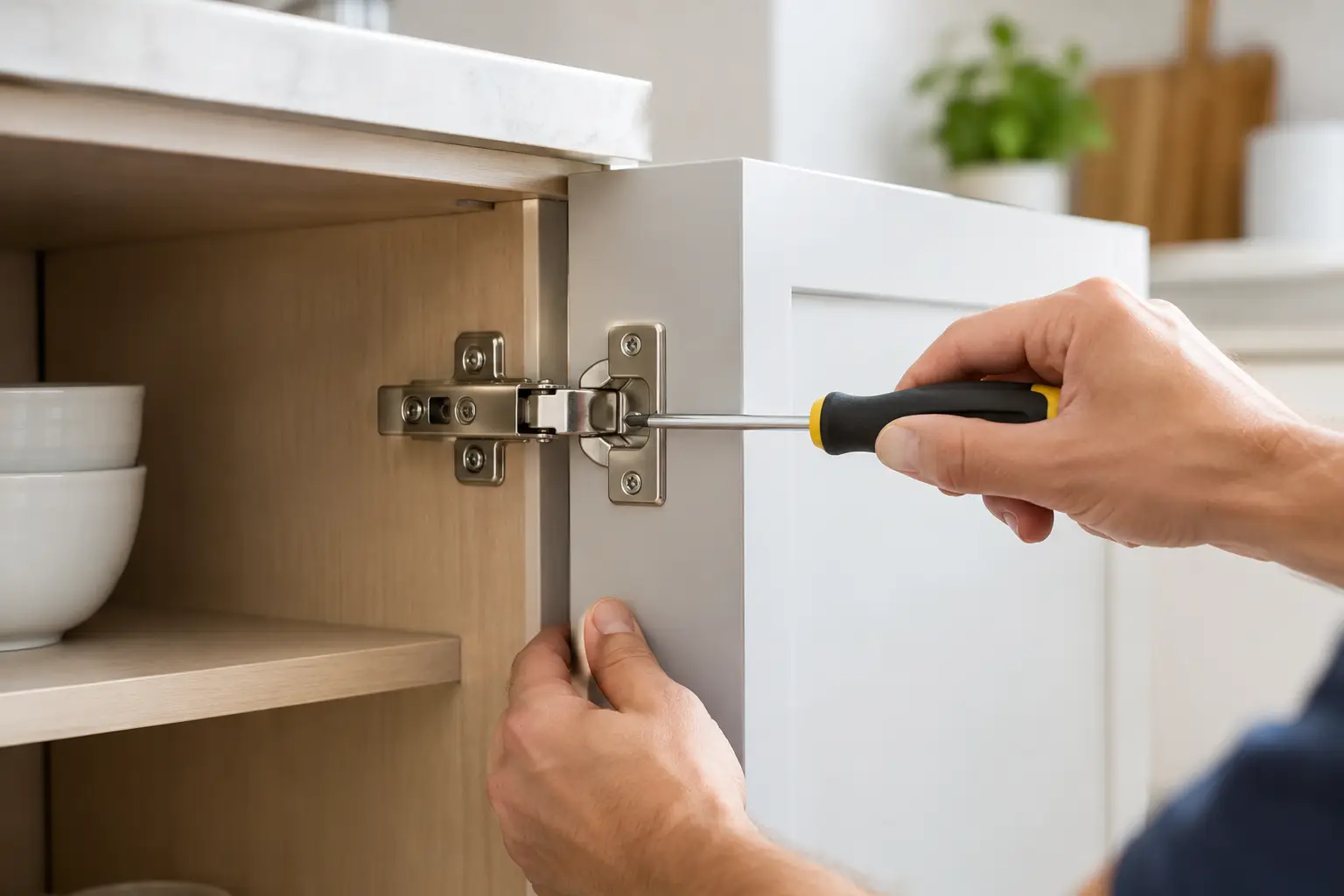
A kitchen door that bangs shut can make even a well-kept kitchen feel older than it is. Learning how to fit soft close hinges is a practical way to make replacement doors feel more refined, reduce everyday noise and protect cabinet edges from repeated impact. The good news is that many existing kitchen units can be updated without replacing the cabinets themselves – provided the hinges, doors and drilling positions are chosen carefully.
For homeowners who like their present kitchen layout but want it to work and look better, new doors with soft-close hinges can be one of the most noticeable finishing touches. It is a small change in principle, but one you use every day.
What soft-close hinges do
A soft-close hinge slows the door during the final part of closing, guiding it gently against the cabinet rather than allowing it to hit the frame. Most modern concealed kitchen hinges have this mechanism built in, although add-on soft-close dampers are also available for certain older hinge types.
The benefit is not simply a quieter kitchen. Soft closing can help reduce wear on doors, cabinets and handles, particularly in busy family kitchens where doors are regularly shut with a little more force than intended. It also gives replacement kitchen doors a more up-to-date feel, even where the original units are still structurally sound.
Not every kitchen needs the same hinge. The right choice depends on how the door sits over the cabinet, where it is positioned and whether the unit has a face frame or a frameless interior. This is why measuring and checking the existing hinge arrangement before ordering doors is so worthwhile.
Before you fit soft close hinges, check compatibility
Most modern kitchen doors use concealed 35mm cup hinges. The circular cup is recessed into the back of the door, while the hinge arm connects to a mounting plate fixed inside the cabinet. If your existing doors use this familiar arrangement, changing to soft-close hinges may be straightforward.
However, it is still essential to check more than the cup size. Look at the distance between the hinge cup and the edge of the door, often called the cup setback. Check the position of the screw holes, the number of hinges on each door and the type of door overlay. A full-overlay door covers most of the cabinet side; a half-overlay door shares a cabinet side with another door; an inset door sits within the cabinet opening. Each arrangement requires a compatible hinge.
Older kitchens can present a few more variables. The cabinets may have different mounting plates, non-standard drilling patterns or hinge positions that have shifted over time. A replacement door can usually be drilled to suit, but it is better to work from accurate measurements than assume that every cabinet is standard.
How many hinges does a kitchen door need?
Door height and weight determine how many hinges are required. A typical wall-unit door may need two hinges, while taller larder doors often need three, four or more. Heavier doors in solid-look finishes, or doors fitted with storage racks, may also need extra support.
Too few hinges can cause the door to drop, pull away from the cabinet or close poorly. Too many are not automatically better either, as each hinge needs to be accurately aligned. If you are replacing several doors, a practical discussion about door size, material and hinge positions can prevent problems later.
Tools and parts you will need
For a straightforward replacement door installation, you will generally need a tape measure, pencil, screwdriver or drill-driver, small spirit level and suitable screws. A 35mm Forstner bit is used to drill hinge cups where the replacement doors have not already been prepared. A hinge jig can make drilling more consistent, especially if you are fitting several doors.
Many made-to-measure replacement doors can be supplied with hinge holes drilled in the right positions. This removes one of the more precise parts of the job and helps ensure the door matches the existing cabinet. It is particularly useful when you are refreshing a whole kitchen rather than changing one door.
Choose hinges and mounting plates from a reliable range rather than mixing unknown parts. Hinges from different systems can look similar but may not sit or adjust in quite the same way. A good-quality soft-close hinge should open and close smoothly, remain stable after adjustment and be suitable for the weight of the door.
How to fit soft close hinges step by step
Start by removing the old door. Open it fully, support its weight and release or unscrew the existing hinges from the mounting plates. Keep one of the original doors nearby as a reference, especially if you are matching the hinge positions on a new door.
If the new door is pre-drilled, place the hinge cup into each hole and secure it with the supplied screws. The hinge should sit flat in the recess without rocking. Avoid overtightening, as this can damage the door surface or strip the screw hole.
Where drilling is required, mark the hinge positions carefully on the back of the door. The standard 35mm cup hole needs to be drilled to the correct depth – deep enough for the cup to sit flush, but not so deep that it breaks through the front face. This is the stage where patience matters most. It is sensible to practise on an offcut if you have not used a Forstner bit before.
Next, attach the mounting plates inside the cabinet if the existing plates are not compatible with the new hinges. Use the same vertical position as the hinge cup where possible. Clip or screw the hinge arms onto the mounting plates, then close the door gently to see how it sits.
At this point, do not expect perfection. Concealed hinges are designed to be adjusted after fitting.
Adjusting the door for an even finish
Most soft-close hinges have three adjustment directions. The side-to-side adjustment sets the gap between neighbouring doors. The depth adjustment moves the door closer to or farther from the cabinet. The height adjustment, usually made through the mounting plate screws, raises or lowers the entire door.
Make small changes, one adjustment at a time. Check the gaps around the door, then open and close it several times. The aim is an even reveal, a door that does not rub against another door or drawer front, and a gentle close without catching the cabinet.
If a door springs back instead of closing properly, it may be out of alignment, the hinge may be unsuitable for the overlay, or the soft-close mechanism may be too strong for a very light door. Some hinges allow the soft-close action to be switched off on one hinge for lighter doors. This is useful, but it depends on the hinge model.
Common fitting problems and what they mean
A door that sits low on one side is usually a height issue or a sign that the mounting plate screws need tightening. A door that catches another door often needs a side-to-side adjustment. If it protrudes at the front when closed, adjust the depth so it sits correctly against the cabinet.
Hinges cannot always compensate for a cabinet that is out of square, loose or damaged. If the unit itself has moved, it may need securing before fitting new doors. Similarly, chipped screw holes may need repair or a different fixing position. Replacing doors and hinges can refresh a kitchen very effectively, but it works best when the cabinets remain sound and level.
It is also worth considering handles, drawer fronts and worktops at the same time. A soft-close door feels more complete when the rest of the kitchen details are working together, whether you prefer a simple shaker style, a modern slab door or something more traditional.
See the options before you decide
Hinges are hidden, but their effect is obvious every time you use the kitchen. Seeing replacement door samples in person can help you judge not only the colour and finish, but also the weight of the door, the quality of the closing action and which style suits your existing units.
At the Replacement Kitchen Doors To Size showroom near St Neots, homeowners can compare door options, discuss measurements and get practical advice on hinges, handles, worktops and other finishing touches. For properties across Little Paxton, Huntingdon, Sandy, Biggleswade, Bedford and nearby villages, that local guidance can make the difference between a door that merely fits and a kitchen refresh that feels properly considered.
If you are unsure whether your current cabinets can take soft-close hinges, bring a few clear measurements and photographs of the existing hinges to the showroom. A closer look at what is already in place is often the simplest route to a quieter, better-fitting kitchen you will enjoy using every day.