Door Hinge Types for Replacement Kitchen Doors
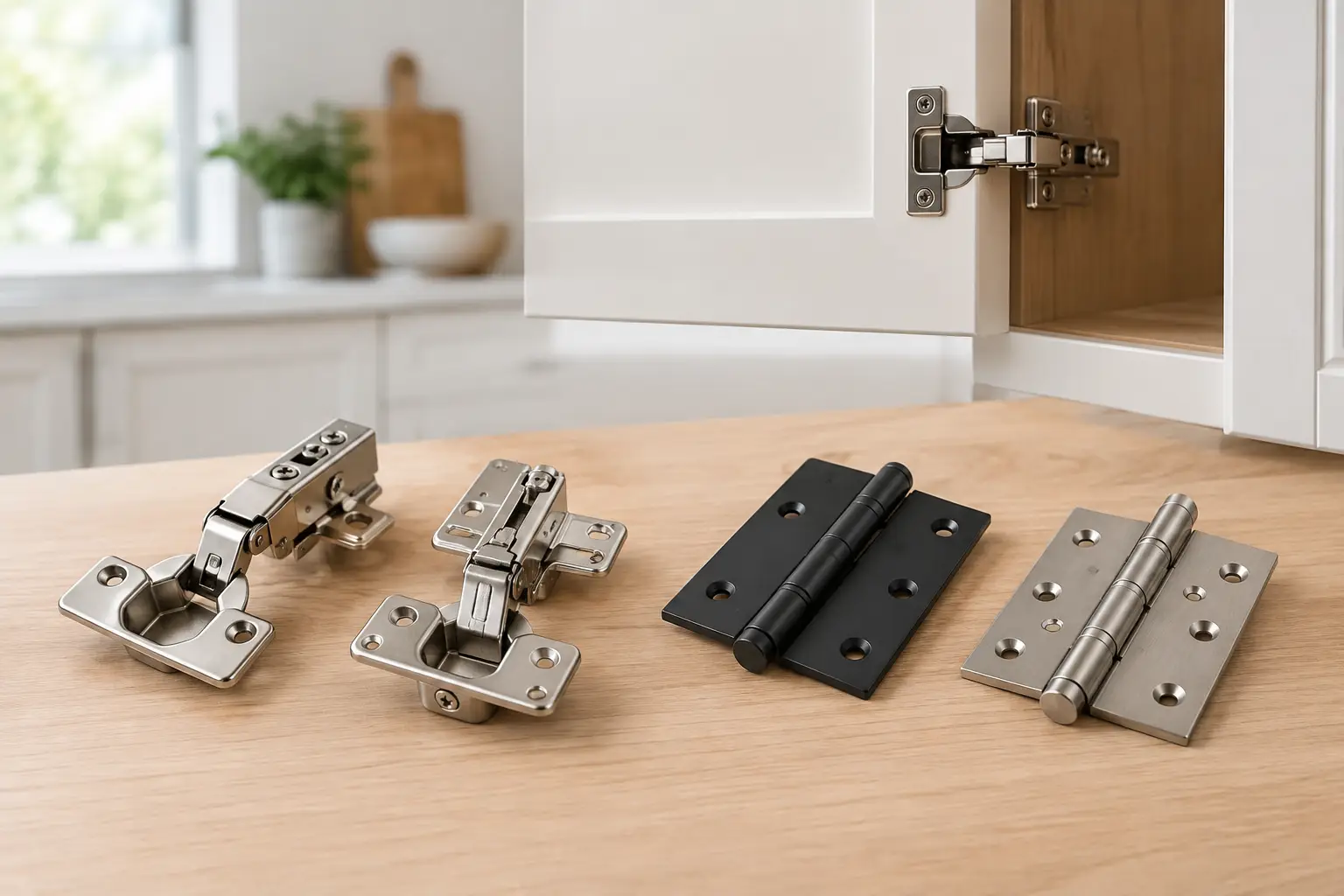
A replacement kitchen door can look exactly right in the showroom, yet still feel awkward at home if the hinges are not suited to the cabinet. The right door hinge types affect how far a door opens, whether it sits neatly against neighbouring units and how quietly it closes. They are a small component with a very noticeable effect on everyday use.
If you are refreshing the kitchen you already have, hinges deserve a little attention before ordering doors. In many cases, existing cabinets can take new doors and modern hinges very successfully. The key is matching the hinge to the cabinet construction, door style and the space around it.
Why hinges matter when replacing kitchen doors
Kitchen hinges do more than hold a door in place. They control the door’s position, movement and adjustment. A good-quality concealed hinge allows fine adjustment after fitting, which helps create even gaps between doors and drawer fronts.
That adjustment is particularly useful in older kitchens. Cabinets may have settled slightly over time, walls may not be perfectly true and original doors may have been fitted years ago. A suitable hinge gives an installer room to make the finished kitchen look tidy rather than forcing a door to follow every minor imperfection in the units.
It is also worth remembering that a door’s weight matters. A tall pantry door, a wide larder door or a solid timber-style door may need more hinges than a small wall-cabinet door. Fitting too few can lead to sagging, uneven gaps and strain on the cabinet side over time.
The main door hinge types for kitchen cabinets
Most modern replacement kitchen doors use concealed cabinet hinges, often called European hinges or cup hinges. The round cup is set into the back of the door, usually in a 35mm drilled hole, while the mounting plate fixes to the cabinet. Once the door is closed, the working parts are largely hidden.
Within this familiar style, the hinge arm and mounting position determine how the door sits on the cabinet.
Full overlay hinges
A full overlay hinge is used when the door covers most of the cabinet side panel. This is one of the most common arrangements in modern fitted kitchens, creating a clean run of doors with only a narrow gap between them.
Full overlay doors work well where each cabinet has its own visible side or where doors meet at a shared cabinet division. They give a contemporary, simple appearance and are often the most straightforward option for replacement doors. However, the overlay must be measured correctly. A door that covers too much can clash with the next door, a wall or an appliance housing.
Half overlay hinges
Half overlay hinges are normally used where two doors share one central cabinet side panel. Each door covers roughly half of that panel, allowing both to close without fouling one another.
This arrangement is common on double base units and wall cupboards. It can look very similar to a full overlay kitchen from the front, but the hinge is different. Reusing the wrong hinge is one of the easiest ways to end up with doors that sit too close together or leave an unusually wide gap.
Inset hinges
Inset hinges are for doors that sit inside the cabinet frame or opening rather than covering the front edge of the cabinet. The door face finishes flush with, or just within, the cabinet sides.
This can suit more traditional kitchen styles and framed cabinetry, but it needs careful measuring. Inset doors have less tolerance for a cabinet that is out of square, and clearances around all four edges need to be consistent. A showroom discussion can be helpful here, especially if you are changing from an existing overlay door to a different look.
Wide-angle hinges
Standard concealed hinges often open to around 95 to 110 degrees. That is adequate for many cupboards, but it is not always the most practical choice. A wide-angle hinge can open further, often to around 155 or 170 degrees, making it easier to reach into corner units, pull-out storage or cupboards close to a wall.
The trade-off is space. A door that opens very wide needs enough room beside it. It may not suit a unit immediately next to a freestanding appliance, a radiator or a return wall. It is a useful option where access is restricted by the cupboard layout, not simply because a larger opening angle sounds better.
Soft-close hinges
Soft-close is a closing mechanism rather than a separate door style. It slows the final part of the closing movement so the door shuts gently rather than banging against the cabinet.
For most kitchen makeovers, soft-close hinges are a worthwhile practical upgrade. They make everyday use quieter and kinder to doors and cabinets, particularly in busy family kitchens. The mechanism does add cost compared with a basic hinge, and very light or narrow doors may need the soft-close setting adjusted so they close properly. Quality hinges generally allow this to be fine-tuned.
Clip-on and screw-on hinges
Many current concealed hinges are clip-on. The hinge arm clicks onto a mounting plate fixed to the cabinet, making doors easier to remove for fitting, cleaning or adjustment. Screw-on designs attach more directly and may be found in older kitchens.
A clip-on hinge can make installation and future maintenance easier, but it cannot be assumed that every existing mounting plate is compatible. Hinge brands and plate systems vary. When retaining cabinets, it is usually best to assess the existing hinge positions and plates rather than ordering based on appearance alone.
Check the cabinet before choosing replacement doors
The most suitable hinge is determined by the cabinet, not just by the door you like. Before choosing, look at how the current door is fitted and where it sits when closed. Is it overlaid on the cabinet side, set inside the opening or paired with another door on a shared panel?
Measure the existing door height and width, then note the hinge cup positions. Standard 35mm cups are common, but the distance from the cup to the door edge and the spacing between hinges also matter. A replacement door can be drilled to suit, provided there is enough material around the drilling point and the measurements are accurate.
Check the cabinet sides too. Chipboard that has swollen around old screw holes, loose mounting plates or a damaged cabinet edge may need repairing before a new door is fitted. Replacing doors is often far more economical than replacing a whole kitchen, but it still works best when the cabinet carcasses are sound and secure.
If you are adding thicker doors, changing from vinyl-wrapped doors to a painted-style finish, or choosing large handleless fronts, ask whether the hinge quantity should change. Two hinges may be enough for a short door, while a taller door may need three or four to stay aligned.
Hinges and the look of your refreshed kitchen
Although concealed hinges are largely out of sight, they influence the finished appearance. Consistent door gaps, level lines and doors that close flush all depend on careful adjustment. This is especially noticeable with handleless styles, shaker doors and darker colours, where uneven spacing can stand out.
Hinges also need to work alongside handles, worktops and nearby appliances. For example, a long handle on a door next to a wall may limit the opening angle. A dishwasher door or pull-out bin unit may need clearance from adjacent doors. These are the practical details that are easier to spot when looking at samples and discussing your kitchen layout in person.
For homeowners around St Neots, Little Paxton, Huntingdon and the surrounding villages, bringing a few measurements and photographs to the showroom can make the conversation much more useful. You can compare door styles and finishes while getting clear advice on what is likely to fit your existing cabinets.
When existing hinges can stay – and when to replace them
If your current hinges are good quality, move smoothly and match the new door drilling, they may be suitable to retain. This can reduce the cost of a replacement-door project and is often sensible where the kitchen is relatively modern.
Replacement is usually the better route if hinges are rusty, loose, bent, noisy or unable to hold adjustment. It is also sensible to change them if you want soft-close closing, a wider opening angle or a different overlay arrangement. A fresh set of correctly matched hinges gives new doors the reliable feel they deserve.
Do not judge a hinge only by whether the old door opens. The question is whether it will support and position the new door properly for years to come. A small investment at this stage can prevent rubbing doors, repeated adjustment and frustration later.
A kitchen refresh should make daily life easier, not create fiddly problems that were not there before. Take a close look at the hinges while planning your replacement doors, and bring any uncertainty to a local showroom visit. Seeing the options and talking through your cabinet layout is often the simplest way to choose with confidence.