Best Pull Out Bin Systems for Existing Kitchens
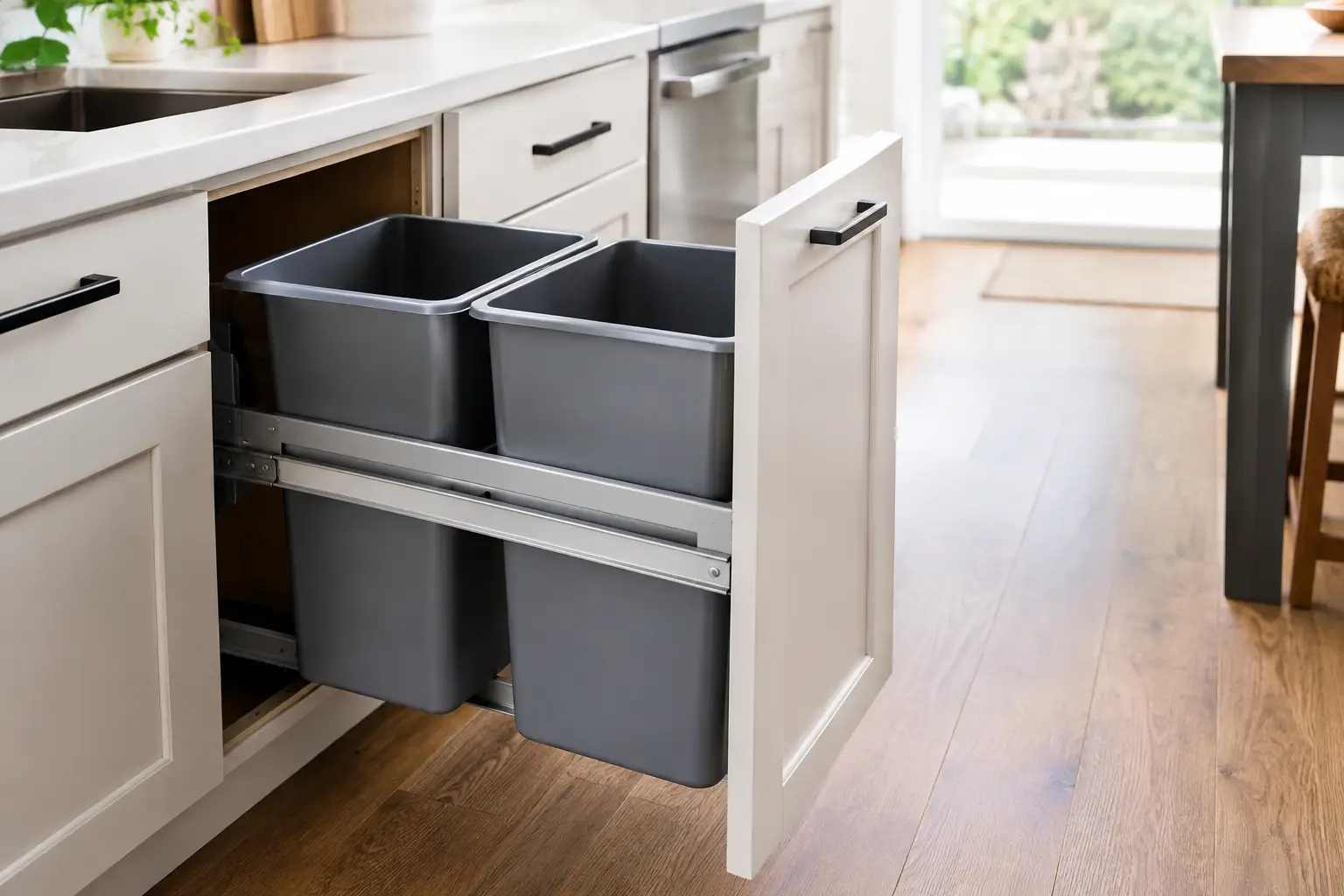
A kitchen bin is easy to ignore until it becomes awkward. A lid catches on a cupboard door, recycling takes over the utility room, or a freestanding bin sits exactly where somebody needs to walk. The best pull out bin systems put waste and recycling where you need them, then keep them out of sight when you do not.
For many homeowners, this is one of the most useful practical upgrades to make when refreshing an existing kitchen. If your cabinets are sound and the layout works, you may not need a full refit to make daily cooking, clearing up and recycling easier. A well-chosen pull-out bin can be added alongside replacement doors, new handles or a worktop to make the whole room feel more considered.
What makes a pull-out bin system worth choosing?
A pull-out bin system is fitted inside a base cabinet, usually behind a hinged door or within a drawer-front unit. It uses runners or a frame to bring the bins forward, making it easier to scrape plates, sort packaging and replace liners without bending into the back of a cupboard.
The main benefit is not simply a tidier look. It is convenience. Positioning the bins close to the sink or food-preparation area reduces unnecessary steps while cooking and washing up. It also gives recycling a proper home, rather than leaving bags, boxes and spare containers on the floor.
The right system should suit the cabinet you already have, the way your household handles waste, and the space available around plumbing or internal shelves. The biggest bin is not always the best choice. A large capacity is helpful for a busy family, but it may take up a cupboard that would otherwise be more useful for pans or food storage.
Best pull out bin systems: the main types
There is no single best option for every kitchen. The most suitable design depends on whether you are working with a hinged cupboard, a drawer unit, a narrow cabinet or a larger under-sink space.
Door-mounted pull-out bins
Door-mounted systems are attached to the cupboard door, so the bin frame pulls forward as the door opens. They are a good choice where you want a simple, integrated arrangement behind an existing door. The contents are immediately accessible, and the door front remains visually consistent with the rest of the kitchen.
This style needs a suitably strong and well-aligned door. Older hinges or a heavy solid door may need checking before a loaded bin system is fitted. It is also worth allowing room for the bins to clear internal cabinet edges and any neighbouring handles.
Cabinet-mounted pull-out frames
A cabinet-mounted frame is fixed to the base or sides of the cupboard, with runners that pull the bins forward independently of the door. In some arrangements, the existing door can be attached to the frame; in others, you open the door first and then pull the bins out.
These are often a flexible option for kitchen makeovers because they can work within a standard base unit without changing the overall layout. A good-quality runner system matters here. Smooth runners and a stable frame make the unit easier to use when the bins are full, and they help it stand up to everyday family life.
Pull-out bins for drawer-front units
If your kitchen has deep drawers or you are replacing drawer fronts as part of a refresh, an internal bin drawer can give a particularly neat result. Waste and recycling sit within a pull-out drawer behind a matching front, so the storage looks like part of the kitchen rather than an add-on.
This option can look very clean, especially in more contemporary kitchens. However, it needs careful planning. The drawer depth, runner capacity, front height and available internal width all affect what can be fitted. It may also be less straightforward to adapt an existing cupboard than a standard pull-out frame.
Narrow recycling pull-outs
A slim pull-out with one or two narrow containers can make excellent use of an otherwise awkward space. It can be useful beside a sink, at the end of a run of cabinets, or in a narrow base unit where a standard bin arrangement would not fit.
The trade-off is capacity. A narrow system may need emptying more often, so it is usually better for recycling, compostable waste or households with lower volumes of rubbish than as the only kitchen bin.
Choose capacity around your household, not the brochure
Bin capacity is commonly measured in litres, but the practical question is how often you want to empty it. A couple who cook most evenings may be happy with two medium containers. A family with children, packed lunches and regular home cooking may benefit from a larger general-waste bin plus separate recycling sections.
Two-compartment systems are often enough for general waste and mixed recycling. Three or four compartments can be useful where you want to separate food waste, glass, paper or other recycling at source. They do, however, divide the available cupboard space into smaller sections. Before choosing more compartments, consider the collection rules in your area and whether you will genuinely use each one.
Food waste is another decision worth making early. A small removable caddy is easy to carry to an outdoor bin and can help keep the main cupboard cleaner. Look for containers with handles and lids that are simple to wipe down. Complicated clips and narrow corners can become frustrating very quickly.
Measure the cabinet properly before you buy
Most fitting problems come down to measurements taken from the outside of a cabinet rather than the usable space inside it. The internal width, depth and height are what matter. Measure around hinge plates, pipework, shelves, internal bracing and any central divider, not just the empty-looking opening.
For an under-sink cabinet, check where the waste pipes run. A full-depth bin unit may not be possible, but a shallower or offset system can often make better use of the space than a freestanding bin. Take note of the door hinges too, as these can reduce usable width close to the front edge.
You should also consider how far the system projects when open. In a compact kitchen, a bin that blocks a walkway or clashes with an opposite drawer will soon become a nuisance. A showroom conversation can be valuable here, particularly if you bring cabinet measurements and a few photographs of the inside of the unit.
Look for details that make everyday use easier
The runners and frame are the working parts of a pull-out bin system. A cheaper unit may seem fine when empty, then become stiff or unstable once filled with bottles, tins and food waste. Choose a system designed for the expected load, with solid fixings and smooth action.
Soft-close runners are a pleasant extra, but they are not essential for every kitchen. They are most worthwhile where children use the kitchen regularly or where you want a quieter, more refined feel. More important is that the bins are easy to lift out, liners can be secured neatly, and the unit can be cleaned without dismantling half the cupboard.
A lid can help contain odours, though it may slightly reduce quick access. Some households prefer an open top inside a closed cabinet because the cupboard door already conceals the bins. Others value individual lids for food waste and recycling. There is no wrong choice, provided the arrangement matches how you cook and clear up.
Make it part of a wider kitchen refresh
A pull-out bin has a small footprint, but it can change the way a kitchen functions. It is especially effective when combined with other targeted updates: replacement doors to modernise tired cabinets, new handles for a cleaner finish, or a fresh worktop that makes an older layout feel current again.
Keeping your existing cabinet layout can save disruption and preserve storage that already works for you. Rather than replacing a whole kitchen because one area feels inconvenient, it is often more sensible to address the problem directly. A better bin system near the sink, for example, may make more difference to daily life than changing perfectly serviceable cabinets.
At Replacement Kitchen Doors To Size near St Neots, homeowners can compare door finishes and practical kitchen options in person, rather than trying to judge sizes and materials from a screen. Bringing measurements of your cabinet, along with photos of the inside and surrounding units, gives you a useful starting point for practical advice.
The best pull-out bin system is the one that fits your cupboard accurately, suits your household’s waste routine and makes the busiest part of the kitchen easier to use. A few careful measurements now can turn an awkward cupboard into one of the most useful spaces in the room.