Are Quartz Worktops Heat Resistant at Home?
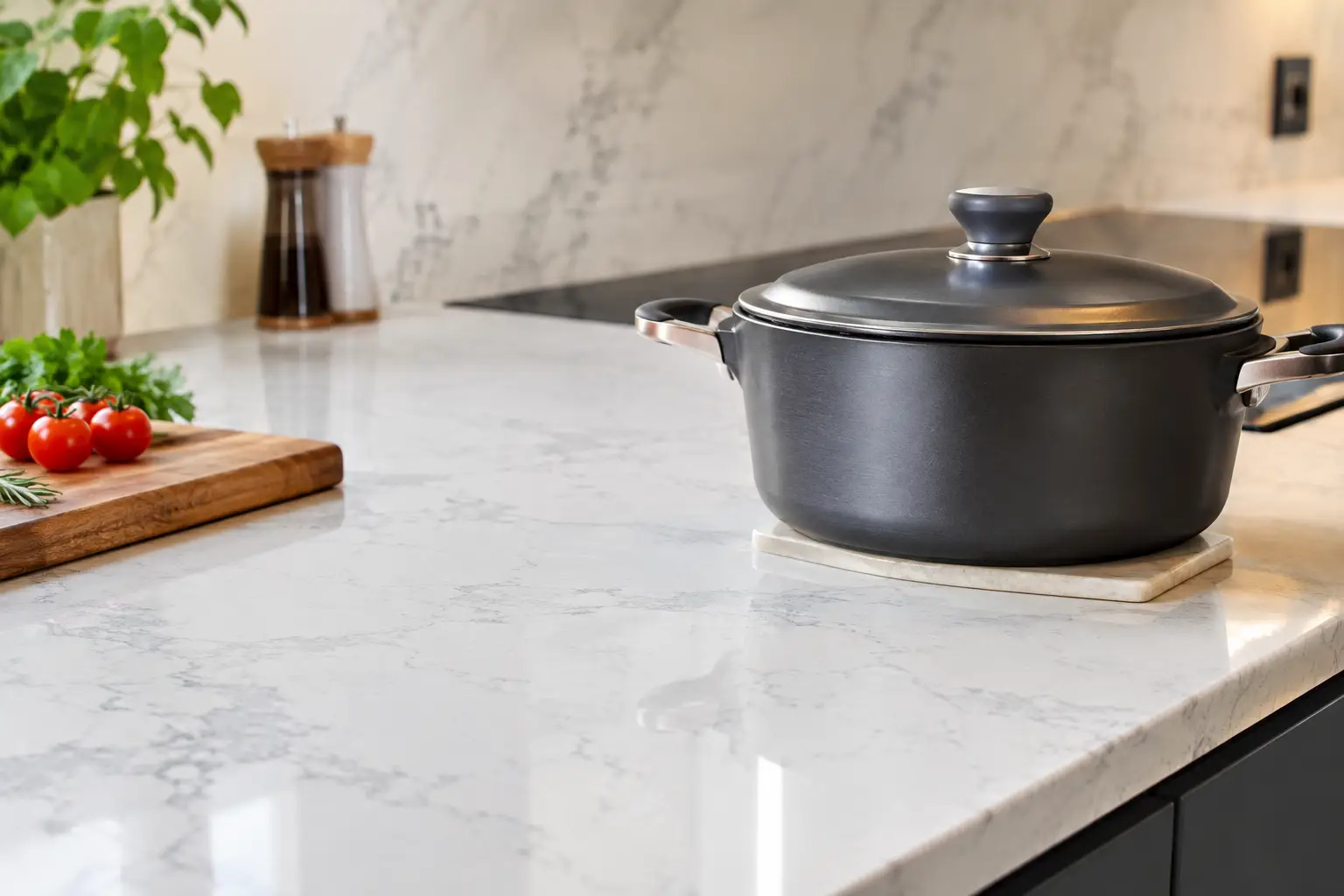
A hot pan lifted straight from the hob can feel harmless when dinner is on the table and everyone is hungry. But it is one of the few everyday habits that can spoil an otherwise well-planned kitchen refresh. So, are quartz worktops heat resistant? Yes, to a point – but they are not heatproof, and placing very hot cookware directly on them is a risk not worth taking.
Quartz is a popular choice for homeowners updating a kitchen they already like. It gives a clean, substantial finish, works well with both modern and traditional replacement doors, and is straightforward to look after. Understanding how it responds to heat will help you choose it with confidence and keep it looking its best for years.
Are Quartz Worktops Heat Resistant Enough for Daily Cooking?
Quartz worktops cope well with the normal warmth of a busy kitchen. A warm plate, a mug of tea or a bowl fresh from the microwave will not usually cause a problem. The issue is sudden, intense heat – particularly from pans, roasting trays, casserole dishes and slow cooker inserts.
Engineered quartz is made from natural quartz combined with resins and pigments. The quartz itself is hard and stable, but the resin content is more sensitive to high temperatures and rapid changes in temperature. Put a scorching-hot pan directly on the surface and the heat can affect that resin, potentially leaving a dull patch, discolouration or, in more serious cases, a crack.
The precise level of heat resistance varies between suppliers and product ranges. Thickness, colour and the particular composition of the slab can all make a difference. That is why a simple rule works best: treat quartz as heat resistant for everyday use, but always use a trivet, heatproof mat or wooden board beneath hot cookware.
Why Thermal Shock Is the Main Concern
A quartz worktop does not have to be near an open flame to be damaged. Thermal shock is often the bigger concern. This happens when one small area of a cool surface is exposed to a sudden burst of high heat.
Think of a heavy cast-iron pan taken from a hot hob and set down in the same spot. Or a roasting tin coming directly from an oven at high temperature. Heat is concentrated underneath the cookware, while the surrounding worktop remains comparatively cool. That uneven change puts stress on the material.
A worktop near the hob is particularly worth planning carefully. It is the place where people naturally put pans down while serving or draining vegetables. A trivet stored in a drawer is easily forgotten, whereas one kept on the worktop or hung close to the cooking area is far more likely to be used.
Quartz is also not suitable as a surface for placing items straight from a barbecue, wood burner or outdoor pizza oven. Even if the worktop appears fine at first, repeated exposure can gradually affect its finish.
What about boiling water?
Boiling water spilled briefly on a quartz worktop is unlikely to cause damage, especially if it is wiped up promptly. A kettle itself is normally fine too, provided it is sitting on its base as intended. The greater concern is a metal pan or tray that has retained intense heat and transfers it directly into the surface.
Take care around boiling water taps as well. They are practical in a family kitchen, but it makes sense to keep a heatproof area nearby for hot pans and dishes. Good habits protect both the worktop and the people using the kitchen.
Heat, Colour and Finish: Does Your Choice Matter?
The general advice on hot pans applies to every quartz worktop, whether you choose a pale marble-effect design, a soft concrete look or a darker polished finish. However, how easily a mark is noticed can differ.
On a very light worktop, heat-related yellowing or dullness may be more visible. On a dark, highly polished surface, a change in sheen can stand out in certain light. A matt or textured finish can be more forgiving of fingerprints and day-to-day marks, although it should still be protected from extreme heat in exactly the same way.
This is one reason samples matter. A worktop might look very different under showroom lighting, daylight from a kitchen window and the warmer lighting used in the evening. Holding samples alongside your chosen replacement doors, handles and splashback ideas gives a much more realistic impression of the finished room.
Practical Ways to Protect a Quartz Worktop
Looking after quartz should not mean treating your kitchen like a museum. It simply means building a few sensible precautions into daily cooking.
Keep a trivet or heatproof mat beside the hob and oven, rather than relying on a tea towel. A tea towel is not designed to insulate against very hot cookware and can trap moisture against the worktop. Cork, silicone, cast iron or purpose-made stainless-steel trivets are all practical options, provided they have a stable base.
Use a chopping board for food preparation too. Quartz is highly scratch resistant, but not completely scratch proof. Cutting directly on it can blunt knives and may leave fine marks over time. A board also gives you a safe temporary place for a hot pan if you are plating up in a hurry.
For appliances that give off sustained heat, such as air fryers, slow cookers and coffee machines, follow the manufacturer’s placement guidance. Most are safe on a worktop, but steam and heat should not be trapped beneath wall units or directed constantly at a vulnerable edge or join. Wipe away condensation rather than allowing it to sit around appliance bases.
Avoid placing hot pans over seams, cut-outs or narrow sections around sinks and hobs. These areas have less continuous material and deserve a little extra care. A good installer will discuss where joins and cut-outs sit, but everyday use still matters.
Is Quartz a Good Choice for a Family Kitchen?
For many households, yes. Quartz combines a polished appearance with the practical advantages people want from a refreshed kitchen: a non-porous surface, good resistance to everyday stains and no need for regular sealing. It is well suited to food preparation, busy breakfasts, homework at the island and the occasional enthusiastic baking session.
The trade-off is that it is not the worktop to choose if you know hot pans will routinely be put down wherever there is space. In that case, you may prefer to consider a material with higher tolerance for direct heat, or plan a dedicated heatproof zone next to the cooker.
It is also worth considering the wider kitchen rather than choosing a worktop in isolation. A new quartz surface can make existing cabinets feel far more current when paired with replacement doors, updated handles, a new sink and tap, or better lighting. If the cabinet units are sound and the layout still works for your household, refreshing those visible elements can be a practical alternative to starting again from scratch.
What to Ask Before Ordering a Quartz Worktop
When comparing worktop samples, ask about the care guidance for the specific range rather than assuming every quartz product performs identically. Find out what the supplier recommends for hot pans, which cleaning products to avoid, and how the material should be supported around hobs, sinks and overhangs.
It also helps to be honest about how you use your kitchen. Do you cook several meals at once? Do children regularly make snacks at the island? Is the worktop likely to be used for serving Sunday lunch? These details help shape sensible choices around worktop thickness, edge profile, layout and accessories.
Seeing materials in person is particularly useful if you are weighing up quartz against laminate, solid surface or another option. At the showroom in Little Paxton, homeowners can compare colours and finishes alongside replacement kitchen doors, then talk through what will suit their room and routine rather than making a decision from a small image online.
A quartz worktop can be an excellent, long-lasting finishing touch for a kitchen makeover – just give hot pans a proper place to land. That small habit keeps the surface looking as good as the day it was fitted, while you carry on enjoying the kitchen you have refreshed.