A Kitchen Refacing Example for a Tired Kitchen
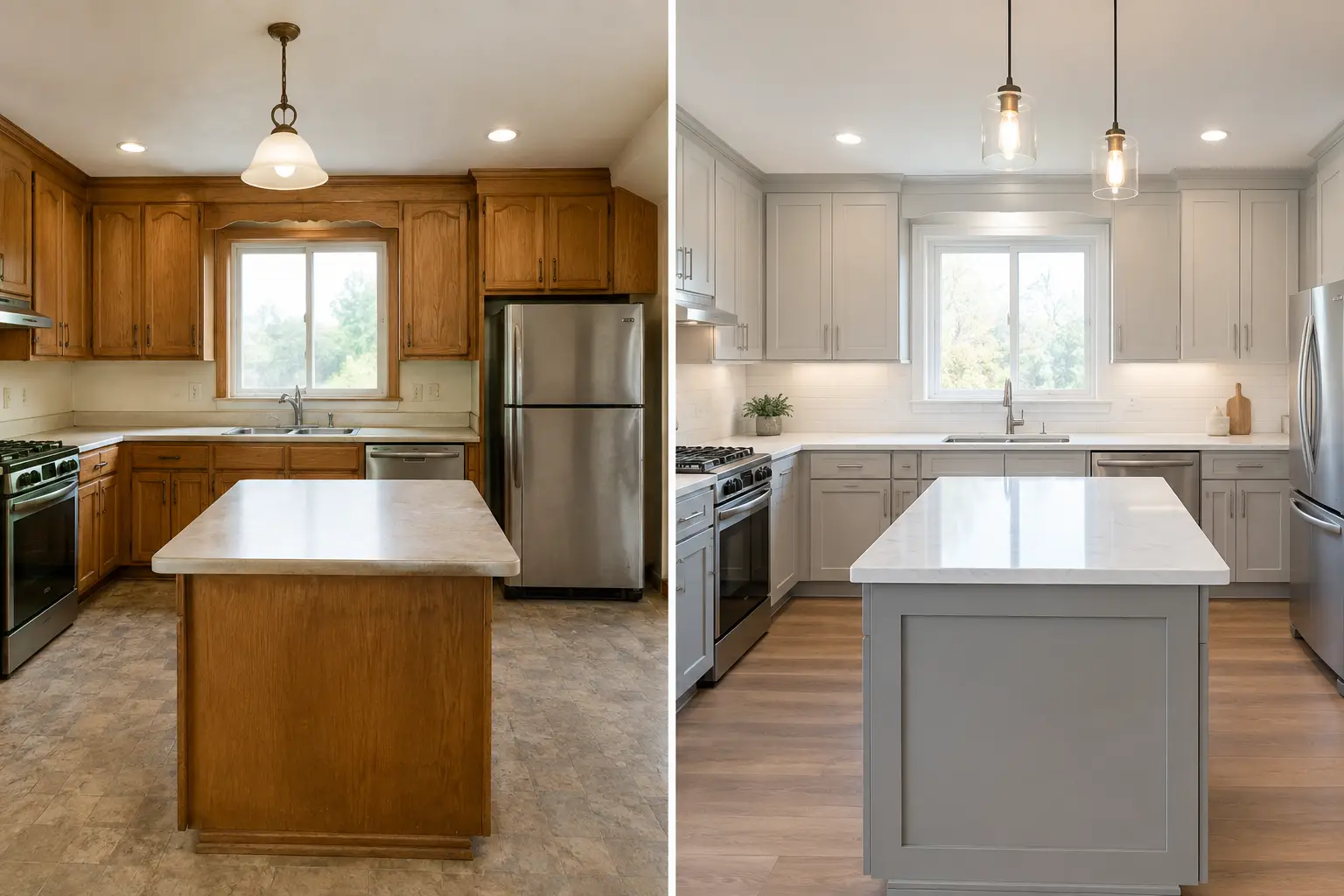
A kitchen can feel dated long before it stops working properly. Perhaps the oak-effect doors look heavy, the handles have seen better days, or the worktop is marked and difficult to keep clean. A kitchen refacing example shows how much can change when the cupboards themselves are still sound and the layout already suits the way you live.
For many homeowners, the most sensible starting point is not to remove every cabinet. It is to look closely at what is worth keeping, then refresh the visible and hard-working parts around it. New doors and drawer fronts can alter the character of the room; a new worktop, sink and tap can make it feel more practical every day.
A typical kitchen refacing example
Imagine a kitchen fitted around 15 years ago in a family home near St Neots. The cabinet units are sturdy, the drawers run smoothly and the owner is happy with the position of the hob, sink and fridge. The problem is appearance: medium woodgrain doors, curved silver handles and a dark laminate worktop make the room feel smaller and more dated than it needs to.
Rather than pay for a complete replacement kitchen, the owner keeps the existing cabinets. The old doors and drawer fronts are removed and replaced with made-to-measure shaker-style fronts in a soft matt grey. Slim brushed nickel handles give the units a cleaner outline without being overly decorative.
The dark worktop is changed for a lighter stone-effect surface, which reflects more light and creates a calmer contrast with the grey doors. A stainless-steel sink is replaced with an understated composite option, paired with a practical mixer tap. Small details, including matching plinths, end panels and cornice where needed, make the finished kitchen look considered rather than pieced together.
The layout has not changed, but the room has. It feels brighter, easier to clean and much more in keeping with the rest of the home. That is the value of refacing when the original cabinet layout is doing its job.
What changes in a refaced kitchen?
Kitchen refacing is sometimes used to describe different things, so it helps to be clear. In this type of makeover, the existing cabinet carcasses are retained where they are in good condition. The visible elements are then updated to suit the style, budget and practical needs of the household.
Replacement kitchen doors and drawer fronts usually make the biggest visual difference. A plain slab door can give a contemporary look, while a shaker design can feel more traditional or more modern depending on the colour, handle and worktop chosen. Gloss finishes can help bounce light around a compact kitchen, whereas matt finishes often give a softer, less reflective appearance.
Worktops are another major decision. Replacing a worn laminate surface can transform the look of the room, but it can also improve the way it works. The best choice depends on how the kitchen is used. A busy family may prioritise a forgiving, easy-care surface, while someone who enjoys baking may value a more substantial feel and a better area for preparation.
Handles, hinges, sinks, taps and lighting should not be treated as afterthoughts. They are the parts used every day. A comfortable handle, a tap that reaches the right areas of the sink and well-placed lighting can make a kitchen feel noticeably better to use, even if the layout stays exactly the same.
When keeping the existing cabinets makes sense
Refacing is a good option when the cabinet units are level, secure and free from serious water damage. Doors may be swollen, chipped or difficult to adjust while the carcasses behind them remain perfectly serviceable. If that is the case, replacing the fronts can be a sensible way to avoid unnecessary disruption and waste.
It also works particularly well when you already like the kitchen layout. Moving plumbing, electrics and appliances can add cost and complication to a full replacement. If the sink is in the right place, there is enough worktop space and the storage broadly works for your household, a facelift can concentrate the budget on the finishes you see and touch.
There are situations where a replacement kitchen is the better route. Cabinets affected by damp, badly damaged worktops around the sink, poor access, or a layout that creates daily frustration may need more than new doors. A narrow cooking area, lack of usable drawers or awkward appliance positions can be worth addressing properly. The useful question is not whether refacing is always cheaper, but whether it solves the problems you actually have.
Choosing a look that will last
A refaced kitchen does not need to follow every current trend. The strongest schemes tend to balance a style you genuinely like with finishes that will remain comfortable to live with over time.
For a smaller or darker room, lighter door colours and a pale worktop can help the kitchen feel more open. This does not mean everything has to be white. Warm neutrals, soft greys, muted greens and gentle blue-grey tones can all work well, particularly when samples are viewed in the room’s natural light.
Darker doors can look smart and grounded, but they often need enough light and contrast to avoid making the space feel enclosed. A light worktop, pale walls and thoughtful lighting can make a significant difference. Handle choice matters too: knobs and cup handles can add character, while bar handles or handleless styles give a quieter, more streamlined finish.
Samples are worth seeing in person. A colour that looks right on a mobile phone screen may appear cooler, warmer or darker under your kitchen lighting. At Replacement Kitchen Doors To Size, homeowners can compare door styles, colours, worktop samples and finishing details at the showroom in Little Paxton before making decisions at home.
Planning the practical details
Before choosing colours, take stock of how your kitchen works on an ordinary weekday. Which cupboard is difficult to reach? Are pan drawers more useful than shelves in a particular area? Is the bin arrangement working? Does the worktop near the kettle or toaster become cluttered? These small observations shape a more useful refurbishment.
You may be able to keep most of the kitchen while improving selected areas. For example, an awkward cupboard can sometimes be changed to drawers, a tired wall unit can be updated with a different door arrangement, or a new worktop can create a better surface around the hob. Appliances can also be replaced as part of the project if their size and position suit the existing units.
Measure carefully, especially in older kitchens where sizes are not always standard. Made-to-measure replacement doors can be useful where cabinet widths or heights do not match off-the-shelf dimensions. End panels, fillers, plinths and pelmets should be planned alongside the doors, not added as an afterthought. They are what bring the finished result together.
A showroom visit can prevent costly guesswork
Photos provide ideas, but they cannot tell you how a door finish feels, whether a handle is comfortable, or how a worktop edge looks next to a particular colour. Seeing options together is particularly helpful when you are retaining tiles, flooring or a splashback that must work with the new scheme.
A local showroom visit gives you space to compare choices without rushing. Bring a few photographs of your current kitchen, rough measurements if you have them, and a note of what you would most like to improve. It is often easier to narrow down a wide choice of styles once you can place samples side by side and talk through what is realistic for your existing units.
For homeowners in Little Paxton, St Neots, Huntingdon, Sandy, Biggleswade, Bedford and nearby villages, refreshing the kitchen you already have can be a practical way forward. Start with the cupboards, layout and surfaces you use every day, then choose changes that will make the room more pleasant to cook, eat and spend time in.