Solid Wood Versus MDF Doors for Kitchens
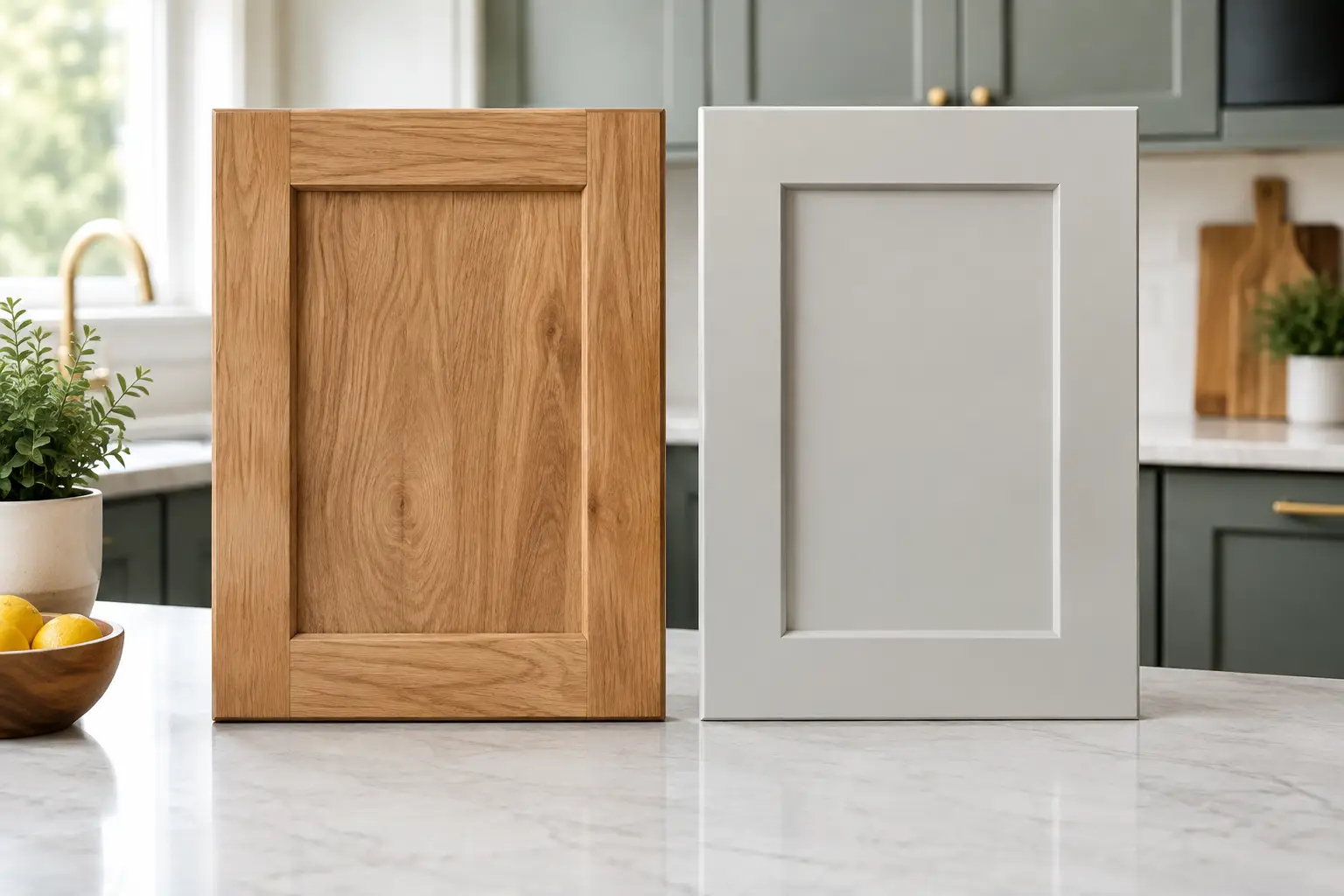
A kitchen door can look simple from the front, but the material beneath the paint or grain makes a real difference to how it feels, wears and costs. When comparing solid wood versus MDF doors, the best choice is rarely about one material being universally better. It is about the look you want, how you use your kitchen and how much natural variation you are happy to live with.
For homeowners who are keeping their existing cupboards and refreshing the visible parts, choosing the right replacement doors can bring a dated kitchen back to life without changing a layout that already works well.
Solid wood versus MDF doors: the practical differences
Solid wood doors are made from natural timber, often with a framed construction and a central panel. MDF, short for medium-density fibreboard, is an engineered board made from fine wood fibres pressed with resin. It is commonly used for painted kitchen doors, particularly doors with detailed routed or shaker-style designs.
Both can create a smart, durable kitchen when they are well made and fitted properly. The main differences are in appearance, movement, finish, maintenance and price.
Wood has natural grain, knots and tonal variation. That individuality is exactly why many people choose it. MDF has a smooth, even surface with no grain direction, making it particularly well suited to a crisp painted finish. Neither is automatically the right answer for every home.
When solid wood doors are a good fit
Solid wood is often chosen for its warmth and character. A timber door can suit a traditional cottage kitchen, a country-style shaker design or a more contemporary kitchen where a natural oak finish is part of the scheme. The grain gives each door its own character, so no two kitchens will look exactly alike.
Natural grain and long-term character
If you would like the material itself to be visible, rather than covered in paint, solid wood is the natural choice. Oak, for example, can be oiled, stained or finished to bring out its grain. It works especially well with stone-effect worktops, neutral wall colours and simple handles.
Wood can also develop a gentle patina over time. For some homeowners, that is part of its appeal. A small mark or slight change in colour may feel lived-in rather than damaged, particularly in a family kitchen.
Things to consider before choosing wood
Natural timber responds to its surroundings. Changes in humidity and temperature can cause slight expansion and contraction, especially near a kettle, dishwasher, range cooker or poorly ventilated area. A quality door is designed with this in mind, but minor movement and variation are normal characteristics of real wood.
A painted solid wood door can also show the outline of joints or grain over time. This does not mean the door has failed. It is simply the nature of a living material beneath the paint. If you want a very uniform painted surface that stays visually consistent, MDF may be a better match.
Solid wood is usually the more expensive option, both because of the material and the work involved in producing it. It can be a worthwhile investment where a real timber finish is central to the look you want, but it is not essential for achieving a high-quality kitchen makeover.
Why MDF doors suit many painted kitchens
MDF doors are a popular choice for replacement kitchen doors because they provide a smooth base for paint and can be machined into a wide range of profiles. Shaker doors, raised panels, grooved designs and clean modern styles can all be produced accurately in MDF.
A smooth, consistent painted finish
Because MDF has no natural grain, paint sits evenly across the surface. This is particularly useful for colours such as white, cream, soft grey, sage green, navy or charcoal, where a neat and consistent finish matters. It also means that a painted MDF door will not show wood grain through the paint as a timber door sometimes can.
For a kitchen being updated from older oak or vinyl-wrapped doors to a modern painted style, MDF often offers the broadest choice of colours and designs. It is a practical way to create a tailored look while retaining the cupboards you already have.
Care, edges and moisture
MDF is stable in normal kitchen conditions, but it must be properly finished and sealed, particularly around edges, cut-outs and handles. If water is repeatedly allowed to sit on a damaged edge, MDF can swell. This is why good-quality manufacturing, careful fitting and prompt attention to chips or scratches all matter.
It is sensible to wipe up spills, avoid soaking cloths draped over door edges and make sure steam has somewhere to escape. These are good habits for any kitchen door, but they are especially worthwhile with MDF.
MDF can be very durable for everyday use, although a hard knock may dent an edge more readily than a solid timber frame. The construction and finish are just as important as the core material, so it is worth comparing actual door samples rather than making a decision from photographs alone.
How the materials compare in daily use
For most households, both solid wood and MDF can cope well with the demands of cooking, cleaning and family life. The decision often comes down to the finish you prefer and the level of natural variation you are comfortable with.
If you want a stained, oiled or visibly grained door, solid wood gives you something MDF cannot replicate exactly. Wood-effect finishes can look very convincing, but they do not have the depth or unique feel of natural timber.
If you want a painted kitchen with sharp lines and a smooth, uniform appearance, MDF is usually the more straightforward choice. It gives designers and homeowners greater flexibility with colour and routed detail, often at a more accessible price point.
For both materials, use a soft damp cloth and mild household cleaner rather than abrasive pads or strong solvents. Hinges should be adjusted if doors begin to catch, and leaks beneath the sink or around integrated appliances should be dealt with quickly. Looking after the room around the doors is as important as looking after the doors themselves.
Think about the whole kitchen, not just the door
Replacement doors are an opportunity to make several parts of the kitchen work together. A warm oak-style or solid wood door might suit a lighter worktop and brushed metal handles. A painted MDF shaker door can look excellent with a wood-effect worktop, ceramic sink and traditional cup handles. A slab-style MDF door may be the better fit for a simple contemporary scheme with a sleek tap and minimal hardware.
The condition of your existing cupboards matters too. If the units are sound, correctly positioned and still practical for your household, there may be no need to remove them. New doors, drawer fronts, handles, worktops and finishing touches can make the kitchen feel substantially different for less disruption than a full refit.
Measurements also need to be accurate. Standard-size doors can suit many kitchens, while made-to-measure options help when cabinet sizes are unusual or when you want a more considered finish. A door that is right in material and style still needs to fit properly to look its best.
See the difference before you decide
Photographs are useful for inspiration, but they cannot show the texture of timber, the smoothness of a painted finish or the scale of a door profile in a real room. Seeing samples in person makes it easier to compare colours in different light, hold handles against the door and judge which finish feels right for your home.
At the showroom near St Neots, homeowners can talk through solid wood and MDF options alongside worktops, handles, sinks and taps. That practical comparison is particularly useful if you are torn between the warmth of natural timber and the clean look of a painted kitchen.
Bring a few photos and rough measurements of your current kitchen, along with an idea of what is frustrating you about it. A tired finish, awkward handles or a worktop that has seen better days can often be addressed without replacing the kitchen you already know and use.