Can You Replace Kitchen Doors Only? A Practical Guide
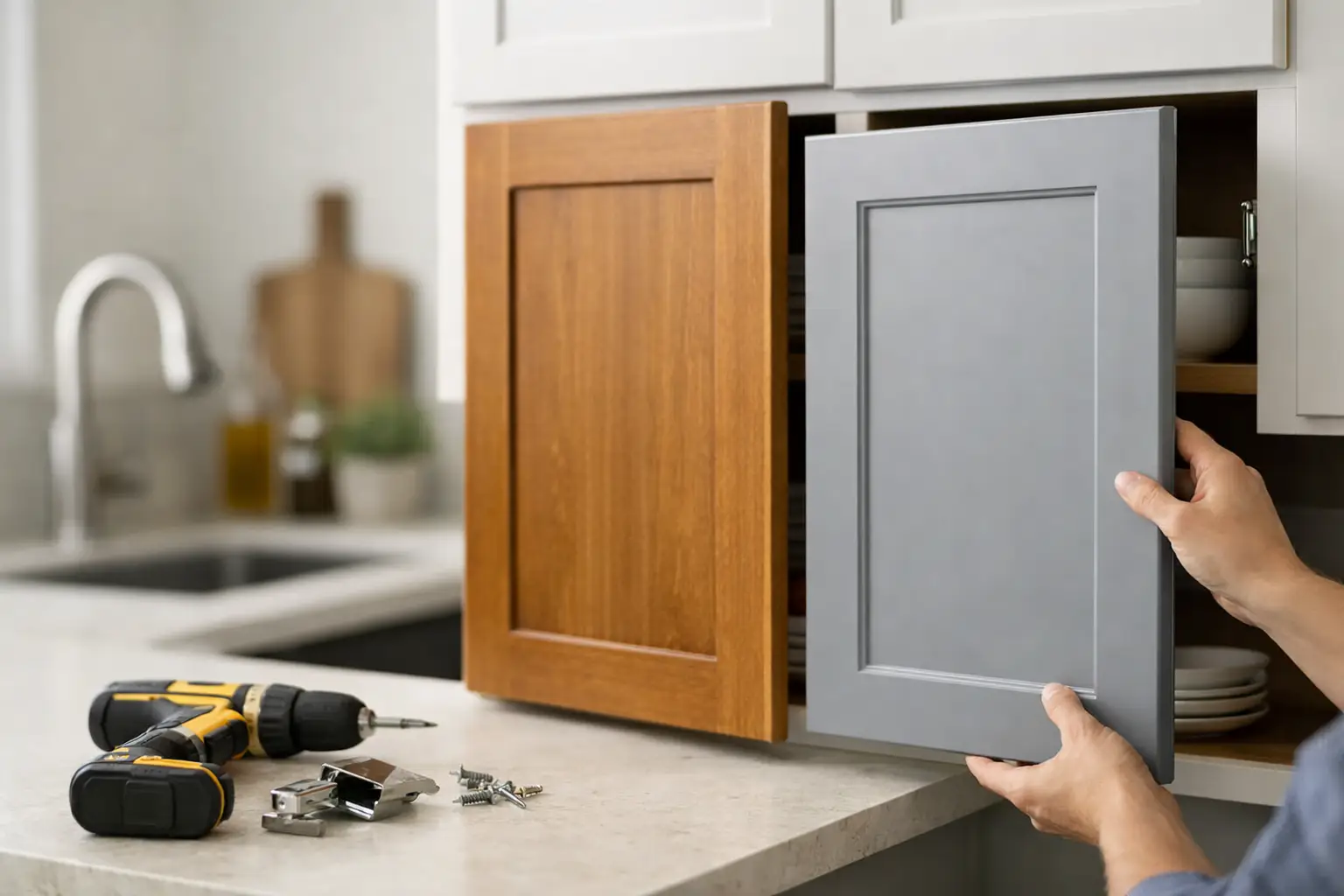
A kitchen can feel dated long before it stops working. If the cupboards are still in the right places, the drawers run smoothly and the overall layout suits how you live, starting again with a full refit may be unnecessary. So, can you replace kitchen doors only? In many cases, yes – and it can make a remarkable difference to the look and feel of the room.
Replacing doors and drawer fronts is a practical way to refresh the kitchen you already have. It lets you change the style, colour and finish while keeping the existing cabinet units in place. The result can be a calmer, brighter and more up-to-date kitchen, with less disruption than removing every cupboard and worktop.
When can you replace kitchen doors only?
Replacement kitchen doors work best when the cabinet carcasses – the fixed boxes behind the doors – are sound. They do not need to look new, because they will be largely hidden, but they do need to be sturdy, level and free from serious water damage.
Open a few cupboards and look closely at the inside panels, base units and areas beneath the sink. Minor scuffs, old shelf-pin holes and signs of everyday use are usually not a concern. Swollen chipboard around the sink, loose cabinet sides, crumbling edges or units pulling away from the wall need attention before new doors are fitted.
It is also worth thinking about whether the layout still earns its place. A replacement-door makeover is ideal if you are happy with where the oven, sink, fridge and storage are positioned. If you regularly struggle for worktop space, need more accessible storage or want to move plumbing and appliances, a larger redesign may be more appropriate.
For many homes around St Neots, Little Paxton, Huntingdon and Bedford, the answer lies somewhere in between. Keep the useful parts of the existing kitchen, then improve the areas that affect everyday use most – doors, handles, worktops, lighting or a tired sink and tap.
What changes when you fit new doors?
New doors do far more than cover old cupboards. Door style sets the character of the whole kitchen. A simple slab door can give a clean, contemporary finish, while a shaker design brings more detail and suits both traditional homes and modern extensions. Matt finishes tend to feel soft and understated; gloss can help reflect light in a darker room; wood-effect finishes add warmth without needing a full timber kitchen.
Drawer fronts matter just as much. Keeping old drawer fronts beside new doors can make even a well-planned update look unfinished. Replacing both creates a consistent finish across the room.
Handles are a relatively small choice with a noticeable effect. Brushed metal bar handles, cup handles, slim edge pulls and knobs each give a different feel. They also change how the kitchen works in practice. A handle that looks right in a sample may feel awkward if you have large drawers, limited clearance or young children opening cupboards all day.
A worktop replacement can take the transformation further. If your existing worktop is scratched, stained, swollen at the joins or simply the wrong colour for your chosen doors, changing it at the same time often makes sense. It is also an opportunity to consider a new sink, tap and upstands, so the finished kitchen looks considered rather than pieced together over several years.
Check the details before ordering replacement doors
The important part of replacing kitchen doors is not choosing a colour first. It is making sure the new fronts will fit the existing units properly. Kitchens are not all built to identical sizes, particularly if they were fitted some time ago or have been altered over the years.
Measurements need to account for door height, width, thickness, hinge positions and the small gaps between doors. A door that is only slightly too wide can catch the one next to it. Hinge holes that do not match the cabinet can create extra work, and an incorrectly sized drawer front can upset the lines across a run of units.
Standard sizes or made to measure?
Standard-size doors can be a good option where cabinet sizes are conventional and consistent. They can offer a straightforward route to a fresh look. Made-to-measure doors are often the better answer for unusual widths, taller units, non-standard drawer fronts or kitchens where exact alignment matters.
Neither option is automatically right for every home. The sensible choice depends on the units you have, the finish you want and how much adjustment would be required. Seeing door samples and discussing measurements in person can prevent costly assumptions.
Hinges, plinths and end panels
Doors are the visible feature, but finishing components make the difference between a quick change and a kitchen that looks properly renewed. Existing hinges may be reusable if they are in good condition and compatible with the new doors. If they are loose, rusty or no longer closing cleanly, replacing them is usually worthwhile.
Plinths at the bottom of the units, decorative end panels, cornices and pelmets can also need updating. Leaving a faded plinth under new sage green or cashmere doors, for example, may draw attention to the age of the original kitchen. Matching these elements helps the new design carry through the whole room.
The benefits and limits of a door-only makeover
The strongest benefit is that you retain a kitchen layout that already works. There is less removal work, less waste and normally less upheaval in the home than with a complete replacement. You can focus your budget on the visible and practical improvements that will be noticed every day.
It also gives you flexibility. Some homeowners replace doors and drawer fronts first, then add a new worktop, sink or appliances later. Others prefer to complete everything together, particularly if the worktop needs to be lifted to fit a new sink or if old appliances are nearing the end of their useful life.
There are limits, however. New doors cannot correct badly fitted, damaged or poorly planned cabinets. They will not create deeper drawers, solve a lack of cupboards or move a hob to a safer position. If the kitchen feels cramped because of its layout rather than its appearance, it is worth asking whether a more substantial redesign would give better value in the long term.
The honest answer is that a door-only replacement is not a shortcut in every situation. It is a sensible, considered option when the structure is worth keeping.
How to choose a style that will still feel right
Start with the room itself rather than a trend on a screen. Consider how much natural light the kitchen receives, the floor you are keeping and whether the space opens into a dining or living area. A pale door colour can lift a compact kitchen, while deeper blues, greens or charcoal shades can bring definition to a larger, well-lit room.
Samples are especially useful because finishes behave differently in real light. A warm white may look cream beside a cool grey worktop. A textured wood-effect door may suit a country property but feel too busy alongside an existing patterned floor. Looking at several options together – door, handle, worktop and splashback – makes decisions much easier.
Practicality should guide the finish as well. High-gloss doors can show fingerprints more readily, while some textured or matt surfaces are more forgiving in busy family kitchens. There is no single best material or colour, only the combination that works for your household and the condition of the room.
Get practical advice before committing
Photographs and rough measurements are a useful starting point, but a showroom visit can give you a clearer view of what is possible. At Replacement Kitchen Doors To Size at The Conservatory Village in Little Paxton, homeowners can compare styles, colours, handles and worktop samples side by side, rather than trying to judge them from a small online image.
It is a good idea to take a few photographs of your kitchen, including the inside of a cupboard, your hinges and any awkward corners. Note down what you would like to keep, what frustrates you and whether you are considering extras such as a replacement sink, tap or appliances. That turns a general wish for a fresher kitchen into a practical conversation about what will fit and what will make the greatest difference.
A well-chosen set of replacement doors can give a familiar kitchen a new lease of life without asking you to throw away a layout that already serves your home. If you are unsure where to begin, seeing the options in person and talking through the details is often the simplest next step.