Made to Measure or Standard Doors for Kitchens
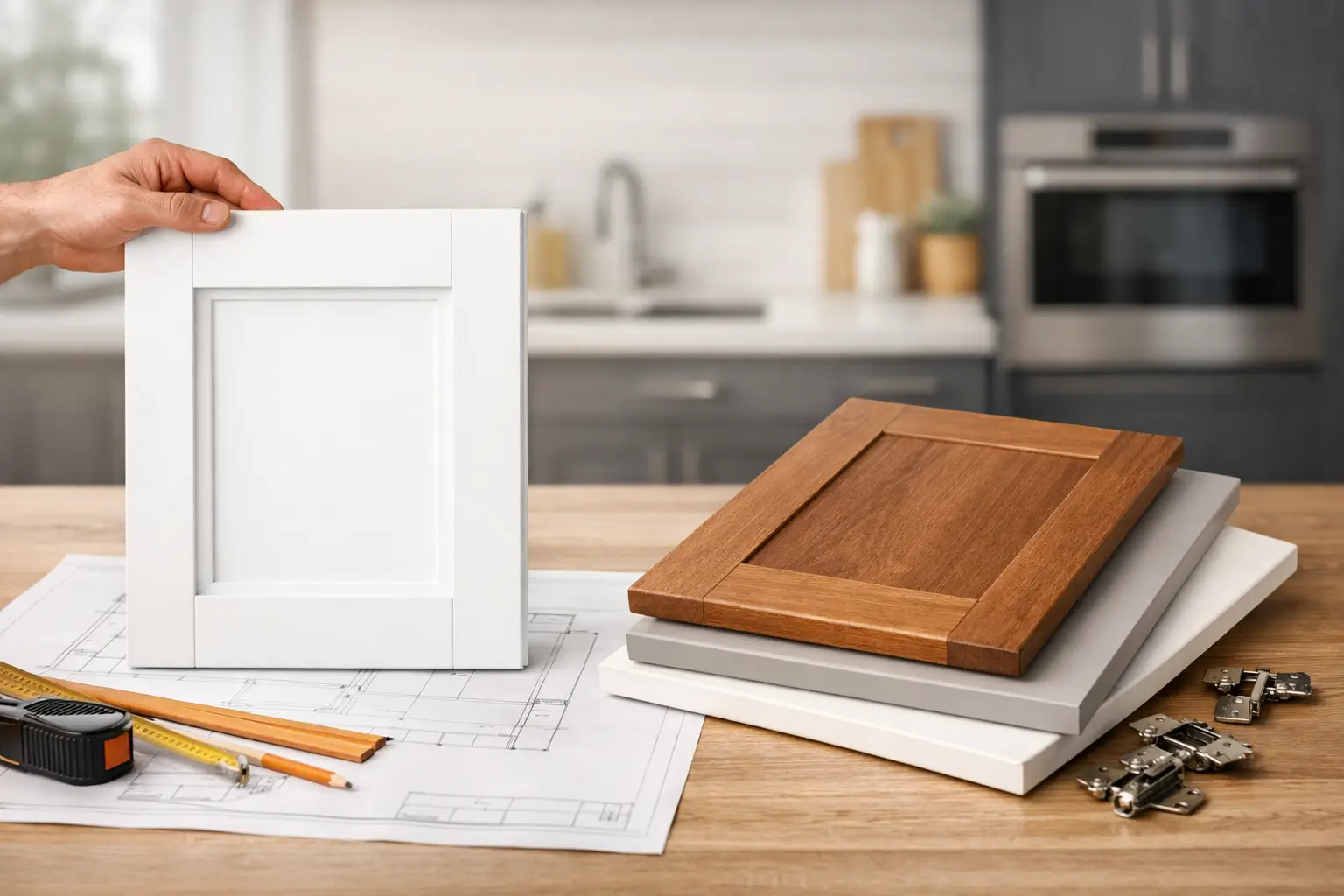
A kitchen can look dated long before the cabinets themselves are worn out. If the layout still works, the appliances are in sensible places and the units are sound, replacing the fronts can be a far more practical route than starting again. The key question is whether made to measure or standard doors are the better fit for your kitchen.
There is no one right answer. Standard sizes can be an excellent choice for many kitchens, while made-to-measure doors can solve awkward sizing and give a more tailored finish. The best option depends on the cabinets you have, the look you want to achieve and how much flexibility you need.
Made to measure or standard doors: what is the difference?
Standard replacement kitchen doors are made in a set range of common widths and heights. They are designed to fit many established cabinet sizes, particularly units from well-known kitchen suppliers. If your existing doors match those measurements, standard doors can offer a straightforward and cost-effective way to update the room.
Made-to-measure doors are produced to your exact dimensions. This means the replacement fronts can be specified for non-standard cabinets, older kitchens, bespoke units or areas where the original doors have unusual proportions. You are not limited to choosing the nearest available size and filling gaps around it.
Both options can give your kitchen a complete new character. A fresh set of shaker doors in a softer painted colour, for example, can make an older kitchen feel calmer and more current. Sleek slab doors, new handles and an updated worktop can take the same cabinets in a more contemporary direction. The difference is mainly in how closely the doors need to fit the units beneath them.
When standard-size doors make good sense
If your kitchen was fitted using standard cabinets and the existing doors measure up consistently, standard doors are often the sensible place to start. They can offer plenty of choice in style, colour and finish without paying for dimensions you do not need.
This is particularly useful where several doors and drawer fronts are the same size. A typical run of base units may have 300mm, 400mm, 500mm or 600mm doors, with standard drawer fronts above. Provided the measurements and hinge positions work, replacing these fronts can be a relatively simple way to give the kitchen a lift.
Standard sizes are not limited to plain, basic looks. Homeowners can still choose from traditional shaker styles, modern handleless-inspired designs, woodgrain effects, matt finishes and a wide range of colours. The final result is shaped by the full combination of doors, handles, worktops, lighting and finishing panels, not simply whether the door is a standard size.
The trade-off is that standard doors need to suit the cabinets accurately. A door that is close in size is not necessarily close enough. Even a small mismatch can leave uneven gaps, affect how doors open or make the finished kitchen look less considered.
When made-to-measure doors are worth it
Made-to-measure doors come into their own when a kitchen has dimensions that fall outside the usual ranges. This is common in older properties, kitchens fitted years ago, utility rooms, handmade cabinets and layouts altered over time. A tall larder door may be an unusual height, a corner unit may need a particular arrangement, or a cupboard may have been built to fill a recess.
They are also helpful when you want a consistent finish across a mixture of unit sizes. Rather than compromising with several near matches, tailored doors allow the proportions to be retained. That can make a real difference in a compact kitchen, where every visible line is more noticeable.
Made to measure does not automatically mean that every part of the kitchen needs replacing. It may be the right solution for one awkward cabinet, with standard sizes suitable elsewhere. Equally, a full set of bespoke-sized fronts may be the clearest route if the whole kitchen has non-standard measurements. Looking at the individual units rather than making an assumption from one door is worthwhile.
The main consideration is budget and lead time. Producing doors to exact sizes generally costs more than choosing from a standard range, and it may take longer. For many homeowners, though, that extra investment is justified by the quality of fit and the freedom to keep cabinets that are otherwise perfectly usable.
Measure carefully before choosing
Accurate measuring is the foundation of a successful door replacement. Measure the door itself, not just the cabinet opening, and record the height, width and thickness. It is also useful to note the gap between doors, the position of hinges, the number of hinge holes and whether a door sits over the cabinet edge or within the frame.
Drawer fronts need the same care. Two drawers may look identical at first glance but be a few millimetres different in height. Tall units, corner cupboards and integrated appliance doors deserve particular attention because their fixing arrangements can vary.
A few practical checks can prevent disappointment later:
- Open doors fully to see whether handles could clash with walls, appliances or neighbouring units.
- Check whether the cabinet edges are sound and level, especially around the sink and dishwasher where moisture may have caused damage.
- Look at end panels, plinths and cornices. New doors can make tired surrounding pieces stand out more.
- Consider whether old hinges are still operating smoothly or would benefit from replacement.
It is easy to focus on the most visible doors, but the details help the finished kitchen feel complete. Matching panels and plinths, carefully chosen handles and a worktop that suits the new colour can make the update look planned rather than pieced together.
Think about the kitchen as a whole
Replacement doors are an opportunity to improve how the room feels to use, not only how it looks. If your current layout works, keeping it avoids the cost and disruption of moving plumbing, electrics and appliances. You can instead put the budget towards the parts you touch and see every day.
For example, a worn laminate worktop may make new doors seem less effective, while changing the worktop and sink at the same time can refresh the main working area. New handles can add a more traditional or modern feel, and soft-close hinges can make older cabinets more pleasant to use. A new tap, improved internal storage or better lighting may also be worth considering while the kitchen is being updated.
That does not mean everything has to be changed. Sometimes replacement doors and drawer fronts are all that is needed. The most practical projects are the ones that address what is genuinely tired, inconvenient or out of keeping with the rest of the home.
Why seeing samples in person helps
Door colours and finishes are difficult to judge from a screen. A warm grey may look quite different beside your flooring or in the changing daylight of your kitchen. A matt finish may suit one household better than a high-gloss surface, particularly where fingerprints are a concern. Likewise, handles that look good in a photograph need to feel comfortable in the hand.
A showroom visit gives you the chance to compare door styles, colours, worktop samples and handles together. It is also a useful opportunity to talk through measurements and identify whether standard doors are likely to fit, or whether made-to-measure options would give a better result.
For homeowners around St Neots, Little Paxton, Huntingdon, Sandy, Biggleswade and Bedford, a visit to Replacement Kitchen Doors To Size can turn a vague idea into a clearer plan. Bringing a few photographs and rough measurements of your kitchen is often enough to start a useful conversation.
Your existing kitchen may have more potential than it first appears. Before committing to a full refit, take the time to see how the right replacement doors, worktops and finishing details could refresh the space you already have.