How to Refresh Kitchen Cupboards Without Replacing Units
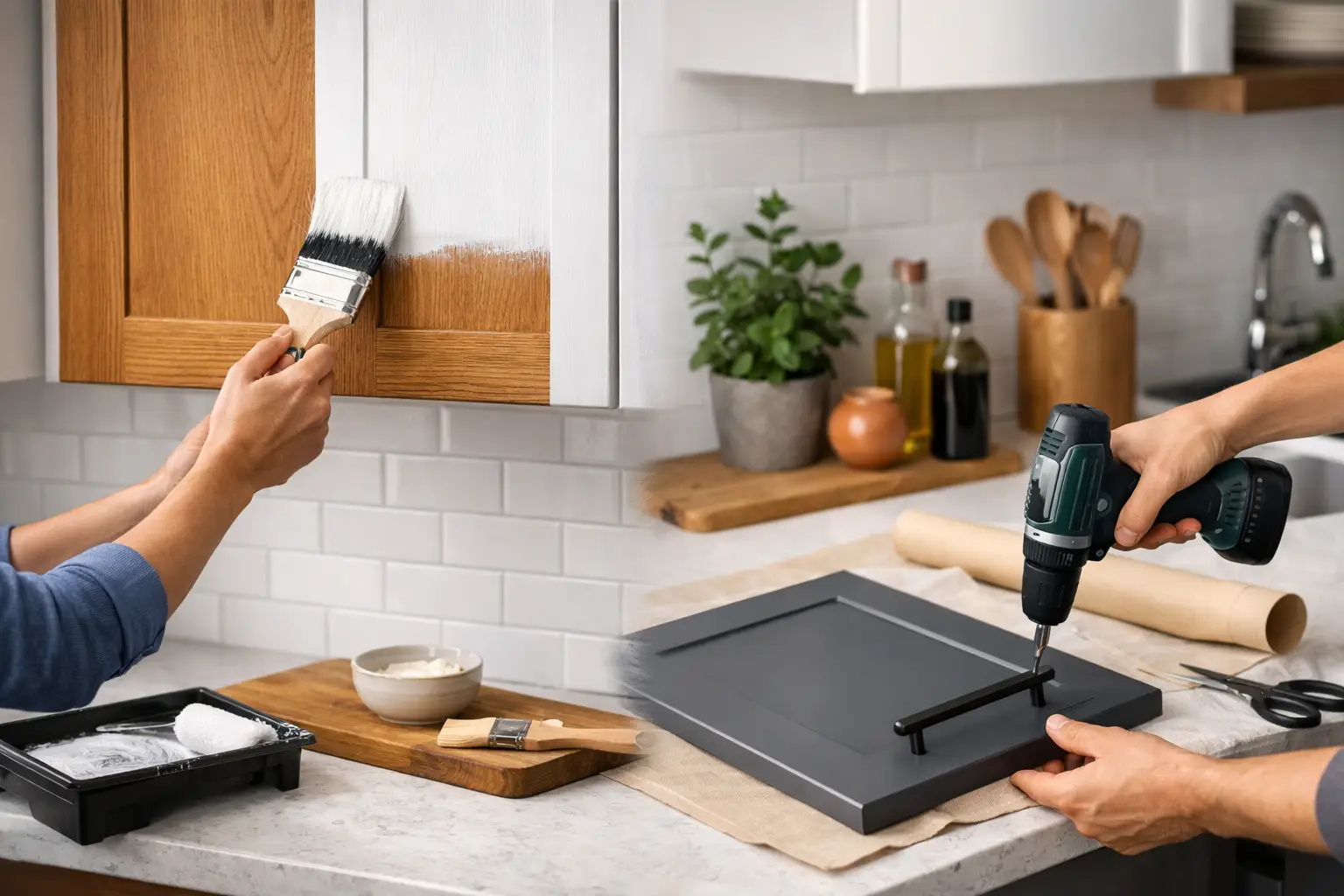
If you are wondering how to refresh kitchen cupboards, start by looking past the tired doors. In many homes, the cupboards themselves are still solid, useful and well positioned. It is the visible surfaces – faded finishes, dated profiles, worn handles and chipped worktops – that make the whole room feel past its best.
That is good news if your kitchen layout still works for the way you live. Rather than taking on the cost and disruption of removing every unit, you can update the parts you see and use every day. Replacement doors, drawer fronts and carefully chosen finishing touches can give an existing kitchen a completely different character while keeping the practical foundations in place.
Start with what you want to keep
Before choosing colours or door styles, decide what is working. Is there enough cupboard space? Are the main work areas in sensible places? Does the sink, cooker and fridge arrangement suit your household? If the answer is largely yes, retaining the cabinet units is often the most sensible route.
Open each cupboard and drawer and check the basics. The carcases should be sound, reasonably level and free from serious water damage, particularly around the sink. Hinges and drawer runners can often be adjusted or replaced, but swollen or crumbling units may need more attention. A fresh set of doors will look best when fitted to cabinets that are structurally in good order.
This assessment also helps you spend where it makes the greatest difference. You may be happy with most of the layout but want a wider drawer bank, a better bin solution or a replacement cabinet in one awkward corner. A kitchen refresh does not have to mean changing every single element in the same way.
Refresh kitchen cupboards with replacement doors
Replacing doors and drawer fronts is usually the biggest visual change you can make without removing the kitchen units. It lets you move from an older style, such as glossy slab doors or ornate routed fronts, to something that feels more suited to your home now.
For a clean, modern look, a simple shaker door or a smooth handleless-style front can work well. If you want warmth rather than a stark finish, consider softer neutral colours, muted greens, warm greys or a timber-effect finish. The right choice depends on the light in the room, the size of the kitchen and what you are keeping elsewhere.
Colour samples are particularly useful here. A shade that looks calm under showroom lighting can look cooler or warmer at home depending on your windows, flooring and wall colour. Seeing full-size door samples also gives a much clearer impression of texture, edge detail and finish than a small image on a screen.
Standard-size replacement doors can suit many established kitchens, while made-to-measure options are helpful for non-standard cabinets or older units. Measuring accurately matters. Door height, width, hinge-hole position and drawer-front dimensions all need checking before ordering, especially where previous alterations have been made.
Choose a finish that suits daily life
A high-gloss finish can brighten a darker kitchen, but it may show fingerprints more readily in busy family homes. Matt doors have a softer appearance and are often forgiving of everyday marks, although the exact performance varies by material and colour. Textured woodgrains add interest and can be practical, while painted-look finishes give more traditional kitchens a gentler update.
There is no single best finish. Think about who uses the kitchen, how much natural light it receives and how often you want to clean visible marks. A local showroom visit gives you the chance to compare finishes side by side and judge what feels right rather than choosing from photographs alone.
Do not overlook handles, hinges and drawer fronts
Handles are small, but they can date a kitchen surprisingly quickly. Replacing curved chrome handles with slim bar handles, simple knobs, brushed brass or dark metal can alter the overall style at modest cost. The key is to match the handle proportion to the door. Long handles can suit tall larder doors, while smaller knobs or short pulls can look better on narrow drawers.
Check fixing-hole centres before selecting replacements. Choosing handles with the same centres can avoid unwanted holes, although fitting new doors gives you more freedom to position them as you wish.
Drawer fronts deserve the same attention as doors. Keeping old drawer fronts while fitting new cupboard doors can make the refresh look incomplete. Matching fronts create a consistent finish, particularly on the run of drawers beside a hob or beneath a worktop.
At the same time, make sure doors close properly and drawers run smoothly. Soft-close hinges and improved drawer runners may not be the first thing visitors notice, but they make the kitchen more pleasant to use every day.
Consider whether the worktop is holding the room back
A new worktop can make replacement kitchen doors feel like part of a complete makeover. Laminate has come a long way and offers convincing stone, timber and concrete-inspired designs at a practical price. It is a good option when you want an attractive, hard-wearing update without a major investment.
Wood worktops bring warmth but need regular care to protect them from water and staining. Stone, compact laminate and solid-surface options can offer a more premium feel, though they come with different costs, fitting requirements and maintenance considerations. The best choice is not always the most expensive one. It is the one that suits your cooking habits, budget and willingness to maintain it.
If the worktop is staying, inspect the seal around the sink and upstands. Refreshing worn sealant, replacing an old drainer or fitting a new tap can make a noticeable difference even before the new doors go on.
Add finishing touches that improve the way the kitchen works
Once the main surfaces are chosen, the finishing details can bring everything together. A new sink and tap can make washing up easier and improve the look of the work area. Under-cupboard lighting can brighten preparation space, while updated plinths, end panels and cornices help replacement doors look properly integrated rather than added on.
Inside the cupboards, look for simple improvements that reduce daily frustration. A pull-out bin, better cutlery storage, a pan drawer or a sensible shelving arrangement may be more valuable than an extra decorative feature. If a cupboard is difficult to reach or constantly cluttered, addressing that problem is part of a successful refresh.
Appliances are worth considering too, but only where there is a clear benefit. Replacing an unreliable oven or an inefficient extractor can improve daily use, while keeping perfectly good appliances helps control the overall budget.
Plan the refresh in the right order
It is tempting to choose doors first and deal with the rest later, but a little planning avoids mismatched finishes and last-minute compromises. Start with the overall look you want, then choose the door style and colour. Next, decide whether the worktop, sink, tap, handles, lighting and appliances will stay or change.
Measure the room and take photographs of the existing kitchen, including awkward corners, end panels and appliance housings. These details make it easier to discuss what is possible. It is also helpful to bring a sample of your flooring or a photograph of nearby rooms if you want the kitchen to connect with the rest of the home.
Allow for practical fitting details. A thicker worktop may affect appliance heights. New handles may catch on adjacent doors if they are too large. A darker door colour can look smart, but may make a small north-facing kitchen feel enclosed without good lighting. These are the sorts of decisions that are easier to make when you can see samples together.
Get practical advice before you commit
For homeowners around St Neots, Little Paxton, Huntingdon, Sandy, Biggleswade and Bedford, visiting a showroom can remove much of the guesswork. At Replacement Kitchen Doors To Size, you can compare door styles, colours, worktop finishes and handles in person, then talk through standard and made-to-measure options for the kitchen you already have.
Bring your measurements, photographs and a clear idea of what you would like to improve. You do not need every decision made before you arrive. The purpose of a visit is to see the choices properly, ask practical questions and work out which changes will have the strongest effect for your budget.
A kitchen does not need to be stripped back to the walls to feel fresh again. If the layout still earns its place, thoughtful replacement doors and a few well-chosen upgrades can make the room brighter, more practical and more enjoyable to use for years to come.