Matt or Gloss Kitchen Doors – Which Is Best?
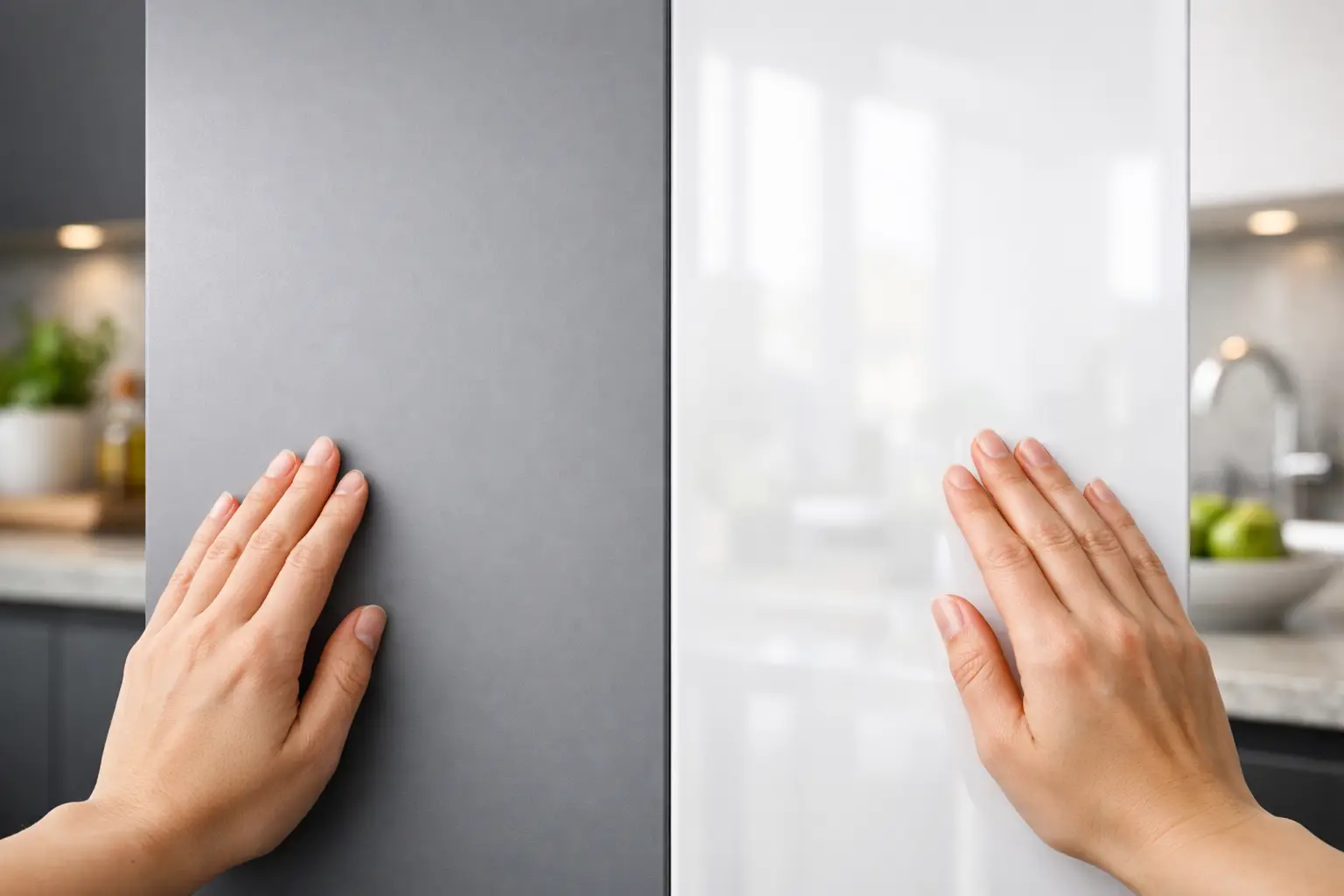
A bright south-facing kitchen and a compact kitchen with one small window can need completely different finishes. That is why the choice between matt or gloss kitchen doors is not simply about following a trend. It is about how the room looks at different times of day, how your household uses it and how much day-to-day cleaning you are happy to do.
If you like your kitchen layout but the doors now feel tired, changing the door finish can make a remarkable difference without replacing every cabinet. Both matt and gloss doors are practical options for a kitchen refresh. The right one is the finish that suits your space, your colour choice and the way you live.
Matt or gloss kitchen doors: start with your room
Before choosing samples, look honestly at the kitchen you have. Consider its natural light, ceiling height, window position and the colours already fixed in place, such as floor tiles or a worktop you plan to keep. A finish that looks excellent in a large, light-filled showroom can feel different in a narrow galley kitchen at home.
Gloss reflects light, so it can help a darker room appear brighter and more open. Matt absorbs light instead, giving a softer, calmer look. Neither is automatically better for a small kitchen. A pale matt door can still feel airy, while a darker gloss finish can be striking but may show reflections from every window and light fitting.
It also helps to think about the role your kitchen plays. Is it mainly a hardworking family room, with school bags on the floor and plenty of cooking? Is it open to a dining or living area? Or is it a neat, compact space used by one or two people? These details should influence the decision as much as the colour on the door sample.
Why homeowners choose matt kitchen doors
Matt kitchen doors have become a popular choice for homeowners who want a clean, contemporary update without a high-shine appearance. Their non-reflective surface gives colour more depth, particularly in softer shades such as sage, stone, cashmere, pale grey and deep blue.
A relaxed, understated finish
Matt doors work well when you want the kitchen to sit comfortably alongside the rest of the home. They are often a good fit for shaker-style doors, where the frame detail creates interest, as well as modern slab doors with simple handles or handleless details.
Because matt surfaces do not bounce light around the room, they can make a large, open-plan kitchen feel more settled. They are also useful where there are several other finishes competing for attention, such as patterned flooring, timber shelving or a statement worktop. The doors become a calm background rather than another reflective surface.
Better at disguising everyday marks
A common reason for choosing matt is that it can be more forgiving of fingerprints and light smudges, especially in mid-tone colours and textured finishes. That does not mean matt doors never need wiping down. Cooking splashes, grease and marks around handles will still show eventually, particularly on very dark or very pale doors.
The practical advantage is that a matt finish often looks presentable between cleans. For busy homes around St Neots, where the kitchen is in constant use, that can be more valuable than an immaculate showroom look that needs frequent polishing.
There is one trade-off. Some matt finishes, particularly ultra-matt dark colours, can show oily marks if they are rubbed with the wrong cloth or cleaning product. A soft microfibre cloth, warm water and a mild cleaner are normally all that is needed. Avoid abrasive pads and harsh sprays, whichever finish you choose.
When gloss kitchen doors make sense
Gloss doors have a smooth, light-reflecting face that can bring energy to a kitchen. They suit homeowners who enjoy a sharper, more polished look and want to make the most of limited daylight.
Making a darker kitchen feel brighter
In kitchens with modest windows, gloss can reflect daylight and ceiling lighting across the room. White, cream and pale grey gloss doors are especially effective in compact kitchens, as they help reduce the visual weight of the cabinetry. This can be useful when wall units run along more than one side of the room.
Gloss is not restricted to white. Grey, navy, black and richer colours can look very smart, particularly when paired with a simple worktop and restrained handles. However, a very dark gloss door creates stronger reflections, so it tends to suit kitchens where you are comfortable with a more dramatic, contemporary appearance.
A finish that needs regular wiping
The main compromise with gloss is visibility. Fingerprints, water marks and smears can be easier to spot, especially near integrated appliances, bin cupboards and doors opened several times a day. If there are young children in the household, high-gloss dark doors can quickly become a record of who has been in the kitchen.
This is not a reason to rule gloss out. Many people are happy to give the doors a quick wipe as part of their usual routine. It simply pays to see a full-sized sample in person, touch it and imagine it in the busiest part of your kitchen rather than judging from a small photograph.
Colour, door style and handles change the answer
The matt-versus-gloss question becomes less straightforward once you add colour and door style. A pale matt shaker door and a charcoal matt slab door may have the same finish, but they create very different kitchens. Equally, a white gloss slab door looks quite different with a long brushed-metal handle than with a slim handleless rail.
For a traditional or country-inspired update, matt is usually the more natural partner for shaker and framed door designs. It gives the grooves and proportions of the door a softer finish. For a modern, streamlined kitchen, both matt and gloss slab doors can work well. Matt tends to feel warmer and more architectural, while gloss is cleaner and more reflective.
Handles deserve attention too. If you are replacing doors but retaining cabinet units, new handles can be one of the simplest ways to make the change look complete. Brushed nickel, black, brass-toned and chrome handles all affect whether a door colour feels classic, modern, warm or cool. Take a door sample and handle together rather than choosing each separately.
Think beyond the doors you are replacing
Replacement doors are an effective way to refresh sound kitchen cabinets, but they should be considered alongside the surfaces that will remain. A glossy white door beside a worn, heavily patterned worktop may not produce the clean result you expect. In some kitchens, a new worktop, sink or tap is the finishing touch that brings the whole update together.
You do not need to replace everything at once. If your worktop is in good condition and works with the new colour, keeping it can make excellent sense. If it is the feature that dates the room most, changing it at the same time as the doors may offer better value than living with a combination that never quite feels right.
Also check the condition of hinges, drawer boxes and cabinet edges. Well-made replacement doors deserve well-adjusted units behind them. Small practical improvements, such as soft-close hinges, new drawer fronts or better internal storage, can make the refreshed kitchen more enjoyable to use every day.
Compare matt and gloss samples in real light
Photographs are useful for ideas, but they cannot show how a finish feels, how it reflects light or how it sits beside a worktop. A showroom visit gives you the chance to compare samples side by side, place handles against different colours and ask practical questions about made-to-measure and standard door sizes.
At Replacement Kitchen Doors To Size in Little Paxton, homeowners can look at finishes properly before making a decision. Bringing a photo of your kitchen, a rough measurement or even a sample of existing flooring can make the conversation more useful. It is often easier to narrow the choice down to two or three finishes once you can see them in person.
If you are undecided, do not force a quick answer. Take note of which doors suit the light in your room, which colours work with the items you are keeping and how much maintenance feels realistic for your household. The best kitchen refresh is one that still looks right on an ordinary Tuesday evening, not just on the day it is fitted.