Replacement Kitchen Doors Guide for Your Home
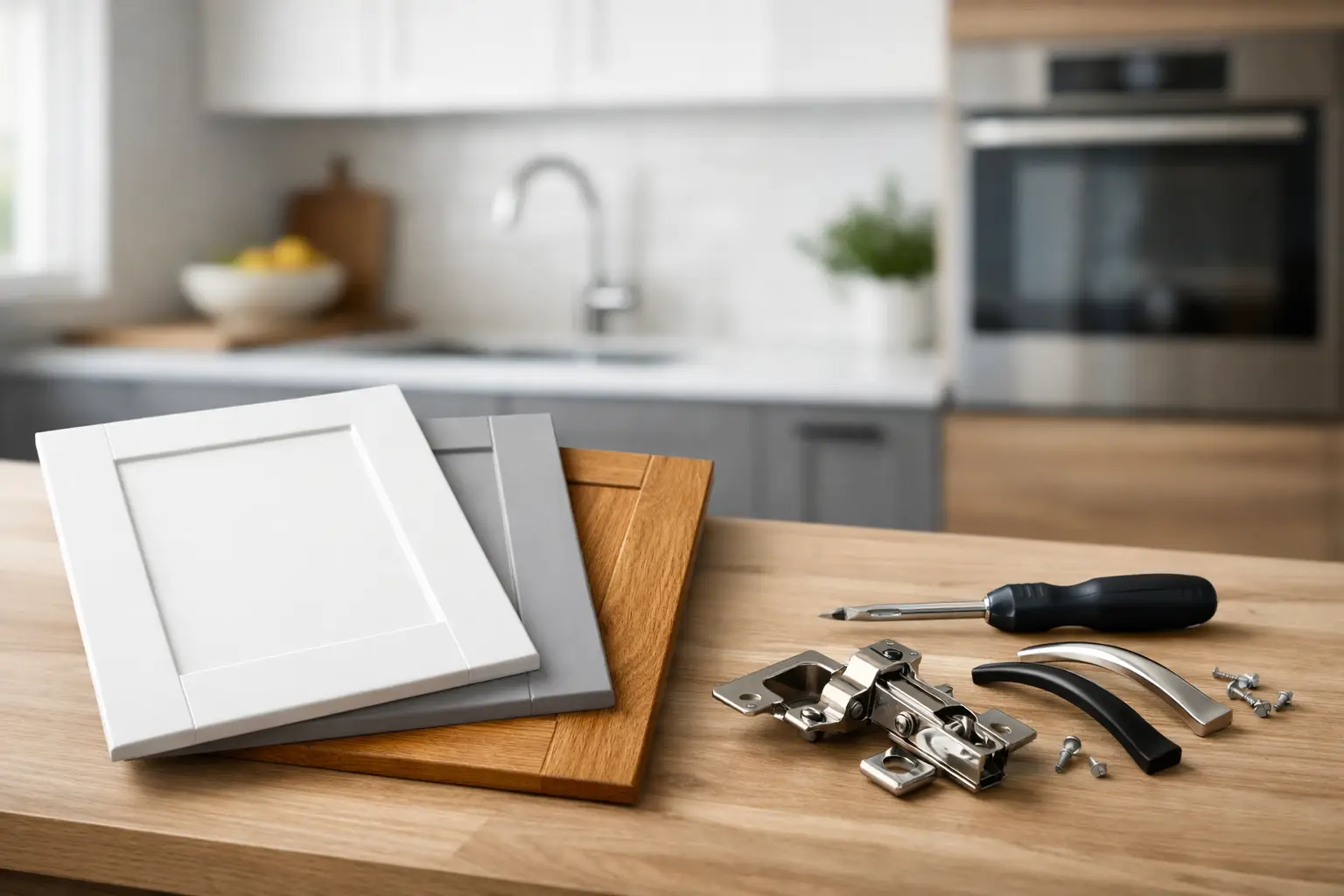
If the cupboards are sound, the layout works and you still know where everything is, replacing the whole kitchen can feel unnecessary. This replacement kitchen doors guide explains how to give an existing kitchen a worthwhile new look by changing the parts you see and use every day – without automatically starting again from scratch.
For homeowners around St Neots, Little Paxton, Huntingdon and the surrounding villages, a kitchen makeover can be a sensible middle ground. New doors and drawer fronts can change the character of the room, while worktops, handles, sinks and taps can be updated where they will make the biggest difference. The key is checking what is worth keeping, then choosing replacements that fit properly and suit how you live.
Start by assessing the kitchen you have
Replacement doors are best suited to kitchens with cabinets that are structurally sound. Open each cupboard and drawer, check the hinges, and look inside the units for signs of swelling, water damage or loose fixings. A few tired hinges or worn drawer runners do not necessarily rule out a makeover, as these can often be replaced. Cabinets that are badly damaged, uneven or affected by a long-term leak may need more attention first.
Think about the layout as well. If your fridge, oven, sink and worktop space are in the right places, there is little reason to disrupt the whole room simply because the door style is dated. On the other hand, if you constantly lack storage, have a poorly positioned appliance or need easier access, it may be worth considering a small redesign alongside the new fronts.
A makeover works particularly well when the basic kitchen was well planned but has simply aged. It can also be a good opportunity to replace awkward corner fittings, add a pull-out bin or improve lighting, without taking on the cost and disruption of a complete refit.
Replacement kitchen doors guide: choosing the right size
Getting the measurements right is the practical foundation of a good result. Kitchen doors are not all interchangeable, even when units appear similar. The height and width of each door, the number of hinge holes, the direction it opens and the gaps around it all matter.
Some kitchens use common standard door sizes, which can offer a straightforward route to a refresh. Others need made to measure doors, especially where cabinets are older, have non-standard dimensions or include unusual drawer banks and end panels. Made to measure is often the better choice when you want a consistent finish across the kitchen rather than trying to make near-enough sizes work.
Measure each door separately rather than assuming matching cupboards have identical dimensions. Record the height, width and thickness, then note whether it is a left- or right-hand door. Take photographs of the hinge position and any shaped or glazed doors. Drawer fronts should be measured individually too, including shallow top drawers that can easily be overlooked.
It is also worth allowing for the small, even gaps between doors and drawers. A door that is only a few millimetres too large can catch on the adjacent unit; too small, and the overall kitchen can look untidy. Seeing options and discussing measurements in a showroom is reassuring, particularly if your kitchen includes a mix of sizes.
Pick a style that suits the room, not just a trend
The door design has the biggest visual effect. Shaker doors remain popular because their simple framed detail works in both period homes and newer properties. A smooth, slab door creates a cleaner, more contemporary feel and is often easy to keep looking neat. Traditional raised-panel styles can suit a more classic kitchen, while handleless or integrated-handle options give a streamlined finish.
There is no single right choice. A compact kitchen with limited natural light may benefit from a light, plain finish that keeps the room feeling open. In a larger kitchen, deeper colours or a wood-effect finish can add warmth and definition. If you like colour but do not want every cupboard to dominate the room, consider a calmer main door colour with a contrasting island, dresser unit or bank of tall cabinets.
Samples matter here. A shade that looks soft grey under showroom lighting may look cooler in a north-facing kitchen or warmer beside a cream floor. Hold samples next to your existing tiles, paint, flooring and worktop if those are staying. This is one reason an in-person visit is more useful than choosing from a small image on a screen.
Choose finishes for real life
A kitchen door should work hard as well as look good. Matt finishes have a calm, contemporary appearance and can disguise minor marks well, although very dark matt shades may show fingerprints. Gloss reflects light and can brighten a smaller room, but it may need more frequent wiping in a busy family kitchen. Textured wood effects add character and can be forgiving of everyday use.
Consider who uses the kitchen and how. Households with young children, pets or a lot of cooking may prefer a finish that is easy to wipe down and does not show every splash. If the kitchen is mainly a social space and you enjoy a crisp, polished look, a gloss or painted-style door may be ideal. The best finish is the one you will still be happy to maintain several years from now.
Door edges deserve attention too. They are the areas most likely to meet knocks, steam and moisture. Good-quality materials and careful fitting help doors stay looking smart, especially around the sink, dishwasher and kettle.
Do not overlook drawer fronts, panels and hinges
Replacing only the main cupboard doors can improve a kitchen, but it may leave the room looking incomplete if the drawer fronts, end panels and plinths remain in a mismatched finish. For a joined-up result, plan these visible elements at the same time.
End panels are particularly important on exposed cabinet sides, such as the end of a run of units or a breakfast bar. Plinths finish the base of the cabinets and can make a surprising difference when old ones are scuffed or faded. Cornice, pelmet and feature panels may also be needed in more traditional kitchens.
Hinges and runners should be checked before fitting begins. Soft-close hinges can make older units feel more refined, while new drawer runners may solve irritating sticking or sagging drawers. These are small details, but they affect how the kitchen feels every day.
Decide what else should change
New doors can be fitted on their own, but a few carefully chosen extras often make the makeover feel complete. Handles are one of the simplest changes, yet their shape and finish can move a kitchen from dated to current. Brushed metal, black, chrome and warm brass-toned finishes all create different effects, so compare them against the door sample rather than choosing in isolation.
A worn worktop can make brand-new doors look less convincing. If the worktop is in good condition and the colour works with your chosen doors, keeping it is a sensible saving. If it is damaged, heavily stained or ties the room to an old colour scheme, replacing it may be worthwhile. New sinks and taps are also practical upgrades, especially if you want a deeper bowl, a pull-out spray tap or a more modern finish.
Appliances should be considered before final measurements are agreed. A new integrated dishwasher or oven can have slightly different requirements from the appliance it replaces. Planning everything together avoids discovering late in the process that a matching door or filler panel is needed.
Why visiting a showroom helps
A kitchen is difficult to judge from a photograph. In the showroom at The Conservatory Village in Little Paxton, you can compare door styles side by side, feel the finish, test handles and see how colours sit with different worktops. It is also the right place to ask practical questions about standard and made to measure sizes, matching panels and the order in which work should be completed.
Bring a few measurements, photographs and, if possible, a sample of your flooring or wall colour. A straightforward conversation can help narrow a wide choice into options that suit your cabinets, budget and home. Replacement Kitchen Doors To Size can help you look at the whole picture, from the door style to the finishing touches that make the room feel properly refreshed.
A good kitchen makeover should leave you with a room that feels more like yours, while keeping the layout that already earns its place in your home. Before committing to a colour or style, see it in person, place it alongside the things you are keeping, and choose the combination that will make everyday cooking and living easier.