Shaker or Slab Kitchen Doors – Which to Choose?
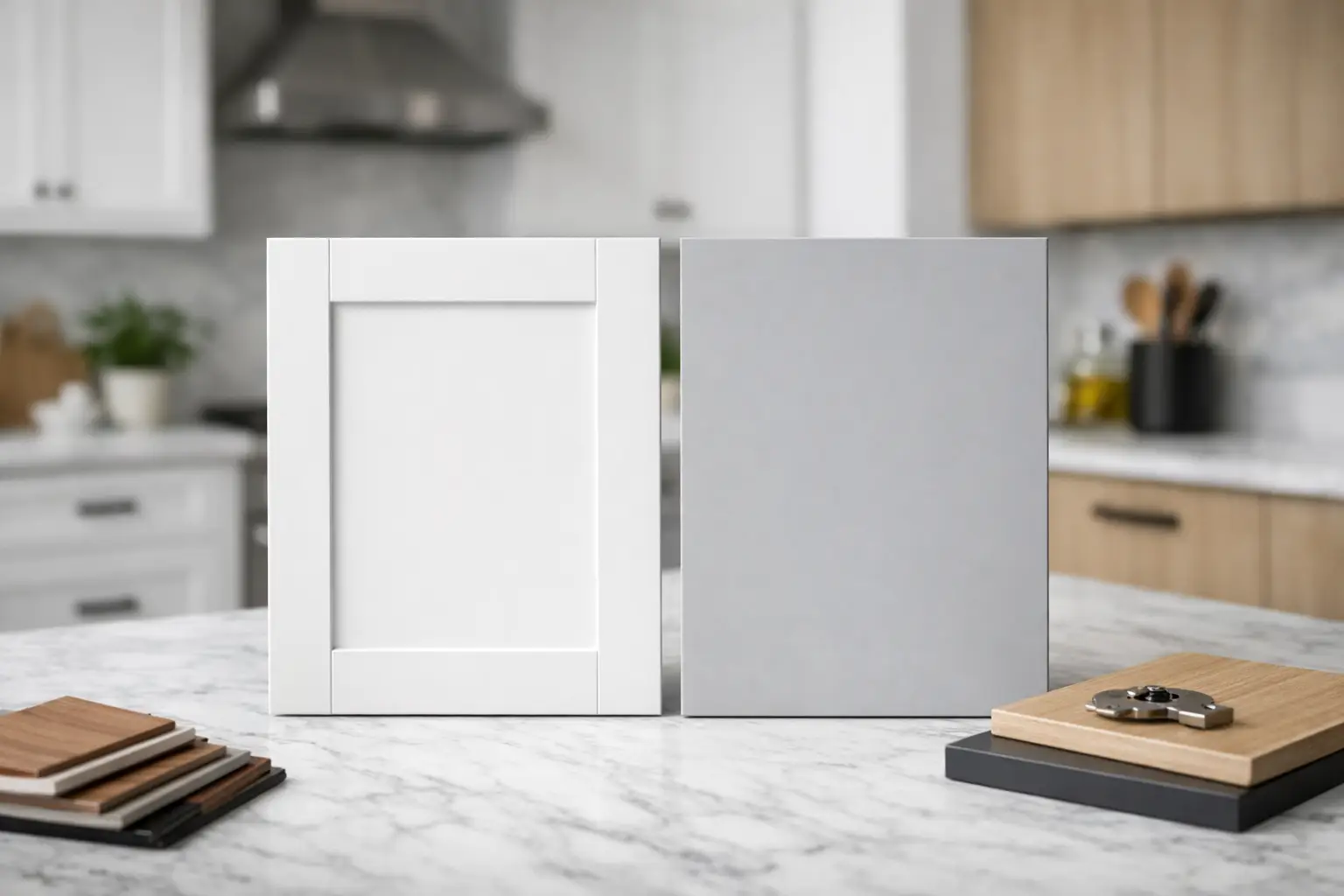
If your kitchen cabinets are sound but the fronts are making the room feel dated, the choice between shaker or slab kitchen doors will have the biggest effect on the finished look. Both can transform an existing layout without the disruption and expense of starting again. The right choice comes down to the character of your home, how you use the kitchen and how much detail you want to see every day.
A replacement door project is not simply about following the latest look. It is about choosing doors that suit the cabinet units you already have, work with your preferred worktop and make the kitchen easier to live with. Shaker and slab doors are both versatile, but they create very different results.
What are shaker kitchen doors?
Shaker doors have a framed appearance, with a recessed centre panel. The style is based on simple, practical furniture rather than ornate decoration, which is why it has stayed popular for so long. A narrow frame gives a lighter, more contemporary feel, while a wider frame can make the kitchen feel more traditional and substantial.
For many homes around St Neots, Huntingdon and Bedford, shaker doors are the comfortable middle ground. They bring visible detail and warmth without looking fussy. They can suit a Victorian terrace, a village cottage, a newer family home or an extension with a more classic feel.
Colour makes a real difference to how shaker doors come across. Soft white, cream, pale grey and muted green tend to feel timeless. Deep navy, charcoal or forest green can give the same door style a smarter, more dramatic finish, particularly with a pale worktop or warm brass handles. Woodgrain shaker doors can add texture, although it is worth comparing samples against your flooring and wall colour before committing.
The main practical consideration is cleaning. The routed inner edge around the centre panel can gather dust and cooking residue, especially on doors near the hob. It is not difficult to maintain, but it needs a little more attention than a completely flat door. A regular wipe with a soft cloth and mild cleaner is usually all that is needed.
What are slab kitchen doors?
Slab doors, sometimes called flat-panel doors, have a smooth, unframed face. They suit kitchens where you want clean lines, fewer visual breaks and a more modern appearance. Handleless slab doors are especially pared back, while a simple bar handle, knob or rail handle can give the same door a more individual look.
This style works particularly well in compact kitchens, open-plan spaces and homes with contemporary flooring, lighting or furniture. Because the door fronts are flat, a run of units can look calm and uncluttered. That can be useful where the kitchen has several tall cabinets, or where you want a bold door colour without making the room feel busy.
Slab doors are generally the easier option to wipe down. There are no recessed sections, so a quick clean across the face and edges is straightforward. That is helpful for busy households, keen cooks and kitchens used by children, although very dark matt finishes may show fingerprints more readily than mid-tone or textured finishes.
Do not assume slab has to mean glossy white and ultra-modern. Matt stone, cashmere, soft grey, deep blue and wood-effect finishes can all look considered and welcoming. A slab door can be just as suitable for a traditional home when the colour, handles and worktop are chosen with care.
Shaker or slab kitchen doors: the key differences
The simplest distinction is visual. Shaker doors add shape and shadow; slab doors create a flatter, quieter surface. Neither is inherently better. The useful question is which look will still feel right when you walk into the kitchen on an ordinary Tuesday morning, not just when you first see the samples.
Shaker often suits homeowners who want the kitchen to feel established, welcoming and a little more furniture-like. It can soften a room with hard surfaces and works well with Belfast-style sinks, timber-effect worktops, tiled splashbacks and traditional handles. It also gives you scope to change the personality of the room later with new handles, paint colours or accessories.
Slab is often the stronger choice if your priority is a clean, modern finish. It can make an older kitchen layout feel more current without altering the cabinets themselves. Pair it with a slim worktop, a simple tap and discreet handles, and the result can feel neat rather than over-designed.
There is also a middle ground. A shaker door in a crisp matt finish with a simple handle can feel surprisingly contemporary. Equally, a warm-toned slab door with a wood-effect worktop and classic cup handles can feel relaxed rather than minimalist. The details around the doors matter as much as the door style itself.
Think about the room before choosing a style
A door sample can look very different under showroom lighting than it does at home. Natural light, the direction the room faces and the amount of wall space all affect how a colour and finish will read. Dark shaker doors can look rich in a larger, well-lit kitchen but may feel heavy in a narrow room with limited daylight. Pale slab doors can brighten a small kitchen, though an all-white scheme may need a warmer worktop or handles to avoid feeling cold.
Look at what is staying. If you are retaining a tiled floor, a worktop, a splashback or existing appliances, take those elements into account. The aim is not necessarily to match everything exactly, but to make the new doors belong in the room.
Consider sightlines too. From the dining area or lounge, do you want the kitchen to blend quietly into the background, or to have more presence? Slab doors often recede, particularly in pale matt shades. Shaker doors tend to become more of a feature because their frame catches the light.
Handles, worktops and finishing details
Replacement doors look most convincing when the finishing pieces are planned at the same time. End panels, plinths, cornices, pelmets and filler panels should complement the new door style and finish. Leaving worn or mismatched panels in place can undermine an otherwise successful refresh.
With shaker doors, cup handles, knobs and traditional D-handles are all natural choices. A brushed nickel finish is practical and understated, while black or antique brass can add contrast. Slab doors can take slim bar handles, edge pulls or integrated handle profiles. The best option depends on how the doors open, how often they are used and whether you prefer a visible handle or a cleaner front.
Worktops can shift the balance considerably. A pale marble-effect surface can lift dark shaker doors, while a timber-effect worktop can make flat matt doors feel warmer. If your current worktop is chipped, swollen or simply out of step with the new fronts, replacing it at the same time is often worthwhile. Sinks, taps and lighting are smaller changes that can make the finished kitchen feel properly renewed rather than partially updated.
Check what your existing cabinets can take
One of the advantages of replacing kitchen doors is that you can keep a layout that already works. However, accurate measuring is essential. Door sizes, hinge positions, drawer-front heights and cabinet condition all need checking before an order is placed. Made-to-measure doors can be particularly useful where units are older, non-standard or have been altered over time.
It is also sensible to assess the cabinets honestly. Sound units with firm fixings and doors that have simply become tired are ideal candidates for a makeover. If cabinets are damaged by water, badly bowed or no longer securely fixed, some remedial work may be needed first. A practical assessment helps avoid spending money on attractive new fronts without addressing the structure behind them.
See shaker and slab samples side by side
Online images are useful for ideas, but they cannot show the depth of a shaker frame, the texture of a matt finish or how a particular colour changes in different light. Seeing samples in person makes the decision less abstract. You can place a handle against each door, compare worktop options and judge whether a finish feels right for your home.
At the Replacement Kitchen Doors To Size showroom in Little Paxton, homeowners can talk through standard and made-to-measure options, as well as the worktops and finishing details that complete the project. Bringing a few photographs, rough measurements and a note of anything you plan to keep will make that conversation even more useful.
A kitchen refresh should make everyday life feel easier, not create another complicated project. Start with the doors you are drawn to, then give yourself permission to compare them properly. The sample that still looks right beside your worktop, floor and preferred handle is usually the one worth taking home.