Quartz Worktop Care Guide for Everyday Kitchens
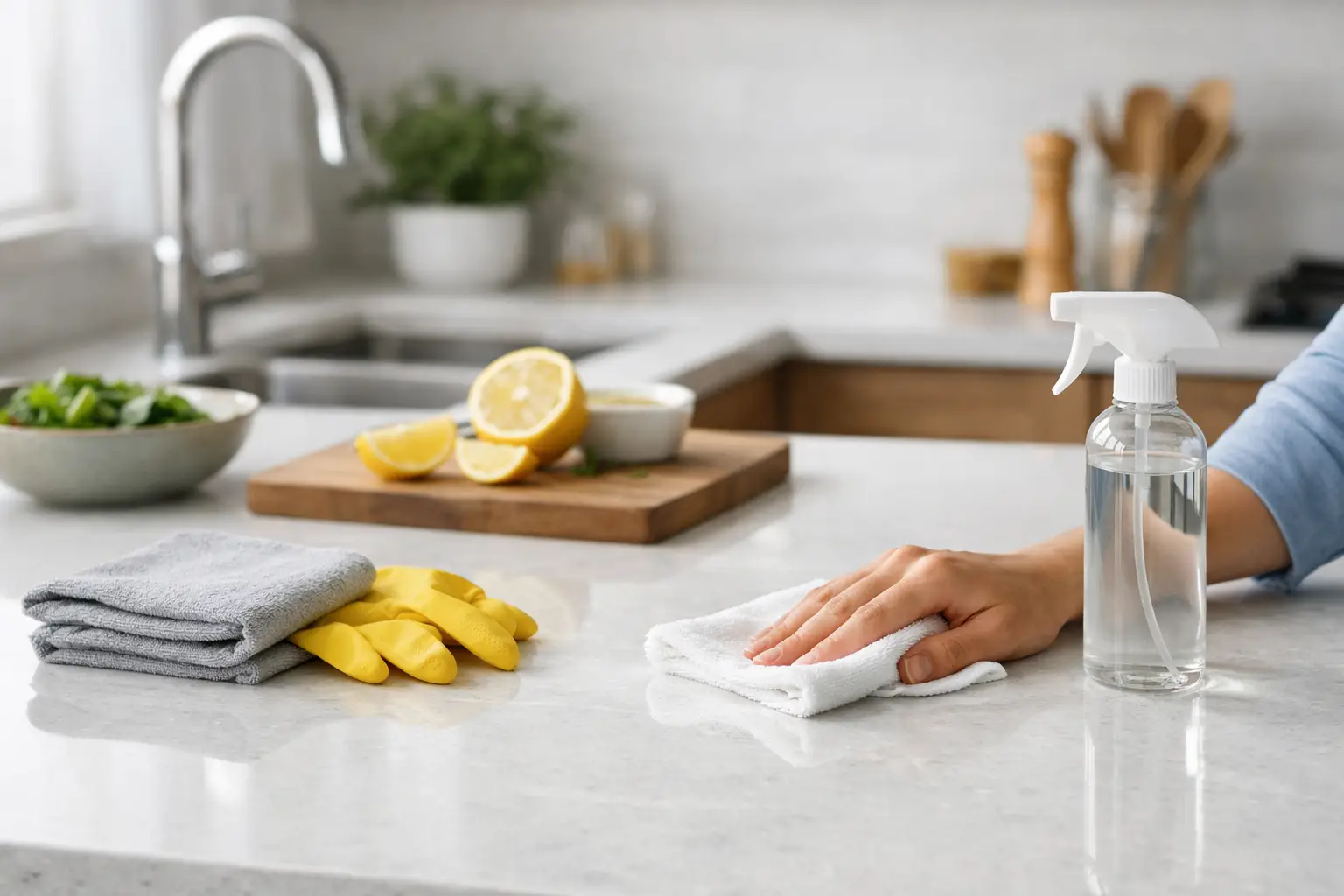
A quartz worktop should make a kitchen easier to live with, not give you another list of chores. This quartz worktop care guide sets out what really matters: a simple daily clean, sensible protection from heat and a quick response when something spills. With those habits in place, quartz can stay looking clean and well cared for through years of breakfasts, packed lunches, baking and family dinners.
Quartz is a popular choice for kitchen makeovers because it brings a smart, consistent finish without the regular sealing associated with many natural stone surfaces. It is also available in a wide range of colours and patterns, from quiet pale finishes to veined designs that give an existing kitchen a more contemporary feel. It is durable, but it is not completely immune to damage. Knowing where its limits lie will help you enjoy it without fuss.
Quartz worktop care guide: the everyday routine
For everyday cleaning, warm water, a soft cloth and a small amount of mild washing-up liquid are usually all that is needed. Wipe away crumbs and splashes, then go over the surface with clean water and dry it with a microfibre cloth or soft tea towel. Drying is a worthwhile final step, particularly in hard-water areas, as it helps prevent cloudy-looking mineral marks around the sink and tap.
Avoid leaving water, washing-up liquid or cleaning spray to dry on the worktop. These do not normally harm the quartz itself, but residue can make a polished or darker surface look dull or streaky. A quick wipe after washing up is generally enough to keep it looking its best.
If your kitchen is busy, there is no need to polish quartz every day or use specialist products for every clean. In fact, using too much cleaner can create the very film you are trying to remove. A straightforward routine is kinder to the surface and easier to maintain.
What quartz is made to handle – and what it is not
Quartz worktops are engineered from natural quartz particles combined with resin and pigments. Their low-porosity surface makes them well suited to normal kitchen spills, including tea, coffee, oil and everyday food stains. Unlike some porous materials, they do not usually need sealing as part of routine care.
That said, low porosity does not mean invincible. The resin content is the reason a quartz surface can be affected by excessive heat, harsh chemicals and abrasive treatment. A good worktop should cope with everyday use confidently, but it benefits from the same sensible precautions you would take with any quality kitchen surface.
Always use a chopping board. Knives can leave marks, and repeated cutting in one place may spoil the finish. It also protects your blades, which quickly become blunt against a hard engineered stone surface.
Heat deserves particular attention. Do not put a hot roasting tray, saucepan, slow cooker insert or air-fryer basket directly on quartz. Use a trivet, heatproof mat or wooden board instead. A single very hot item may cause discolouration, cracking or damage to the resin, especially around edges and joins. It is a small habit that can prevent an expensive problem.
Removing stains without making them worse
Most fresh spills will lift with the regular cleaning method. For dried-on food, first soften it with warm water and mild detergent, then wipe with a soft cloth. If needed, use a plastic scraper held gently at a low angle. Do not use a metal knife, scourer or wire wool, as these can scratch or leave grey marks on the surface.
Grease around a hob or sticky marks left by labels and tape can sometimes need a little more effort. Start with a pH-neutral cleaner that is suitable for quartz, following the product instructions carefully. Apply it to the cloth rather than soaking the worktop, and rinse afterwards.
For limescale near the sink, the safest approach depends on the specific worktop manufacturer’s guidance. Do not assume that a strong limescale remover is suitable simply because it works on ceramic or stainless steel. Acidic products can be too aggressive for quartz resins, particularly if left sitting on the surface. Regular drying around the sink is the easier preventative measure.
When a mark will not shift, resist the temptation to keep escalating to stronger household chemicals. Take a photograph and ask a worktop specialist or the supplier for advice first. The right solution depends on the cause of the mark and the particular quartz range.
Products and habits to avoid
The labels on cleaning products are worth reading. Some common household products are designed for tough jobs, but are not appropriate for an engineered stone worktop. Keep these away from your quartz surface, unless the worktop manufacturer specifically says otherwise:
- Oven cleaner, drain cleaner and paint stripper
- Strong bleach or products containing chlorine
- Abrasive cream cleaners, scouring pads and wire wool
- Highly acidic or alkaline cleaners, including some descalers
It is also wise to keep nail-varnish remover, permanent marker and strong dyes away from the worktop. If an accidental spill occurs, wipe it up promptly, rinse the area with water and dry it. Speed matters more than scrubbing.
Look after edges, joints and the sink area
The flat expanse of a quartz worktop tends to get the most attention, yet the edges and sink cut-out often work hardest. Avoid leaning heavily on unsupported overhangs or dropping heavy cookware onto the edge. Quartz is strong, but stone-based surfaces can chip when struck sharply.
Around an undermounted sink, wipe away standing water and check that the silicone seal remains sound. The seal is there to prevent water reaching the cabinet below, rather than to protect the quartz alone. If you notice loose or discoloured sealant, arrange for it to be checked before a minor issue becomes swelling or damage to the unit beneath.
Joints are usually designed to be discreet rather than invisible. Clean them as you would the rest of the worktop, without trying to dig into them with sharp tools. If a joint seems to have moved, opened or developed a chip, seek professional advice rather than attempting a home repair.
Care choices when refreshing an existing kitchen
A new quartz worktop can make a striking difference when the cabinet layout still works well. Paired with replacement doors, updated handles and a new sink or tap, it can give the kitchen a properly refreshed feel without the disruption of replacing every cabinet.
Before settling on a colour, think about how you use the room. A very pale, heavily polished surface can look bright and elegant, but may show water spotting more readily if it is not dried after use. A darker or textured finish can be more forgiving in some households, although crumbs and dust can be more visible. There is no universally best choice – it depends on your lighting, cleaning routine and the look you want alongside your doors and flooring.
Seeing a full sample in person is particularly helpful with quartz. Veining, sparkle and surface finish can look very different under showroom lighting, daylight and the under-cabinet lights in your own kitchen. Take a door sample, paint reference or a photograph of your current space when comparing options.
Homeowners around St Neots, Little Paxton, Huntingdon and the surrounding villages can visit the showroom at The Conservatory Village to compare worktop samples alongside replacement kitchen doors, handles, sinks and taps. Talking through the practical details before ordering often makes it easier to choose a surface that suits both the room and the way your household uses it.
A quartz worktop does not need complicated care. Treat it as a hardworking part of the kitchen: clean it gently, protect it from direct heat and avoid harsh chemicals. Those simple habits leave you free to enjoy the improvement you have made to the kitchen you already have.