Space Saving Pantry Units for Existing Kitchens
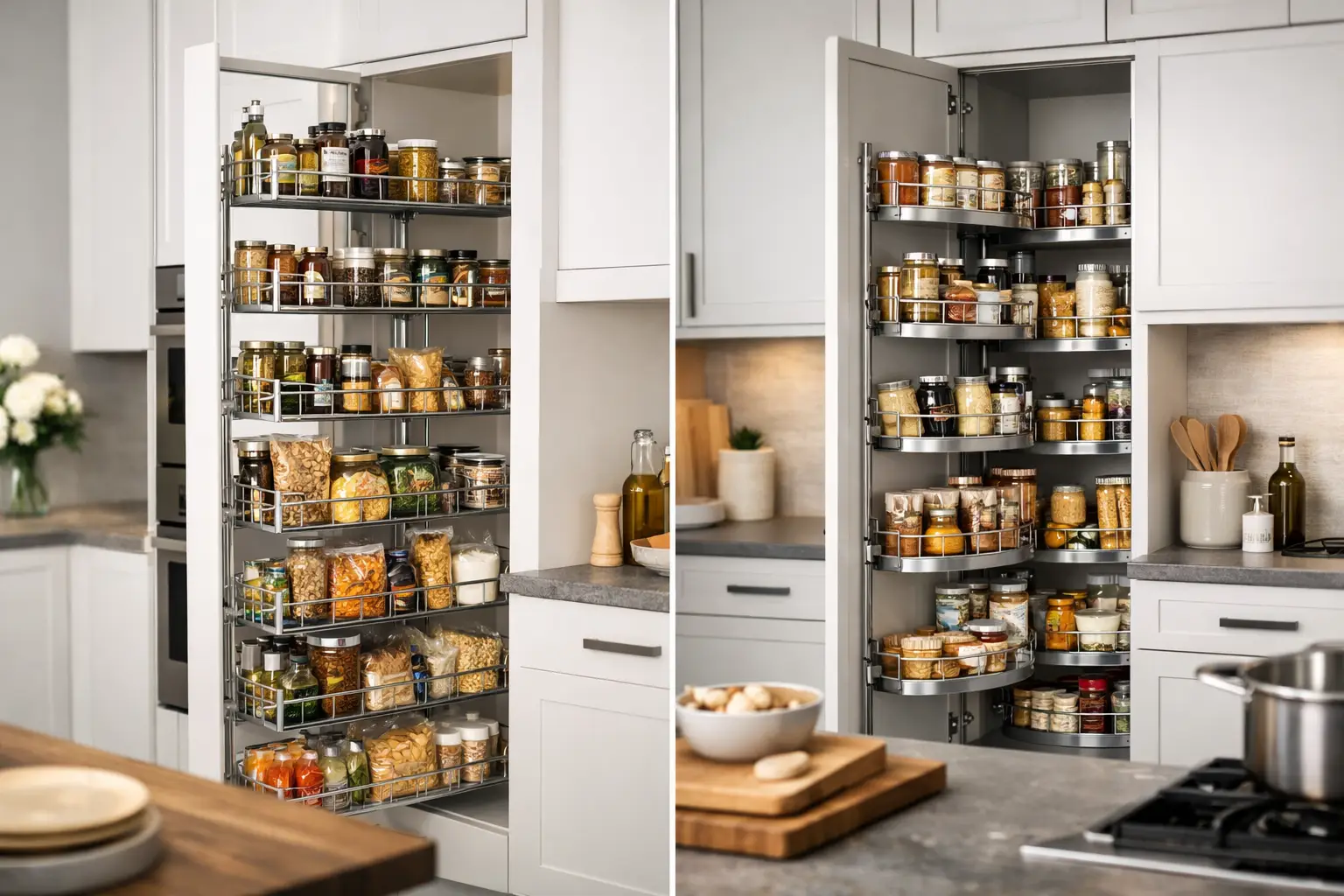
A kitchen can feel short of storage even when the cupboards are full. The issue is often not the size of the room, but how easily you can reach and see what is already there. Space saving pantry units are designed to make everyday food storage more accessible, helping to bring order to groceries, tins, packets and baking supplies without changing a kitchen layout that already works well.
For many homeowners, a complete kitchen refit is not necessary. If the cabinets are sound and you are happy with where the sink, cooker and worktops sit, improving the storage inside and refreshing the visible finishes can make the room far more practical. A well-chosen pantry unit can be one of the most useful changes you make.
What makes a pantry unit space saving?
A pantry unit makes better use of the full height and depth of a cabinet. Rather than stacking items at the front and losing sight of everything behind them, it uses shelves, pull-out mechanisms or door-mounted storage to keep food visible and within reach.
This matters in real kitchens. A deep cupboard may seem generous, but it can quickly become a place where duplicate jars, out-of-date packets and seldom-used ingredients disappear. A tall larder-style unit with organised internal storage gives each item a clearer place. You can see what needs replacing before starting the weekly shop, and there is less rummaging when preparing a meal.
The best option depends on the cabinet space available, the type of food you store and how you use the kitchen. A large family may need room for bulk packets and lunchbox supplies, while a couple may prefer a slimmer pull-out pantry that frees up worktop-adjacent cupboards for everyday items.
Pantry storage that works with your current kitchen
One of the advantages of updating an existing kitchen is that you can focus your budget where it will make the biggest difference. A pantry solution does not always mean removing every unit and starting again. In some cases, an existing tall cabinet can be adapted internally. In others, replacing a poorly used cupboard with a purpose-planned larder unit may be worthwhile.
Tall larder cupboards
Tall larder cupboards are a popular choice where there is an unused full-height space, or where an existing tall unit is no longer meeting the household’s needs. They provide a dedicated home for dry goods and can reduce pressure on wall cupboards and base units.
Shelving is the simpler, lower-cost approach and works well when shelves are set at sensible heights. Pull-out shelves or wire baskets can be more convenient, particularly for lower sections, because you do not have to bend or reach to the back of a deep cabinet. The trade-off is that pull-out mechanisms take up a little internal space and add to the cost, so they are most valuable where access is the priority.
Narrow pull-out pantry units
A narrow gap between cabinets can be more useful than it first appears. Slim pull-out units are suited to bottles, spices, sauces, oils and packets. They are especially helpful in compact kitchens, where every centimetre needs to earn its place.
These units are not intended to replace a full larder. Their strength is convenience: frequently used ingredients can be kept near the cooking area, easy to find and simple to put away. Make sure the shelving and runners are suitable for the weight of the items you plan to store. Bottles soon add up.
Corner storage with better access
Corners can waste valuable kitchen space when they are fitted with basic fixed shelves. The back section is difficult to reach, so it often becomes storage for items that are rarely used. Pull-out corner systems, rotating shelves and shaped baskets can make the space more accessible.
Not every corner needs an elaborate mechanism. If the cupboard is used for larger, occasional items, straightforward shelves may still be perfectly suitable. But if you regularly store food there, improving access can make a noticeable difference to the way the kitchen functions.
Plan around how you actually cook
The most effective pantry storage reflects your routine rather than a picture in a brochure. Think about which items you use every day, which are bought in bulk and which need to be kept out of reach of young children. The answers will guide the height, position and style of the unit.
Keep breakfast foods, tea, coffee and packed-lunch supplies together if mornings are busy. Place pasta, rice, tins and cooking sauces close enough to the hob to be useful, but not so close that heat and splashes become a problem. Heavy items are usually best stored lower down, while lighter packets and less frequently used baking ingredients can go on higher shelves.
It is also worth considering clearance. A pull-out pantry needs room to open fully, and a hinged tall door should not block a busy route through the kitchen. This is where seeing options in person and talking through the room can prevent an expensive choice that looks good but proves awkward to use.
Combine storage improvements with a kitchen refresh
A pantry unit may solve a practical problem, but it can also be part of a wider kitchen update. Replacement doors and drawer fronts can give existing cabinets a more current look, while new handles, worktops, a sink or tap can make the finished room feel considered rather than piecemeal.
Matching the pantry unit to the rest of the kitchen is important. A modern flat door in a soft matt colour can suit a contemporary refresh, while a framed shaker-style door may be a better fit for a more traditional home. Internal storage is largely hidden, but the exterior should sit comfortably with the surrounding doors and finishes.
If your existing cabinet sizes are unusual, made-to-measure options can be particularly useful. Standard sizes can offer good value where they fit, but an ill-fitting door or poorly planned filler panel can undermine the result. Measuring carefully and discussing the practical details before ordering helps ensure the updated kitchen looks intentional.
Small details that keep a pantry useful
The internal layout matters as much as the cabinet itself. Adjustable shelves give you flexibility as your shopping habits change. Deep baskets are useful for packets and snacks, while shallower shelves make it easier to see tins, herbs and jars. Clear containers can look tidy, but they are not essential – a sensible arrangement that is easy for everyone in the household to maintain is more useful than a perfectly styled cupboard.
Good lighting also helps, particularly in tall units or darker corners. If the pantry is close to a work area, consider whether improved task lighting would make the space easier to use. Soft-close hinges and runners are a worthwhile finishing touch for many households, although they are less important than choosing a storage layout that genuinely suits the contents.
Avoid filling every shelf to its limit. A little spare room means food can be put away quickly and items are less likely to be forgotten at the back. It also leaves space for the extra supplies that tend to appear before Christmas, school holidays or visits from family.
See the options before making a decision
Images are useful for ideas, but pantry storage is easier to judge when you can open a door, pull out a basket and compare finishes beside worktop and handle samples. Homeowners around St Neots, Little Paxton, Huntingdon and the surrounding villages can visit the showroom at The Conservatory Village to talk through what can be improved in the kitchen they already have.
Take a few photographs and rough measurements of your current cabinets, along with a note of what frustrates you most. Whether that is a crowded food cupboard, awkward corner storage or tired doors around an otherwise sound layout, practical advice can help you decide which changes will make everyday life easier.
A better pantry is not about cramming more into the kitchen. It is about giving the things you use a sensible place, so the kitchen you already know becomes calmer, easier to use and more enjoyable to spend time in.