12 Pantry Storage Ideas for Kitchen Cupboards
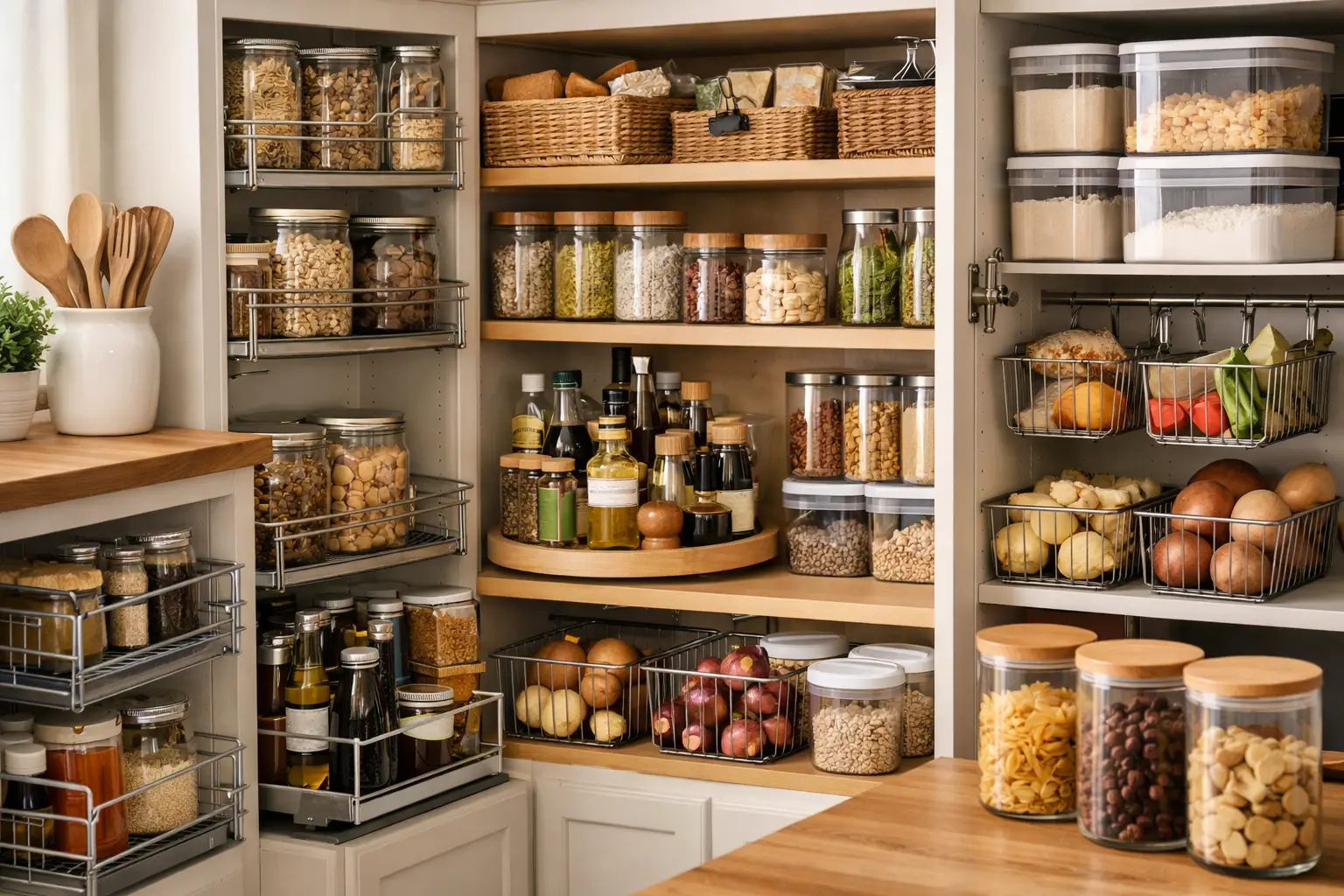
A pantry cupboard can look full long before it is actually useful. Tins disappear behind packets, spices collect in a jumble, and buying a second bag of pasta becomes routine because no one can see what is already there. The best pantry storage ideas for kitchen cupboards are not about fitting in more for the sake of it. They make the food you use every day easier to find, reach and put away.
For many homeowners, improving pantry storage is also a chance to look again at the kitchen as a whole. If the layout still works but the cupboards feel dated, awkward or poorly organised, a refresh with replacement doors, better internal storage and a few well-chosen finishing touches can make the room far more enjoyable to use.
Start with what your household actually uses
Before buying containers or changing cupboard fittings, take everything out of the pantry area. It is a small job that often reveals expired food, duplicate packets and ingredients that have not been used in months. Wipe down the shelves, then group what remains by how it is used rather than by what looks neat.
Breakfast foods, baking ingredients, tinned goods, packed lunches, snacks and cooking staples all need slightly different storage. A household that cooks from scratch most evenings will need quick access to oils, rice, herbs and tins. A busy family may need a simple snack shelf that children can reach without emptying the whole cupboard.
This first sort also helps you decide whether the problem is organisation or the cupboard itself. Deep fixed shelves can be perfectly serviceable for less-used stock, but they are often frustrating for everyday food. A well-planned internal change can be more valuable than simply adding another basket.
Create clear pantry storage zones in the kitchen
A cupboard works best when each shelf has a purpose. You do not need labels on every item, but clear zones stop the pantry slowly becoming a collection of half-open packets.
Keep the things you reach for most often between waist and eye level. This is the right place for cereals, tea and coffee, pasta, sauces and lunchbox items. Put heavier goods such as large bags of flour, bottled drinks and bulk tins on lower shelves. Higher shelves are better for occasional baking supplies, serving platters or spare packets.
Where space is limited, it can help to divide the cupboard into four practical areas:
- everyday cooking ingredients, including oils, seasonings and dry goods
- breakfast and snack foods that need quick access
- baking supplies and less frequently used ingredients
- back-up stock, such as extra tins, jars and long-life items
The aim is not to make the cupboard look like a shop display. It is to make putting the shopping away straightforward, so the system survives a busy week.
Keep a small amount of space spare
A pantry packed to the front edge of every shelf is difficult to maintain. Leaving a little room beside each category makes it easier to see what is running low and avoids the need to rearrange everything after a supermarket delivery. If your household buys in bulk, reserve one shelf or basket for unopened back-up items rather than mixing them with open packets.
Make deep cupboards easier to reach
Deep pantry cupboards are common in established kitchens around St Neots and the surrounding villages. They can hold plenty, but fixed shelves make the back of the cupboard hard to use. Food gets pushed behind other food, particularly when different people put the shopping away.
Pull-out shelves, internal drawers and wire baskets bring the contents towards you. They are especially useful for tins, jars and packets, as you can see the full depth of the storage without kneeling on the floor and searching at the back. They can also make lower cupboards much more comfortable for anyone who finds bending difficult.
A full pull-out larder gives excellent visibility and access, although it needs sufficient cabinet height and a budget for the fittings. For a more modest update, adding one or two pull-out baskets to the most troublesome base cupboard may be enough. The right answer depends on the cabinet size, the condition of the existing units and how much you want to change.
If the carcasses are sound, there is often no need to replace the whole kitchen. New made-to-measure or standard-size doors can refresh the outside, while practical internal storage improves the part you use every day.
Use containers where they solve a real problem
Decanting dry goods can be helpful, but only where it makes food easier to store or identify. Clear, airtight containers suit flour, sugar, rice, pasta, cereal and snacks because they reduce torn packets and show when supplies are low. Square or rectangular containers usually make better use of shelf space than round jars.
Choose only a few container sizes so they stack neatly. Measuring every shelf before buying anything will save frustration later, particularly in older cupboards where shelf depth and hinges may reduce usable space.
Keep labels simple and readable. Include the product name, and for anything decanted from its original packaging, keep the cooking instructions and best-before information nearby or note them on the container. This matters for allergens as well as avoiding guesswork when preparing a meal.
Not everything needs to be decanted. Sauce packets, tea bags, stock cubes and small snack bars often work better in shallow open baskets or drawer organisers. Glass jars can look smart, but they are heavier and may not be the most practical choice for a high shelf or a home with young children.
Give small items a proper home
Spice jars, sachets and baking decorations are usually the first things to become untidy. They are small enough to slip behind larger items, yet used often enough to cause daily irritation.
A tiered shelf insert lets you see labels at a glance and is a good choice for spices or small tins. A narrow pull-out rack can work well beside an oven or at the end of a run of units, provided the cabinet is suitable. Door-mounted racks are useful for lighter items, but check that the door closes comfortably once bottles and jars are in place.
For baking supplies, use a shallow basket for yeast, food colouring, sprinkles and cupcake cases. This can be lifted out in one go rather than searching through several shelves. The same approach works well for gravy, sauces and seasoning sachets.
Think about the cupboard fronts as well as the inside
Storage improvements are more satisfying when the kitchen feels pleasant to be in. If your pantry cupboard doors are worn, mismatched or difficult to open, replacement doors and new handles can make an existing layout feel considered again without the cost and disruption of a complete refit.
Lighter door colours can help a compact kitchen feel more open, while a timber-effect finish can add warmth to a modern space. Handle choice matters too. Knobs are straightforward and traditional, whereas bar handles can suit a cleaner, contemporary look. Neither is automatically better – it depends on the style of the room and what feels comfortable in the hand.
This is where seeing samples in person is useful. Door finishes, worktop colours and handle styles can look quite different under the lighting in your own home. At the Replacement Kitchen Doors To Size showroom in Little Paxton, homeowners can compare options properly and discuss whether a straightforward door change, new worktops or improved cupboard storage will make the biggest difference.
Build a routine that keeps the pantry useful
Even the best cupboard layout needs a little upkeep. When unpacking shopping, place newer items behind older ones where practical, especially tins, cereals and baking goods. Put open packets back into their zone rather than setting them on the nearest shelf. A quick check every month or two is usually enough to clear out anything out of date and reset shelves that have become muddled.
Avoid planning storage around a single perfect arrangement. Families change, eating habits change and kitchen cupboards should be allowed to adapt. Baskets and containers can be moved far more easily than fixed dividers if your needs alter over time.
A tidy pantry does not need to be colour-coordinated or photographed to be successful. It simply needs to help the first cup of tea, the evening meal and the weekly shop run a little more smoothly. If you are refreshing a kitchen you already like, take a few cupboard measurements and bring your questions to the showroom – practical advice is often the easiest place to start.