Kitchen Appliance Brands: How to Choose Well
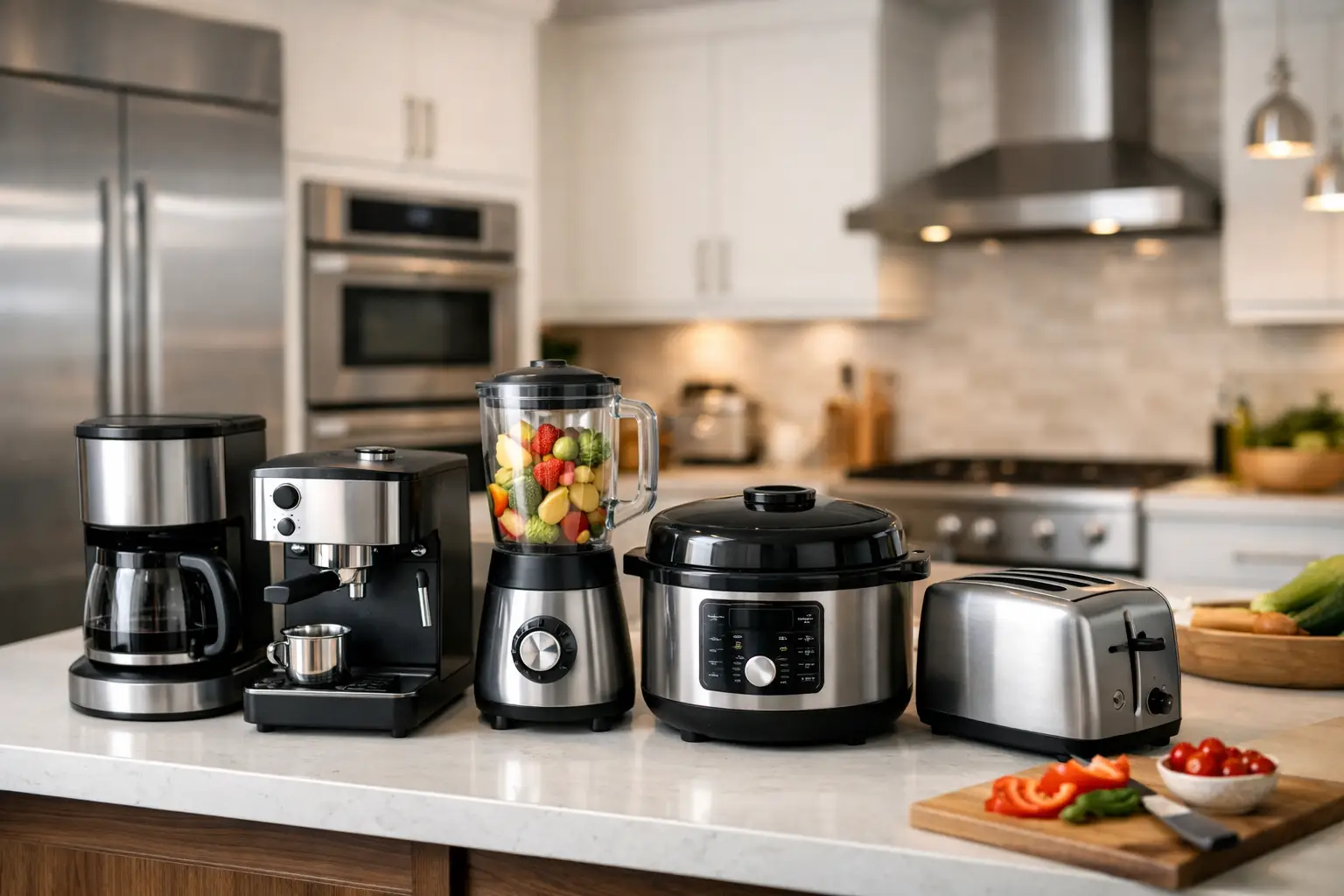
A new oven, hob or dishwasher can make an older kitchen feel far more enjoyable to use, even when the cupboards and layout still suit your home. With so many kitchen appliance brands available, the best choice is rarely about buying the most expensive name. It is about choosing appliances that fit your space, suit the way you cook and work well with the kitchen refresh you have planned.
For homeowners around St Neots, Little Paxton and Huntingdon, a replacement-door project is a good time to take stock. You may only need a new oven and extractor to improve daily cooking, or you may be ready to update several built-in appliances while changing tired doors, handles and worktops. Seeing finishes and sizes together before you buy helps avoid expensive compromises later.
Start with your kitchen, not the badge
Brand reputation matters, but the existing kitchen should lead the decision. Measure the appliance housing carefully, including the width, height and depth, and consider where doors, drawers and handles will sit once they are fitted. A standard 600mm built-in oven may sound straightforward, but ventilation gaps, cabinet depth and the position of a worktop can all affect what will fit neatly.
Think about how you use the room as well. A keen cook may value accurate oven temperature control, a flexible induction hob and a powerful extractor. A busy family might prioritise a large dishwasher, simple controls and a fridge with useful internal storage. If you rarely use a microwave, it may not be worth giving up a cupboard to accommodate a built-in model.
This is where a showroom visit is particularly useful. Comparing door samples, worktop colours, handles and appliance finishes in person makes it easier to judge whether black glass, stainless steel or a lighter finish will feel right in your kitchen. A photograph cannot show how a finish changes in natural light or how visible fingerprints may be on a particular surface.
Kitchen appliance brands: what really separates them?
Most established kitchen appliance brands offer several product levels. Their entry ranges often cover the essentials well, while premium ranges may add quieter operation, more precise controls, stronger warranties or smarter features. The right level depends on how much use an appliance will get and which details matter to you.
Reliability, parts and support
An appliance is only a good value purchase if it remains practical to own. Before deciding, ask about warranty length, local or national servicing arrangements and the availability of replacement parts. A lower initial price can be less appealing if a fault is difficult to repair a few years later.
For integrated appliances, it is also worth checking that the model is designed for the correct type of door fixing. Integrated dishwashers, fridge-freezers and washing machines need compatible furniture-door fittings. This is easily overlooked when choosing online, yet it is vital when you are fitting new kitchen doors around the appliance.
Everyday performance
Specifications can become overwhelming, so focus on the functions you will genuinely use. For ovens, useful features may include even heat distribution, easy-clean linings, telescopic shelves and clear controls. With dishwashers, look at capacity, programme length, drying performance and noise levels rather than choosing purely on the number of wash programmes.
Induction hobs are popular because they heat quickly and are simple to wipe down, but they require compatible pans and an appropriate electrical supply. Gas hobs offer familiar, visible heat control, although cleaning around burners takes more effort. Ceramic hobs can be a sensible middle ground for some homes, particularly where changing the electrical setup would add unnecessary cost.
Noise and energy use
Open-plan kitchens make appliance noise more noticeable. A dishwasher, fridge-freezer or extractor that seems acceptable in a separate room may become distracting beside a dining or sitting area. Check the decibel rating and, where possible, listen to a working appliance or discuss realistic expectations in the showroom.
Energy labels are helpful, but they are not the full picture. A larger fridge-freezer naturally uses more energy than a smaller one, even if both are efficient for their size. Choose capacity that suits your household rather than paying to cool unused space. Similarly, an extractor needs enough power for the size of the room, but an oversized model can create more noise than necessary.
Match appliance finishes to a kitchen refresh
Appliances are a visible part of the finished design, especially when you are replacing doors and worktops. Integrated models can keep the room calm and consistent because they sit behind matching cabinet doors. They are particularly effective in smaller kitchens or where you prefer the cabinetry to be the main feature.
Freestanding appliances can offer more capacity and sometimes better value, but they need to work with the surrounding finishes. A stainless-steel cooker may look at home with brushed metal handles and a neutral worktop, while black appliances can provide a crisp contrast against pale doors. If several appliances will remain on display, aim for finishes that complement one another rather than trying to match every detail exactly.
Do not forget practical surfaces. Glossy black glass can look smart but may show smears more readily. Textured or matt finishes can be more forgiving, especially in a family kitchen. The most attractive choice is often the one that still looks good after an ordinary week of cooking, lunches and washing up.
Decide what to replace now and what can wait
A full run of matching appliances is not always necessary. If your existing fridge-freezer is reliable and fits well, keeping it may free up budget for a better oven, worktop or sink and tap. Replacing doors, drawer fronts and handles around appliances that are still in good order can make the whole room feel renewed.
There are times when replacing several appliances together makes sense. If you are changing from gas to induction, moving the oven position or fitting a new extractor hood, coordinating the work at the same time can reduce disruption. It also allows new cabinet doors, appliance housings and worktops to be planned properly around the chosen models.
Be cautious about selecting appliances before the kitchen details are confirmed. Handleless doors, deep worktops, tall housings and new sink positions can all influence clearances. A dishwasher door needs room to open fully, an oven needs suitable ventilation, and an extractor needs a realistic route for ducting if it is not recirculating.
Questions worth asking before you buy
A good appliance conversation should be practical, not sales-led. Ask whether the model fits the available housing, whether it needs any additional electrical or plumbing work, and how it will sit with replacement doors. If you are comparing two similar options, ask which difference will be noticeable in day-to-day use.
It also helps to be honest about your budget from the start. There is usually a sensible balance to be found between appliance quality and the rest of the project. A durable worktop, well-fitting replacement doors and reliable appliances all contribute to a kitchen that remains easy to live with. Spending heavily in one area while cutting corners in another rarely gives the best overall result.
At Replacement Kitchen Doors To Size, you can bring rough measurements, photographs and ideas to the showroom at The Conservatory Village in Little Paxton. Looking at samples alongside appliance options gives you a clearer view of what can be refreshed, what needs replacing and what will work with the kitchen you already have.
A kitchen update does not have to begin with stripping everything out. Start with the parts that will improve everyday life most, then choose appliances that fit the room, your routine and the finish you want to enjoy for years to come.