Updating Kitchen on a Budget: Keep Your Layout
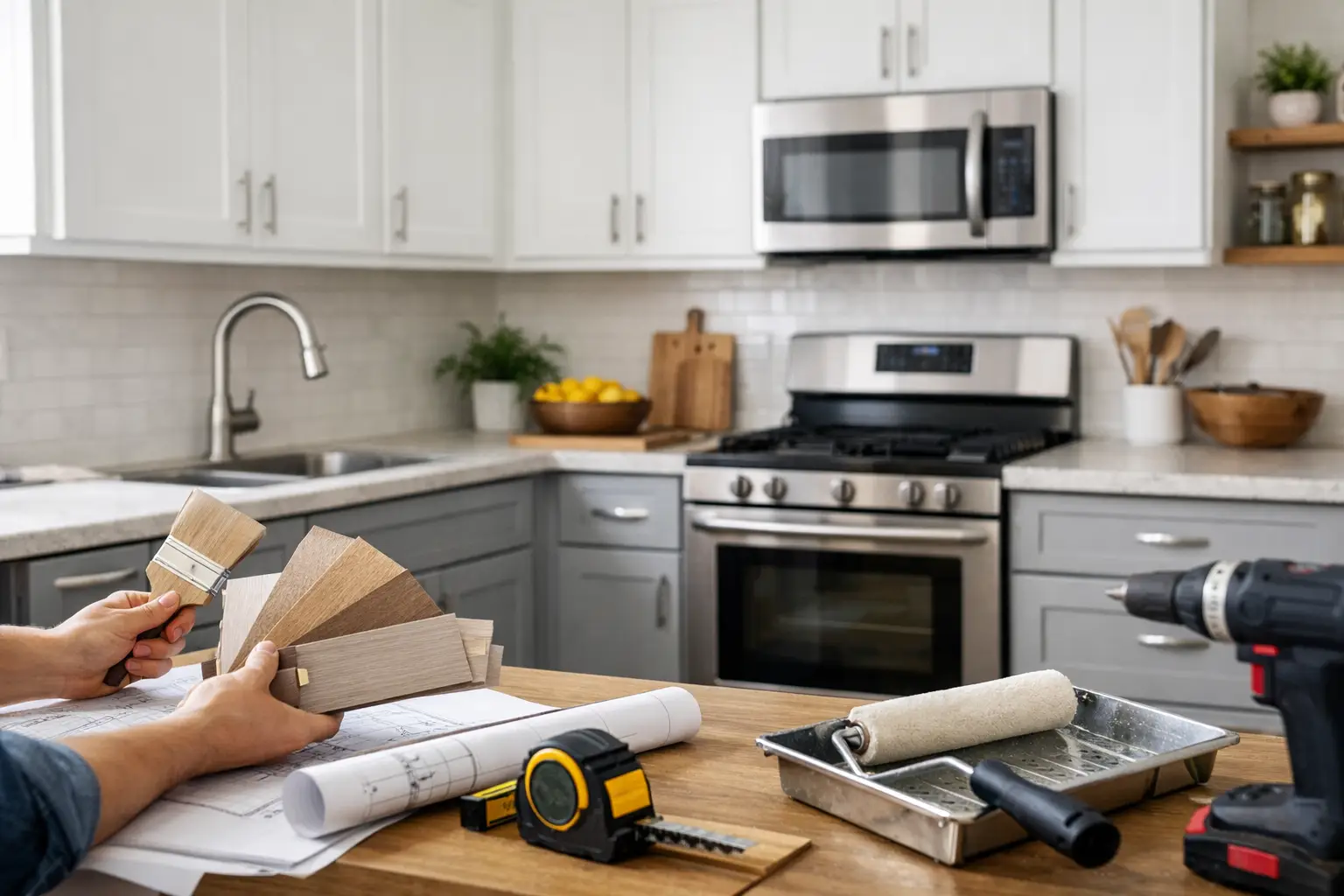
A kitchen can feel past its best long before it needs replacing. Perhaps the cupboard doors are worn around the handles, the worktop has lost its finish, or the colour belongs to another decade. If the cupboards are sound and the layout still works for your household, updating a kitchen on a budget can be a matter of changing the parts you see and use every day, rather than starting again from scratch.
That approach can save considerable disruption as well as money. You keep the plumbing, appliances and cabinet arrangement that already suit your room, then put your budget towards a fresher look and more useful finishing details.
Start with what already works
Before choosing colours or handles, take an honest look at the kitchen you have. Are the cabinets sturdy? Do the drawers run properly? Is there enough worktop space, and are the sink, cooker and fridge in sensible positions? If the answer is largely yes, a full kitchen replacement may not be necessary.
Keeping the existing carcasses is often the most cost-conscious decision. Cabinet boxes are largely hidden, and good-quality units can last for many years. Replacement doors and drawer fronts change the visible face of the kitchen, while new handles, a worktop or a sink can make it feel far more current.
There are times when a new layout is worth considering. You may need better access, more storage, or a safer arrangement for a growing family. Water damage, swollen cabinet panels and badly fitted units also deserve closer attention. The key is to spend money where it solves a real problem, not simply because a kitchen is no longer fashionable.
Put the budget into the changes you will notice most
A sensible makeover does not mean doing everything at once. Decide which elements have the greatest effect on how the room looks and works, then build the project around them.
Replacement doors give the biggest visual change
Doors and drawer fronts occupy most of the visual space in a kitchen. Replacing them can turn dated oak-effect, vinyl-wrapped or tired painted fronts into a clean, coordinated scheme without removing the cabinets behind them.
The choice is wider than many homeowners expect. A simple shaker door can suit a period property or a modern family kitchen depending on its colour and handle. A slab door offers a plainer, more contemporary look and can be particularly effective in smaller kitchens where you want the room to feel calm.
Standard sizes may be suitable for many kitchens and can help keep costs down. Made-to-measure doors are often the better route where cabinet sizes are unusual, the kitchen has been altered over time, or you want a neater fitted appearance. Measuring carefully matters. A door that is only slightly wrong can leave uneven gaps and make an otherwise good update look unfinished.
Worktops can change the character of the room
If your existing worktop is scratched, chipped or difficult to keep clean, replacing it is often money well spent. It is also a useful opportunity to reconsider practical details, such as the depth of the surface, the position of a draining board, or whether a more durable finish would make everyday life easier.
Laminate remains a practical budget choice and now comes in convincing stone, wood and plain finishes. It is good value and straightforward to care for, although it needs sensible treatment around joints and cut-outs. Solid surface, timber, quartz and other premium materials can offer a different feel and longer-term durability, but they will take up more of the budget. The right choice depends on how you cook, how busy the kitchen is, and what you want to spend.
Small details should not be an afterthought
Handles, hinges, taps, sinks, lighting and end panels are easy to overlook, but they are what make a refreshed kitchen feel considered. New handles can alter the style of replacement doors completely. Brushed metal suits many modern schemes, while knobs or cup handles can add a more traditional feel.
A new tap and sink can also bring a practical improvement. Think about bowl size, whether you need a drainer, and how much clearance there is beneath the worktop. A beautiful tap is less helpful if it splashes everywhere or does not suit the way you wash up.
A realistic order for updating a kitchen on a budget
The most common way budgets go off course is choosing finishes before understanding the full scope of the work. It is better to settle the essentials first, especially if a worktop replacement affects the sink, tap, splashback or appliance clearances.
A clear order helps keep decisions manageable:
- Check the cabinets, layout and any repairs needed before ordering anything.
- Choose replacement doors and drawer fronts, as these set the style and colour direction.
- Select the worktop, sink and tap together so the materials and cut-outs work properly.
- Finish with handles, lighting, panels and splashbacks once the main choices are confirmed.
Allow a small contingency as well. An older kitchen can reveal a worn hinge, an uneven wall or plumbing that needs attention once work begins. It is much less stressful to have some room in the budget than to compromise on the parts you will see every day.
Choose colours for the room, not just the sample
A sample door can look very different under your kitchen lighting from how it looks in a showroom. Consider the direction of the room, how much daylight it receives, and the colours already present in flooring, tiles and adjoining spaces.
Lighter shades can make a compact kitchen feel more open, while darker doors can add warmth and definition in a larger room with good light. Two-tone kitchens are another useful option: a deeper colour on base units can hide everyday marks, balanced by lighter wall units to keep the room from feeling heavy.
Bring a photo of your kitchen, along with a sample of flooring or paint if you have one. Seeing door finishes, handles and worktop samples side by side makes it easier to spot whether undertones clash. It also prevents the costly mistake of ordering a colour that looked right online but feels wrong in the room.
Avoid false economies
Budget-friendly does not have to mean choosing the cheapest item in every category. Thin, poorly finished doors, weak hinges or unsuitable worktop materials can quickly lead to replacement costs later. It is usually wiser to prioritise good doors, accurate sizing and careful fitting, then keep the scheme simple rather than adding expensive extras.
Likewise, painting existing doors can be an option if they are smooth, structurally sound and you are prepared for the preparation involved. However, chipped vinyl, damaged edges and worn routed doors do not always provide a dependable surface for paint. Replacement doors can be the more lasting choice, particularly where you want a specific style or a factory-finished surface that is easier to maintain.
Appliances are another area where restraint can help. If the oven, fridge and dishwasher work well and fit the space properly, there may be no reason to replace them during a cosmetic update. If one appliance is failing, plan its dimensions early so new doors, panels and worktops can be designed around it.
See the options before making a decision
Kitchen updates involve more than picking a shade from a screen. Door textures, edge details, handle finishes and worktop surfaces need to be seen and touched. A visit to the Replacement Kitchen Doors To Size showroom at The Conservatory Village in Little Paxton gives homeowners from St Neots, Huntingdon, Sandy, Bedford and nearby villages the chance to compare the options properly and talk through what can be retained.
Bring a few measurements and photographs of the kitchen if possible. Practical advice at the start can help you decide whether standard sizes will work, where made-to-measure doors would improve the fit, and which changes will give you the best return from your available budget.
A well-planned refresh should make the kitchen easier to live with as well as nicer to look at. Keep the parts that serve you well, improve the parts that let the room down, and take the time to choose finishes you will still be happy to see every morning.