Kitchen Lighting That Works in Real Homes
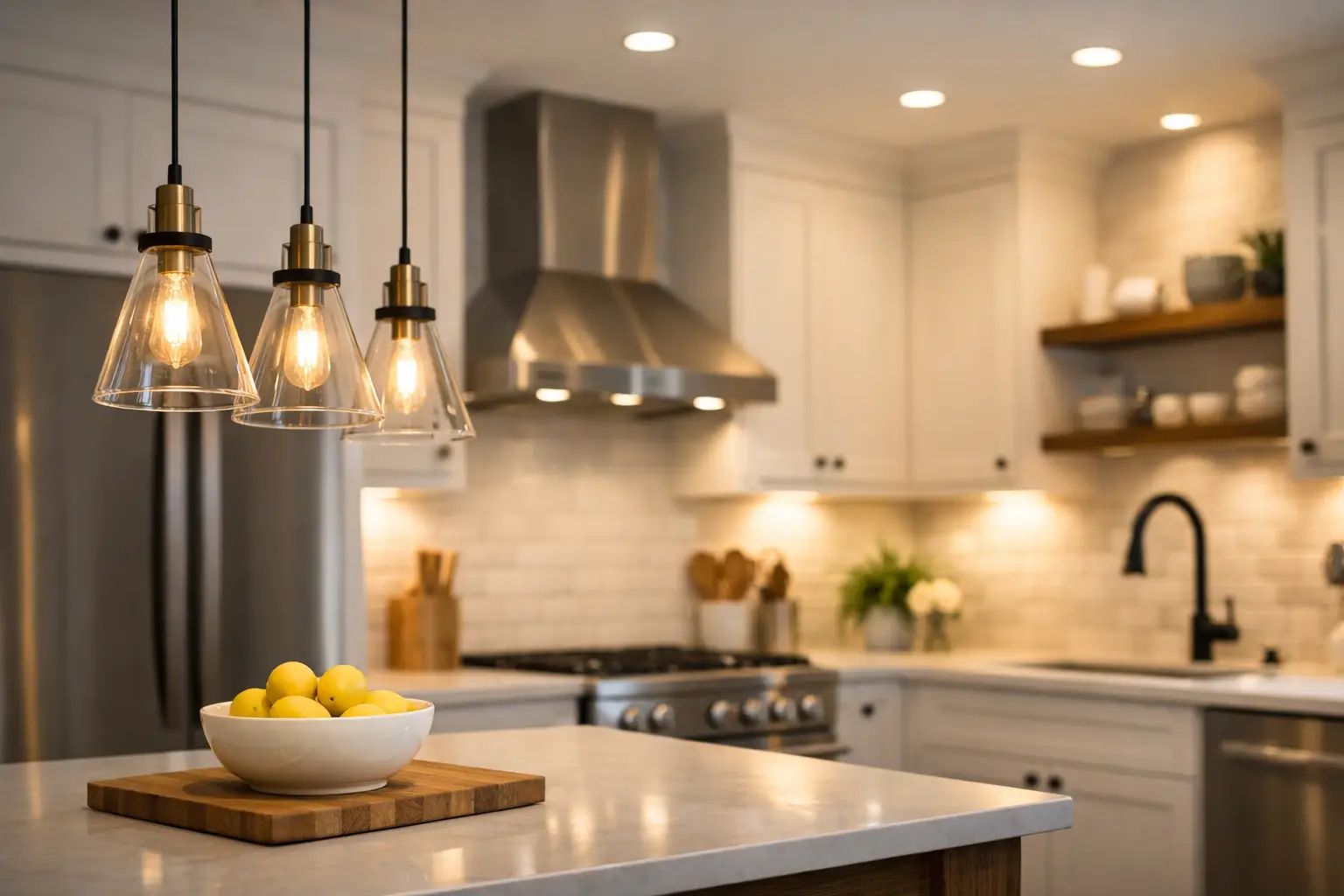
A kitchen can have smart new doors, a fresh worktop and updated handles, then still feel slightly off once the sun goes down. More often than not, the missing piece is kitchen lighting. It affects how colours look, how easy the room is to work in, and whether the whole space feels bright and welcoming or flat and gloomy.
That matters even more when you are refreshing an existing kitchen rather than ripping everything out. If you are keeping the current layout, lighting becomes one of the best ways to improve how the room feels day to day. It can make a modest update look more polished, help tired corners feel useful again and bring out the best in replacement doors, splashbacks and worktops.
Why kitchen lighting matters more than people expect
Most kitchens need to do several jobs at once. They are used for cooking, unpacking the shopping, helping with homework, making tea, chatting with family and sometimes working from the end of the table. One ceiling fitting in the middle of the room rarely handles all of that well.
The trouble is not always a lack of light. Sometimes there is plenty of brightness, but it is in the wrong place. A central fitting can leave worktops in shadow, especially if wall units block the light. In other homes, the room is bright enough for practical tasks but feels harsh in the evening because every bulb is doing the same job.
Good kitchen lighting solves both problems. It gives you stronger light where you need it, softer light where you want atmosphere and a better balance across the room. That is why it often has such a noticeable effect, even if you have not changed the footprint of the kitchen at all.
The three layers of kitchen lighting
The most useful way to think about kitchen lighting is in layers. You do not need a huge kitchen or a large budget to use this approach. You simply need each part of the room to be lit for the way it is actually used.
Ambient lighting
This is the general light that fills the room. It often comes from ceiling fittings such as recessed spotlights, a flush ceiling light or, in some kitchens, pendants over a more open area. Ambient lighting helps the room feel evenly lit and safe to move around in.
If your current kitchen relies on a single pendant, this is usually the first area worth reviewing. A row of well-positioned downlights or a better spread of fittings can make the whole room feel more up to date. That said, more fittings do not always mean better results. Poorly placed spotlights can create glare on glossy doors or leave dark patches near cabinets.
Task lighting
This is the practical layer, and it is often the one that makes the biggest daily difference. Task lighting is there to light the places where you prepare food, wash up and use appliances.
Under-cabinet lighting is one of the simplest and most effective examples. It throws light directly onto the worktop, where you actually need it, instead of from behind you. If you are updating your kitchen with replacement doors or a new worktop, adding discreet lighting beneath wall units can make those surfaces look better and work harder.
Task lighting is also useful above sinks, breakfast bars and any area where the main ceiling light does not quite reach. In some kitchens, especially older ones, the best result comes from improving task lighting rather than changing every fitting in the room.
Accent lighting
Accent lighting is the finishing touch. It is not essential in the same way as task lighting, but it can lift the whole look of the kitchen. This might include plinth lighting, lighting inside glazed cabinets or a soft glow above wall units.
Used well, accent lighting adds depth and makes the room feel more considered. Used badly, it can look fussy. The key is restraint. In most family kitchens, one or two accent features are plenty.
Matching the lighting to the kitchen you already have
If you are not replacing the whole kitchen, the lighting needs to work with what is staying as well as what is changing. That is where a bit of practical planning helps.
A galley kitchen, for example, often benefits from consistent, even lighting that avoids narrowing the room further. Too many statement fittings can make a tighter space feel cluttered. In a U-shaped kitchen, under-cabinet lighting often pays for itself in usefulness because there are more corners and more worktop runs. In an open-plan room, it usually helps to separate the practical kitchen zone from the dining or seating area with different light levels.
Finishes matter too. Matt doors absorb more light than gloss, so they may need a little more help to feel bright. Gloss doors bounce light around the room, which can be useful, but they also show glare more readily. Light worktops reflect brightness differently from dark stone-effect or wood-effect surfaces, and that changes how the whole kitchen feels after dark.
This is one reason it helps to see samples in person when choosing finishing touches. The same door colour can look warmer, cooler, softer or sharper depending on the lighting around it.
Choosing colour temperature without making the room feel cold
One of the easiest mistakes with kitchen lighting is choosing bulbs that are too cool. Very white light can sound appealing because it seems clean and bright, but in many homes it ends up feeling stark, especially in the evening.
For most kitchens, a warm white or neutral white works better than a very cool blue-white tone. You still want enough clarity for cooking and cleaning, but not at the expense of comfort. If your kitchen is the heart of the house, the room needs to feel pleasant at 7pm as well as practical at 7am.
It also helps to keep the colour temperature consistent across the room. If one area is warm and another is noticeably cooler, the kitchen can feel unsettled without you quite knowing why. Mixing styles of fitting is often fine. Mixing completely different types of light is less successful.
Dimmers, controls and everyday convenience
A good lighting plan is not just about fittings. It is also about control. If every light comes on at full strength from one switch, the room has to behave the same way all day long.
Dimmers are useful in kitchens because they let the space shift from practical to relaxed. Bright light is helpful when you are chopping vegetables or cleaning the hob. Later in the evening, that same level can feel too harsh. Separate switching is equally valuable. Being able to turn on under-cabinet lights without the main ceiling lights can completely change the mood of the room.
This does not need to become overly technical. In many homes, a simple arrangement with independent control for ceiling, task and feature lighting is enough.
When to update lighting as part of a kitchen refresh
If you are already changing doors, drawer fronts, handles or worktops, it makes sense to think about lighting at the same time. Not because everything has to be done together, but because these decisions affect one another.
A new worktop may deserve better task lighting. New handles in a brushed metal finish might suit a slightly more modern fitting style. A lighter door colour could help the room feel brighter overall, which means you may not need as many strong overhead lights as before.
There is also the practical side. It is often easier to plan small electrical changes while other finishing work is being considered, rather than trying to bolt them on later.
Common mistakes worth avoiding
The most common lighting mistake is relying on one fitting to do everything. The next is over-lighting the room with too many downlights, which can make a kitchen feel more like a showroom than a home.
Another is choosing fittings for appearance alone. A pendant may look right in a brochure but hang too low over a working area, or cast awkward shadows where you prep food. Equally, strip lighting can be extremely useful, but if it is visible rather than discreetly placed, it can look harsher than intended.
It is also worth thinking carefully before chasing trends. Some lighting fashions date quickly, whereas simple, well-placed fittings tend to last. If you are refreshing the kitchen you already have, that usually makes more sense than choosing something dramatic for the sake of it.
Seeing options in person makes decisions easier
Lighting is one of those things that is much easier to judge when you can compare finishes, colours and materials side by side. What sounds right on paper does not always look right against your chosen doors or worktop.
For homeowners around St Neots, Little Paxton and nearby towns, visiting a showroom can help make those choices clearer. When you can see how different finishes respond to light and talk through what is staying in your kitchen and what is changing, the decisions tend to feel more straightforward. Replacement Kitchen Doors To Size helps people look at the kitchen as a whole, not just as a list of separate products.
The best kitchen lighting is rarely the fanciest. It is the kind that makes the room easier to use, kinder to sit in and better matched to the kitchen you already have. If you are planning a refresh, it is worth giving lighting the same thought as doors, worktops and handles, because a few sensible changes can make the whole room feel more finished.