Kitchen Lighting That Works Harder
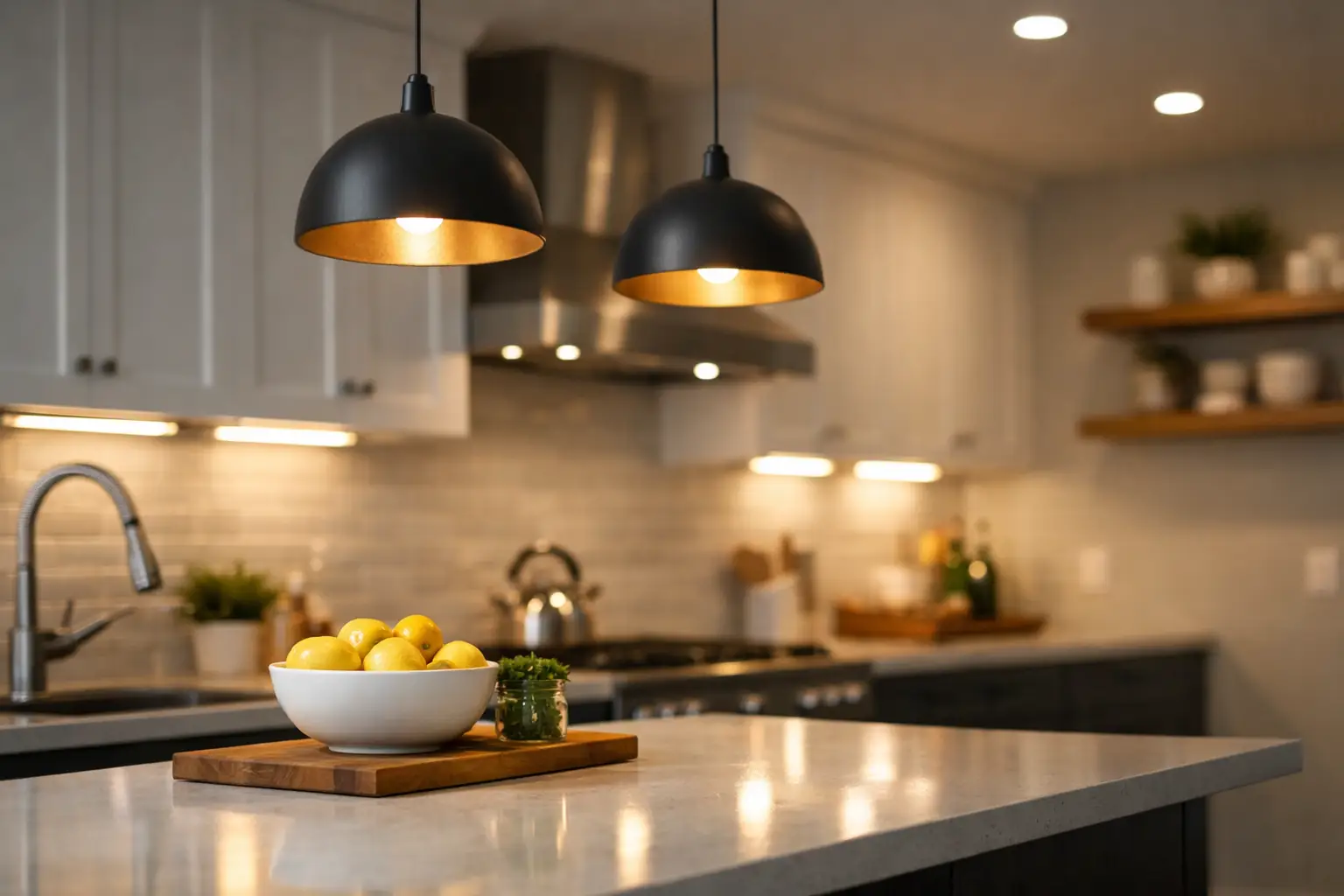
That awkward shadow across the worktop usually shows up at the worst time – when you are chopping vegetables, reading a recipe or trying to check whether the chicken is actually cooked. Good kitchen lighting is not just about making the room brighter. It is about making the kitchen easier to use, more comfortable to spend time in and better matched to the style of the room you already have.
For many homeowners, lighting is one of the most overlooked parts of a kitchen refresh. Doors, worktops and handles tend to get the attention first, which makes sense because they change the look of the room straight away. But if the lighting is poor, even smart new finishes can feel flat. Get it right, and the whole kitchen can feel cleaner, warmer and more up to date without changing the layout.
Why kitchen lighting needs more than one light
A single central fitting rarely does the job well in a kitchen. It can brighten the middle of the room but still leave dark patches where you actually work. If you stand at the worktop with the light behind you, your own body casts a shadow exactly where you need to see clearly.
That is why the best kitchen lighting usually comes in layers. You need practical light for food preparation and cooking, softer general light for the room as a whole, and sometimes a little feature lighting to lift the look of the space. It sounds technical, but in practice it is just about thinking how you use the room from morning to evening.
A kitchen used mainly for quick weekday meals may need something different from one that doubles as a family hub, homework spot or place to sit with a cup of tea. There is no single right answer. The best plan depends on the size of the room, ceiling height, natural light and how much of the existing kitchen you are keeping.
Start with task lighting in the right places
If there is one area worth getting right first, it is task lighting. This is the light that helps you work safely and comfortably at the sink, hob and preparation areas.
Under-cabinet lighting is often one of the most useful upgrades because it shines directly onto the worktop instead of from behind you. It can make a real difference in kitchens where wall units create shade below. Slim LED fittings are popular because they are neat, low maintenance and give a clean, even light.
The colour of that light matters too. Very cool white can make a kitchen feel stark, especially if you have warmer door colours or wood-effect finishes. Very warm light can look cosy, but it may not be as clear for food preparation. For many homes, something in the middle works best – bright enough to see properly, soft enough that the room still feels welcoming.
Task lighting near the sink is useful as well, particularly in winter when daylight fades early. If your sink sits below a wall cupboard, lighting there can stop that area feeling dull and enclosed. Over an island or breakfast bar, pendants can work well, but they need to be positioned carefully. Too low, and they get in the way. Too high, and they lose their effect.
Ambient kitchen lighting sets the mood of the room
Once the working areas are covered, think about the overall feel of the space. Ambient lighting is what gives the kitchen its general brightness. In some homes that will come from recessed ceiling lights. In others it may be a central fitting supported by wall lights or discreet LEDs.
Recessed spotlights are a common choice because they suit both modern and more traditional kitchens, and they spread light evenly when planned properly. The key is spacing. Too few and the room still feels gloomy. Too many and the ceiling can end up looking overcomplicated.
If your kitchen is part of an open-plan room, ambient lighting becomes even more important. You do not want the cooking zone to feel like a different world from the dining or sitting area. Dimmers can help here because they let you shift the mood through the day. Bright for cooking, softer for the evening.
This is also where finishes start to matter. Matt kitchen doors tend to absorb light differently from gloss doors, and darker colours often need more careful lighting to stop the room feeling heavy. If you are updating your doors or worktops at the same time, it makes sense to look at samples under similar lighting conditions rather than under one bright showroom fitting or in weak daylight at home.
Feature lighting should support the kitchen, not fight it
Feature lighting is the part people often notice first, but it should not be the starting point. A row of statement pendants or LED plinth lighting can look excellent, yet if the prep areas are still dim, the kitchen will not work as well as it should.
Used carefully, feature lighting adds depth and gives the room a more finished look. Lighting inside glazed cabinets can soften a kitchen and draw attention to decorative pieces. Plinth lighting can create a floating effect with some modern styles. Lighting above wall units can lift the ceiling visually in certain rooms.
The trade-off is that decorative lighting can date more quickly than simple practical fittings. If you are refreshing an existing kitchen rather than replacing everything, it is usually wise to keep the feature elements restrained. That way the lighting complements your new doors, handles or worktops instead of competing with them.
Matching lighting to your kitchen style
Lighting needs to suit the character of the room. A sleek handleless kitchen often works well with clean-lined spotlights, discreet LED strips and simple pendants. A more classic shaker-style kitchen may suit softer ceiling lights or fittings with a little more detail.
The finish matters as much as the shape. Black fittings can look smart, especially if they tie in with taps or handles, but they can feel quite strong in a small room. Brushed metal tones are often easier to live with over time. Glass shades keep things visually light, while solid shades make more of a statement.
This is where seeing combinations in person is useful. What looks balanced in a photograph can feel very different in a real kitchen. Samples of door colours, worktop finishes and handles all react differently to light, so the overall effect needs thinking through rather than guessing.
Practical points homeowners often miss
One of the most common mistakes is treating lighting as the final touch rather than part of the overall plan. If you are changing doors, worktops, sinks or appliances, that is the ideal time to think about whether the lighting still makes sense.
For example, a darker worktop may need stronger under-cabinet light than a pale reflective one. A new splashback can bounce light around the room more than an old tiled surface. Even changing bulky old pelmets or cabinets can alter where shadows fall.
Energy use is another consideration. LED lighting is now the standard choice for good reason. It is efficient, long-lasting and available in a wide range of styles and tones. It also produces less heat than older fittings, which is helpful in a kitchen.
Then there is maintenance. Decorative fittings with awkward shades may look lovely at first but can be less appealing when grease and dust build up. Kitchens are working rooms, so practical cleaning does matter. If a fitting is difficult to wipe down, that will become a nuisance before long.
Kitchen lighting for a refresh, not a full refit
If you are keeping your existing layout, lighting can be one of the smartest ways to make the room feel genuinely updated. It works particularly well alongside replacement doors, new handles and worktops because it helps those changes show properly.
A kitchen refresh is often about improving what is already there rather than stripping everything back. Better lighting fits that approach. You can make the room brighter, more usable and more current without the disruption of starting again from scratch.
For homeowners around St Neots who want to compare finishes and get a clearer idea of what works together, visiting a showroom can save a lot of second-guessing. Seeing door colours, surface textures and lighting effects side by side is far easier than trying to judge from separate samples or online photos. Replacement Kitchen Doors To Size helps people do exactly that – refreshing the kitchen they already have with practical choices that suit the room.
Getting the balance right
The best kitchen lighting usually goes unnoticed once it is in place. Not because it is dull, but because it quietly does its job. Worktops are easy to use. The room feels comfortable in the evening. New doors and finishes look the way they should.
If you are planning changes to your kitchen, it is worth stepping back and asking not just how the room will look, but how it will feel at seven in the morning and half past eight at night. Often, the difference comes down to the light you put on it.