Is Quartz Good for Kitchen Splashbacks?
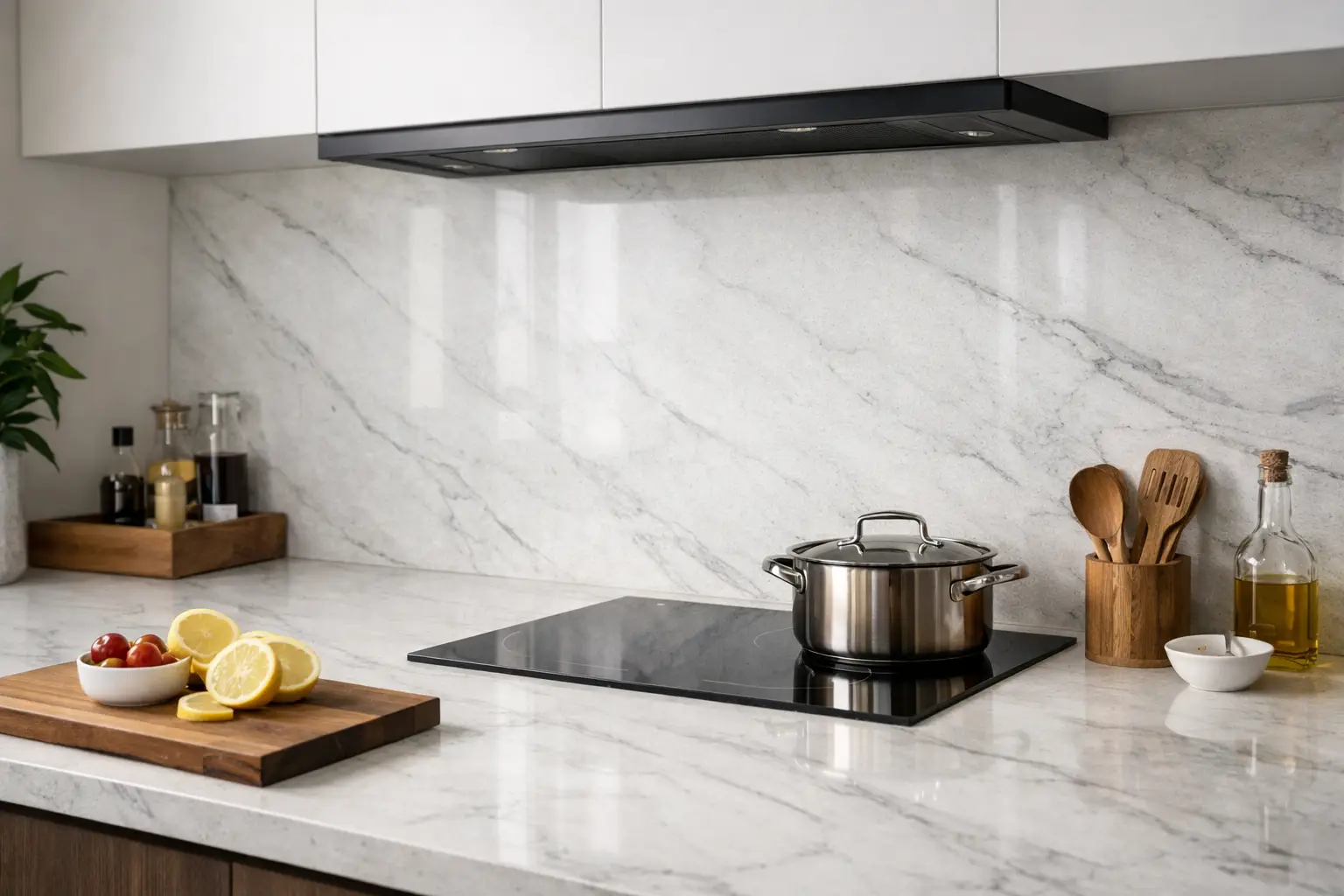
If you are weighing up finishes and asking is quartz good for kitchen splashbacks, the short answer is yes – for many kitchens, it is a very good choice. It gives you a smart, clean look, it is easy to wipe down, and it works particularly well when you want your splashback to tie in with a quartz worktop. But like most kitchen decisions, the right answer depends on how you use the room, the look you want, and how much maintenance you are happy with.
For many homeowners, the appeal of quartz is simple. A splashback has to put up with cooking splashes, steam, grease and constant wiping, so it needs to be practical first and attractive second. Quartz usually manages both.
Is quartz good for kitchen splashbacks in everyday use?
In day-to-day terms, quartz performs well. It has a smooth, non-porous surface, which means spills and splashes tend to sit on the top rather than soaking in. That makes it easier to keep clean than some natural materials, and it can be a good option if you want a kitchen that feels fresh without creating extra work.
It also gives a more solid, fitted look than tiled splashbacks. With tiles, you have grout lines to think about, and those can become a bit of a chore over time. A quartz splashback is usually made in larger sections, so you get fewer joins and a neater finish. If your aim is to refresh an existing kitchen rather than start again from scratch, that can make a real difference visually.
Quartz is especially popular in kitchens where the layout already works well and the update is more about appearance and practicality. If you are replacing doors, drawer fronts or worktops and want the whole room to feel more current, a matching or coordinated quartz splashback can help pull everything together.
What makes quartz a strong choice?
One of the main advantages is consistency. Quartz is engineered, so the pattern and colour are generally more uniform than natural stone. That is useful if you want a cleaner, calmer look or if you are trying to match a splashback with a new worktop and existing units.
It is also available in a wide range of shades and finishes. Some homeowners prefer a plain white or light grey because it brightens the room and works with almost any door style. Others want something darker or more textured to add contrast. Either approach can work, especially in a kitchen makeover where you are keeping the original cabinets and changing the visible surfaces.
Another practical benefit is hygiene. Because quartz is non-porous, it does not harbour moisture in the same way that more absorbent materials can. In a busy family kitchen, that is worth considering. You do not want to be constantly worrying about splashes around the hob or sink area.
Durability matters too. Quartz is hard-wearing and stands up well to normal kitchen use. If you are choosing finishes to last for years rather than just look good for a few months, that reliability is part of its appeal.
The trade-offs you should know about
Quartz is not perfect for every situation, and it is better to be clear about that before making a decision.
The main point to watch is heat. Quartz can cope well with the general warmth and steam you would expect in a kitchen, but it is not the best material for direct, intense heat exposure. Behind many hobs it performs perfectly well when properly specified and fitted, but the exact setup matters. If you have a powerful gas hob and strong localised heat, you need proper advice on whether quartz is suitable in that position or whether another material would be better there.
Cost is another factor. Quartz splashbacks are usually more expensive than standard tiles or basic glass options. The price can still make sense if you are already choosing a quartz worktop and want a coordinated finish, but it may not suit every budget. In a kitchen refresh, it often comes down to where you want to invest. Some people would rather put more into worktops and doors and keep the splashback simpler. Others see the splashback as a key finishing touch that lifts the whole room.
Weight and fitting also matter. Quartz is a substantial material, so it needs accurate measuring and professional installation. It is not a casual weekend job. That is not necessarily a drawback, but it does mean planning it properly as part of the wider makeover.
Quartz splashbacks compared with tiles, glass and laminate
Tiles are often the benchmark because they are familiar, widely available and can be cost-effective. They offer plenty of design choice, but grout lines can date more quickly and need more upkeep. If you want a smooth, low-fuss surface, quartz often feels more streamlined.
Glass splashbacks can create a sleek look and are easy to wipe down. They are a strong alternative, especially if you want bold colour or a very reflective finish. Quartz tends to feel a bit more solid and works particularly well when you want the splashback and worktop to look like part of one joined-up design.
Laminate upstands or splashbacks are usually the budget-friendly route. They can be perfectly suitable in the right kitchen, especially where value is the main priority. The difference is that quartz generally gives a more premium and long-lasting finish. If you are updating a kitchen you plan to keep for many years, that can be worth paying for.
Stainless steel and other specialist materials have their place too, particularly in more contemporary or utility-led spaces. Even so, quartz usually wins for homeowners who want something practical but warmer and more domestic in feel.
Style matters as much as practicality
When people ask is quartz good for kitchen splashbacks, they are often really asking two questions. Will it work well, and will it look right in my kitchen?
That second question is just as important. A splashback takes up a surprising amount of visual space, especially in smaller kitchens. The wrong finish can make the room feel fussy, dark or disconnected. The right one can make older cabinets look fresher and help a new set of doors or worktops sit more naturally in the room.
A plain quartz splashback often suits homeowners who want a calm, uncluttered look. It can make the kitchen feel tidier because there is less visual interruption. If your units already have a strong grain, colour or shaker detail, a simpler splashback can balance things nicely.
On the other hand, if the rest of the kitchen is fairly understated, a quartz design with more movement or veining can add character without the busyness of patterned tiles. It is a good middle ground for people who want interest but not fuss.
When quartz is a particularly good fit
Quartz makes a lot of sense when you are already replacing worktops and want a coordinated finish. Using the same or complementary material across the horizontal and vertical surfaces creates a tidy, considered result. It is also useful in kitchens where cleaning speed matters – for example, family kitchens where the hob area gets messy quickly.
It can be a smart option in kitchen makeovers where the cabinets remain in place but the visible finishes are being updated. New doors, handles, worktops and a quartz splashback can change the feel of the room far more than many people expect, without the upheaval of a full refit.
For homeowners around St Neots, Little Paxton or Huntingdon who prefer to compare materials in person rather than guess from a screen, seeing quartz samples up close is often what makes the decision easier. Colour, texture and edge detail are much easier to judge in a showroom setting.
When another splashback material may suit you better
If budget is tight and your main aim is a straightforward refresh, tiles or laminate may offer better value. If you want a strong feature colour, glass may give you more flexibility. And if your hob area involves high direct heat, it is worth checking carefully whether quartz is the best choice for that exact position.
There is also a style question. Some kitchens suit the handcrafted look of tiles far better than a large quartz panel. If your home has a more traditional character, or you like a slightly softer and less uniform finish, quartz may feel too sleek unless you choose the colour and pattern carefully.
That is why it helps to look at the whole kitchen rather than picking a splashback in isolation. Doors, worktops, handles, wall colour and lighting all affect whether quartz will feel spot on or slightly out of place.
Choosing quartz with confidence
The best results usually come from treating the splashback as part of the wider kitchen picture. Think about how much cooking you do, how often you want to clean grout, whether you are changing the worktops, and what sort of finish will still look right in five or ten years.
At Replacement Kitchen Doors To Size, this is often where practical advice matters most. Many kitchens do not need replacing in full – they need the right combination of updated surfaces and finishing touches. A quartz splashback can be one of those finishing touches that makes the room feel properly refreshed, not just patched up.
If you are unsure, the sensible next step is to compare real samples and talk through how the splashback will work with the rest of the kitchen. The right choice is usually the one that suits your cooking habits, your budget and the kitchen you already have – not just the one that looks best in a photo.