How to Measure for Quartz Worktops
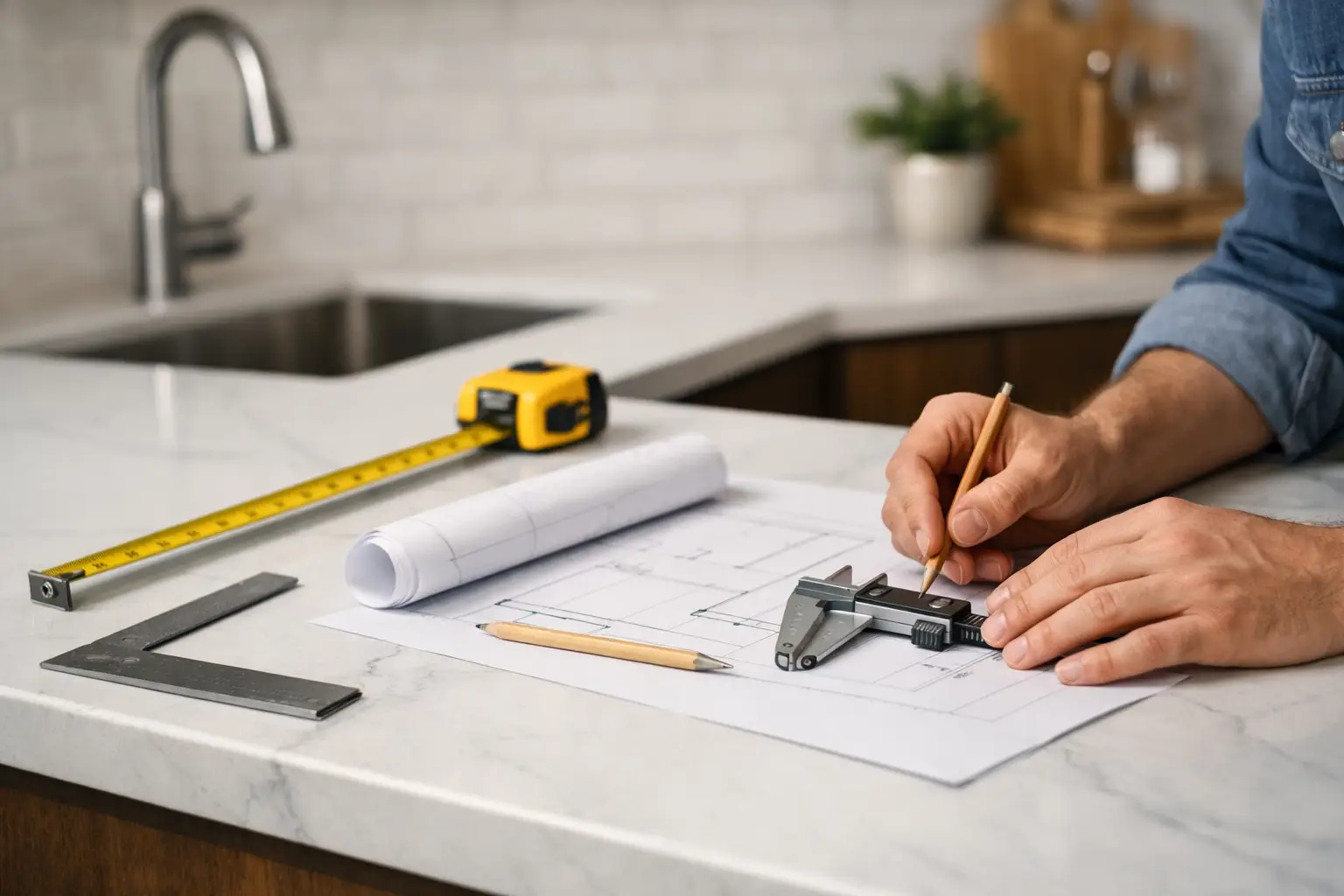
If you are planning a kitchen refresh rather than a full rip-out, knowing how to measure for quartz worktops can save time, avoid confusion and help you get sensible advice early on. Quartz is a made-to-measure product, so even a small measuring mistake can affect cut-outs, overhangs, joins and the final fit.
That does not mean you need trade-level drawings before you start. For most homeowners, the first goal is to get clear, usable dimensions that help you compare options, discuss costs and decide whether quartz is the right choice for your existing kitchen layout. A final site measure is still usually needed before fabrication, but your own measurements are the starting point.
Before you measure for quartz worktops
Start by checking whether you are measuring an existing kitchen that is staying broadly in place, or a space where cabinets, appliances or walls may still change. If your base units are being replaced, resized or re-levelled, the worktop measurements may alter as the project develops. Quartz has very little tolerance for guesswork, so it works best when cabinet positions are confirmed.
You will need a tape measure, something to note dimensions on and, ideally, a simple sketch of the kitchen seen from above. It does not need to look neat. What matters is that each wall, return, appliance gap, sink position and end panel is clear enough to follow later.
Measure in millimetres if you can. That is the standard most fabricators and fitters will use, and it reduces the chance of confusion.
How to measure for quartz worktops in a straight run
For a straight section, measure the full length from one end to the other along the wall line behind the cabinets. Then measure the cabinet depth from the wall to the front edge. Most standard base units are around 560mm deep before doors, with worktops usually finishing deeper to create an overhang at the front.
You should also note how far you want the quartz to project beyond the front of the units. A typical front overhang is often around 20mm to 30mm, but it depends on the kitchen style, the thickness of the worktop and how the doors and handles sit below it.
If the worktop ends against a wall at both ends, measure the full wall-to-wall width. If one end is exposed, decide whether the quartz should stop flush with the cabinet, extend slightly beyond it or line up with a side panel. These details affect both appearance and price.
Old houses around places such as St Neots, Sandy and Bedford do not always give you perfectly straight walls, so do not assume the back edge is consistent all the way along. If the wall bows or runs out, make a note of it. The final template should account for that, but it helps to mention it early.
Measuring L-shaped and U-shaped kitchens
For an L-shape, measure each leg separately rather than trying to capture everything in one figure. Note where the corner falls and whether you expect a joint there. With quartz, joins are often positioned at internal corners or near hob cut-outs and sink runs, depending on slab size, access and the strongest fabrication method.
In a U-shaped kitchen, each run should be measured on its own sketch line. Mark the lengths clearly and show how each section connects. It is also worth noting whether any side has tall housing, an exposed end or a breakfast bar return.
This is where homeowners often come unstuck. They measure just the visible top surface and forget that a templater will need to know the exact shape of the run, including corners, wall conditions and any unsupported projections. Your own measurements are for planning, not for cutting stone.
Sink, hob and tap cut-outs
Cut-outs are one of the main reasons quartz needs careful measuring. A sink cut-out is not just a hole in the middle of a worktop. Its position depends on the sink model, the cabinet below, tap holes, drainer arrangement and the minimum stone left around the edges.
If you already have the sink and hob specifications, note the model names and sizes on your sketch. If you do not, mark their intended positions and approximate widths, but treat those measurements as provisional.
For a sink run, measure from the nearest end of the worktop to the centre line of the sink cabinet if possible. Then note the cabinet width. Do the same for the hob. This helps you and your supplier check whether the chosen appliances sit comfortably within the worktop area without leaving weak strips of quartz.
Tap position matters too. Some taps are deck-mounted through the quartz, while others sit on the sink itself. If you are changing from one arrangement to another, mention it early, especially if your new kitchen update also includes a replacement sink or different style of mixer tap.
Upstands, splashbacks and window cills
When people think about how to measure for quartz worktops, they often focus only on the main top surface. But if you are also considering matching upstands, full splashbacks or a quartz window cill above the sink, those need measuring separately.
An upstand is usually measured by length and height. Splashbacks need a more detailed approach because sockets, extractor position and wall variation all come into play. Window cills should be measured for width, depth and whether the reveals are square.
These added features can make a refreshed kitchen feel far more finished, especially if you are keeping your existing units and simply upgrading doors, handles and worktops. They also affect how much material is needed, so it is worth including them from the start.
Breakfast bars, peninsulas and overhangs
A breakfast bar or peninsula needs extra care because support becomes part of the conversation. Quartz is heavy and strong, but unsupported overhangs have limits. The depth of the slab, the thickness chosen and whether support brackets are needed all depend on the design.
Measure the base section first, then the total intended top size including any seating overhang. Also note whether panels or legs below will support it. If the overhang is generous, do not assume it can simply be cut bigger. This is one of those areas where practical advice matters more than rough online averages.
If you are refreshing an existing kitchen rather than redesigning the room, the key question is whether your current cabinet arrangement can safely support the new quartz top. Often it can, but sometimes a small adjustment to panel placement or support makes the difference between something that looks good on paper and something that works properly day to day.
Common measuring mistakes to avoid
The most common error is measuring the old worktop and assuming the new quartz will match exactly. That can work as a rough guide, but old tops may have been scribed badly, trimmed around uneven walls or fitted over cabinets that have since shifted slightly.
Another mistake is ignoring end details. A waterfall end, boxed return or simply polished exposed edge all need to be identified. So does thickness. A 20mm quartz worktop can look quite different from a 30mm one once overhangs, drainer grooves and edge profiles are taken into account.
It is also easy to forget access. Large quartz pieces have to be carried into the property and manoeuvred into place. Tight hallways, narrow doors or awkward turns can affect where joins are positioned. This is not something most homeowners can judge exactly on a first measure, but it is worth flagging if access is awkward.
What measurements are enough for a showroom visit?
For an initial conversation, you do not need a perfect fabrication drawing. A clear hand sketch with overall run lengths, approximate depths, sink and hob positions, and notes about upstands or breakfast bars is usually enough to start narrowing down options.
That is often the most useful stage for homeowners updating a kitchen they already like. You can compare quartz colours and finishes in person, think about whether your current doors and handles still work with the new surface, and decide if you want to refresh other elements at the same time. At Replacement Kitchen Doors To Size, that kind of practical discussion is often where the best ideas come from.
If you live around Little Paxton, Huntingdon, Biggleswade or the surrounding area, bringing measurements into a showroom can be far more helpful than trying to piece everything together from product photos alone. You can ask sensible questions before anything is final.
When to stop measuring and get expert help
There is a point where homeowner measurements stop being useful and professional templating takes over. That usually comes once your cabinet layout, sink, hob and edge details are decided. At that stage, quartz should be measured on site after the units are fitted and levelled.
That final template is what protects you from the awkward realities of real kitchens – walls that are not square, corners that are not true and appliances that need more clearance than expected. So yes, measure carefully, but do not feel you have to carry the full responsibility for the finished fit.
A good first measure is there to help you plan confidently, compare your choices and move your kitchen update forward without replacing more than you need. Done properly, it gives you a solid starting point – and that is often exactly what a tired but otherwise workable kitchen needs.