12 Walk In Pantry Ideas That Really Work
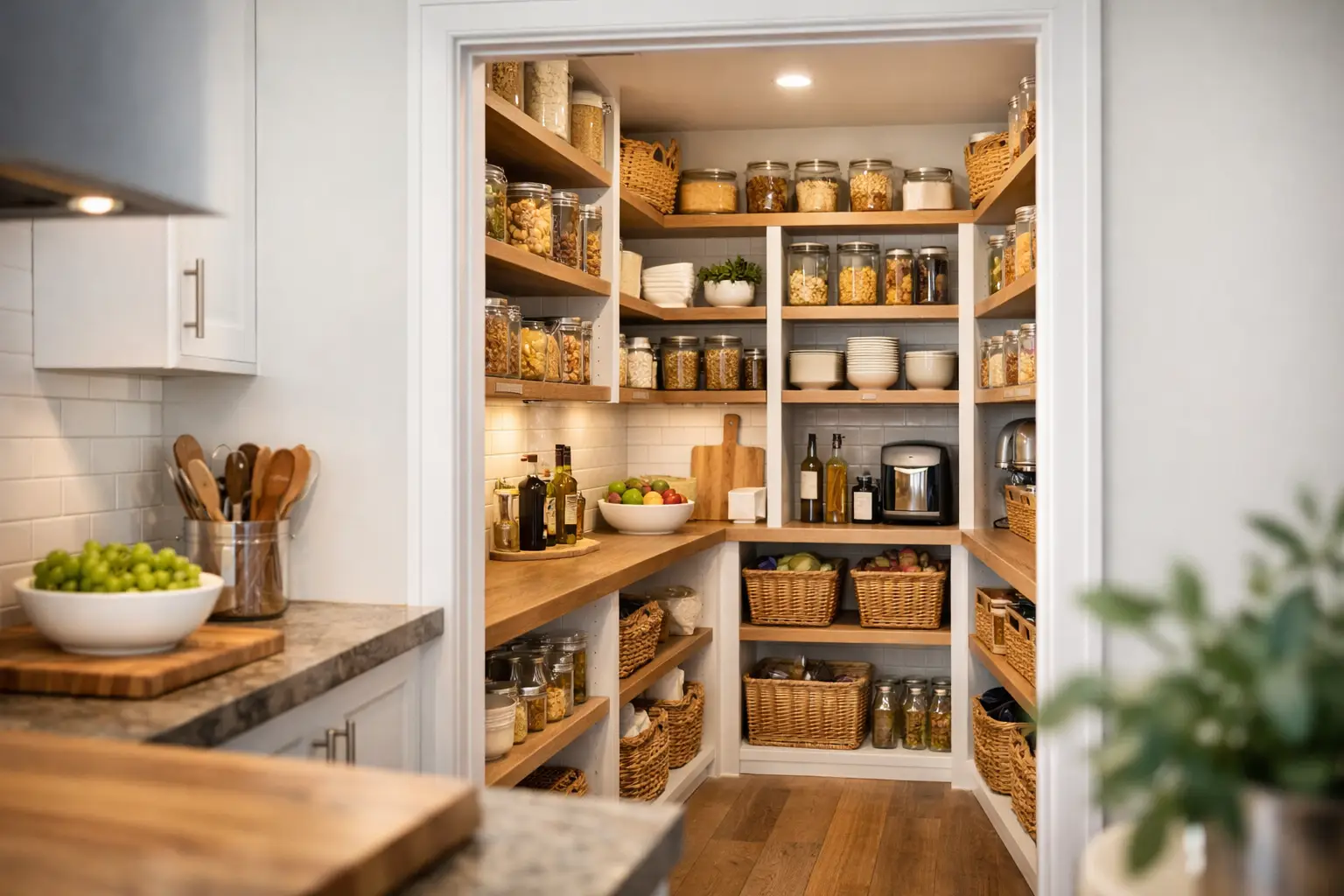
A walk-in pantry sounds generous on paper, but in real homes it can quickly become the place where cereal boxes topple, potatoes disappear behind small appliances and half-used jars gather at the back. The best walk in pantry ideas are not really about adding more shelves for the sake of it. They are about making the kitchen easier to use every day.
If you are planning a pantry as part of a kitchen refresh, it helps to think beyond storage alone. A pantry should suit the way your household shops, cooks and tidies away. It should also feel connected to the rest of the kitchen, especially if you are updating doors, worktops or finishes rather than replacing the whole room.
Walk in pantry ideas that start with layout
Before choosing baskets, jars or paint colours, look at how the pantry sits alongside the rest of the kitchen. The most useful pantry is usually close to the main prep area, not tucked too far away at the opposite end of the room. If you use it for dry goods, breakfast items and everyday essentials, you want a short, easy route between the pantry and the worktop.
Door choice matters more than many people expect. A hinged door can be fine in a larger kitchen, but in tighter spaces a pocket or sliding door may be easier to live with. If the pantry opens into a busy route through the kitchen, think carefully about clearance. It is a small practical point, but one that affects the room every day.
Inside, aim for a simple arrangement rather than trying to fill every inch. Deep shelves can look efficient, yet they often hide what you already own. Shallower shelving around the perimeter usually works better because it keeps food visible and within reach. If you need deeper storage, reserve it for bulk items or appliances you do not use daily.
Mix shelf depths to suit what you store
One of the most effective walk in pantry ideas is to avoid identical shelving throughout. Tall cereal packets, tins, spice jars, baking trays and small appliances all need different amounts of space. A run of 300mm deep shelves may be ideal for tins and jars, while a deeper section can handle larger items such as stand mixers or multi-cookers.
Adjustable shelving gives you more flexibility over time. Households change. Children grow up, shopping habits shift and that coffee machine you once kept in a cupboard may earn a permanent home. Fixed shelves can look neat, but adjustable ones are usually more forgiving.
Leave room for movement
A pantry should not feel like a cupboard you squeeze into sideways. If space allows, leave enough floor area for one person to step in, turn and reach comfortably. If two people are often in the kitchen together, it is worth thinking about whether the pantry can be used without blocking the cook.
This is where realistic planning beats show-home styling. It may be better to have slightly fewer shelves and a pantry that feels calm and usable than a packed-out space that becomes awkward within a month.
Storage details that make a pantry easier to use
Good pantry storage is usually quite plain. You do not need expensive fittings everywhere. What matters is putting the right type of storage in the right place.
Open shelves are still the most practical starting point. They let you see stock at a glance and make it easier to wipe down surfaces. Wire pull-outs can help in lower areas, especially where bending to reach the back of a shelf would be inconvenient. Drawers are useful too, particularly for snacks, packets and loose baking supplies, but they tend to cost more than standard shelving, so it is worth using them selectively.
Baskets can tidy up smaller items, though too many can become a system in themselves. If every item has to be decanted, labelled and lined up perfectly, the pantry may look smart for a week and then drift back to clutter. For most households, a balance works best – everyday items visible, smaller loose items grouped neatly, and only the things that genuinely benefit from containers transferred into jars or tubs.
Create zones, but keep them simple
Pantry zoning helps, as long as it does not become overcomplicated. A breakfast area near the entrance can keep cereal, bread, jam and tea or coffee together. Baking items can sit on one section of shelving. Tins, pasta and rice can go in another. Cleaning supplies should be kept separate from food, ideally lower down and safely away from children if needed.
The key is to group things by use rather than category alone. If you make packed lunches every morning, keeping wraps, snacks and lunch boxes together makes more sense than arranging everything by product type.
Lighting is one of the most overlooked walk in pantry ideas
A poorly lit pantry can make even the best storage feel inconvenient. If you cannot see what is on the shelf, you are more likely to buy duplicates and less likely to use what you already have.
Good pantry lighting does not need to be complicated. A bright ceiling light is often enough in a smaller pantry, but in deeper or enclosed spaces, LED strip lighting under shelves can make a real difference. Motion-sensor lighting is especially useful if your hands are often full with shopping or cooking ingredients.
Lighter interior finishes help too. Pale shelving, a soft wall colour or a light-toned door finish can make the whole space feel brighter and cleaner. This is particularly useful if the pantry has no natural light.
Make room for appliances if they genuinely belong there
Some homeowners want a pantry that doubles as an appliance store. That can work very well, but only if the space is planned with enough power points, suitable ventilation and sensible shelf strength.
A microwave, toaster or coffee machine can be tucked away neatly in a pantry, which helps the main kitchen feel calmer and less crowded. On the other hand, if you use those appliances constantly, shutting them away may be less convenient than keeping them on the main worktop. It depends on how you live.
If appliances are going into the pantry, allow proper landing space nearby. Even a small section of worktop inside can be useful for setting things down, making tea or using a coffee machine without carrying it in and out.
Pantry finishes should tie in with the kitchen
A walk-in pantry does not need to match the kitchen exactly, but it should feel related. If your main kitchen is being refreshed with replacement doors, new handles or a new worktop, the pantry is a good place to carry through some of those choices.
This creates a more settled look across the room and avoids the pantry feeling like an afterthought. For example, if you are choosing a painted shaker style for the kitchen, similar tones or materials in the pantry will help everything sit together. If your kitchen leans more modern, clean lines and simple shelving will usually work better than ornate detailing.
Flooring matters too. Continuing the same flooring into the pantry can make the whole kitchen feel larger and more coherent. If that is not practical, choose a floor finish that is easy to clean and visually calm. Busy patterns can make a small pantry feel cramped.
Small walk-in pantries need discipline, not gimmicks
Not every pantry is a large room with space for endless storage. In many homes around St Neots, Huntingdon and nearby villages, a walk-in pantry is really a compact store tucked off the kitchen. That is still worth having, but it needs more careful planning.
In a smaller pantry, full-height use of the walls is important. Store less-used items up high, everyday items at eye level and heavier supplies lower down. The back of the door can be useful for slim racks, but avoid overloading it. Too much on the door can make the whole space feel busy.
A narrow pantry also benefits from restraint. If every wall is packed with racks, hooks and organisers, the room can feel cluttered before anything is even stored. Often the smartest small pantry is the simplest one.
Think about future changes, not just today
The most successful pantry plans usually leave a bit of room to adapt. You may not need pet food storage now, but you might later. You may start buying in bulk, or stop. You may want a place for school snacks now and a coffee station in a few years.
That is why flexible shelving, good-quality hinges and durable finishes are worth considering. A pantry gets hard use. Surfaces need to cope with spills, knocks and regular cleaning. Doors should open and close properly even when life is busy.
If you are already refreshing your kitchen rather than starting from scratch, it is sensible to view the pantry as part of that wider update. The layout you have may still work well. Often it is the finishes, storage details and day-to-day practicality that need attention. That is very much the thinking at Replacement Kitchen Doors To Size – improving how the kitchen looks and works without replacing everything unnecessarily.
A good pantry should reduce friction in the kitchen
The best pantry ideas are usually the ones that save small amounts of effort every day. You can see what you have. You can reach what you need. The kitchen feels tidier because the storage is doing its job.
That might mean adding a compact walk-in pantry to a redesign, or simply planning one more carefully as part of a kitchen makeover. Either way, keep the focus on real use rather than showroom perfection. If a pantry makes weekday breakfasts quicker, food shopping easier to put away and worktops clearer, it is doing exactly what it should.