How to Update Kitchen Storage Zones
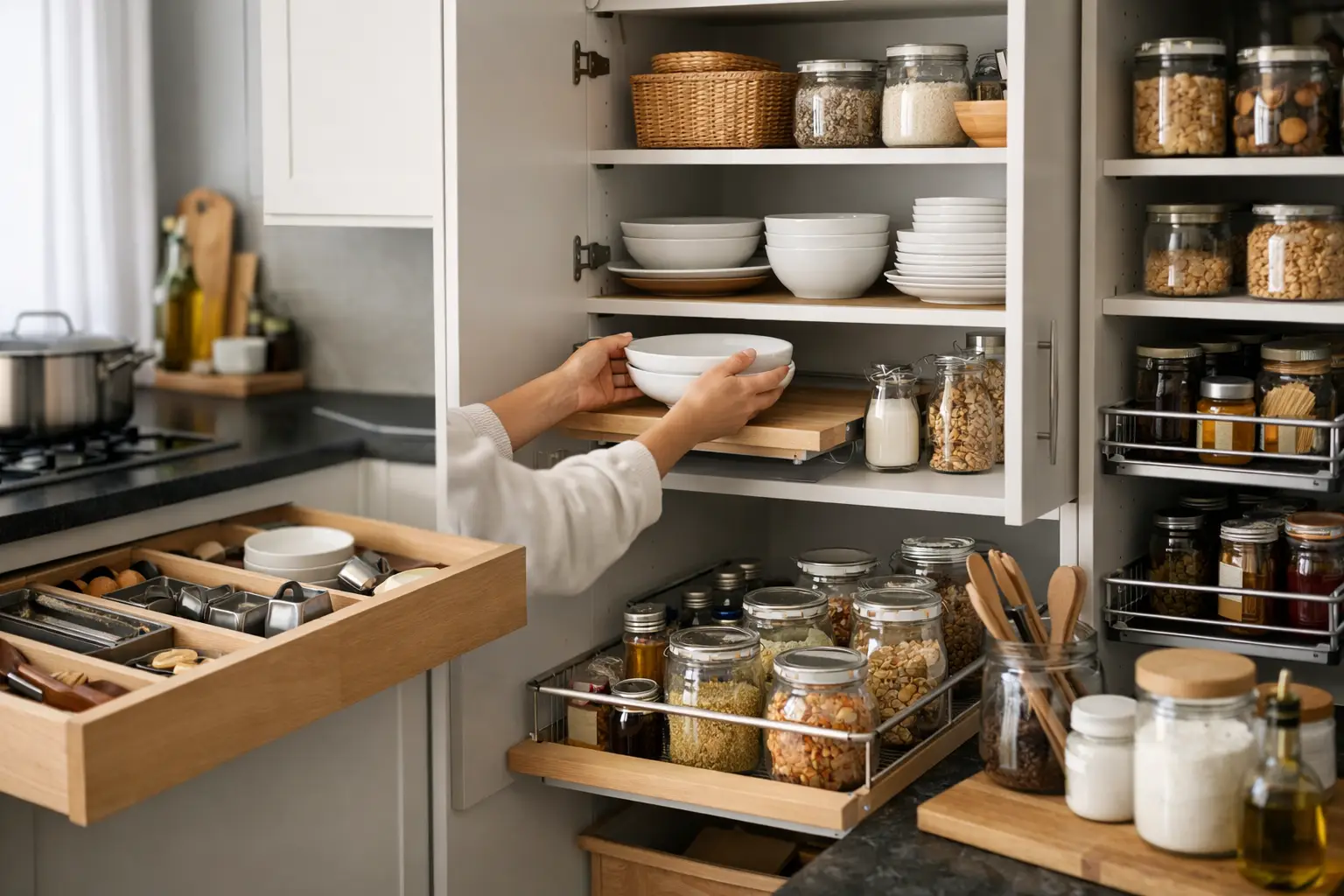
You notice it most on an ordinary weekday. The mugs are in one cupboard, the tea bags in another, pans stacked where the baking trays ought to be, and the drawer with the utensils has somehow become a catch-all for batteries, elastic bands and takeaway menus. If you are wondering how to update kitchen storage zones, the good news is that you often do not need a full new kitchen to make daily use feel easier.
For many homeowners, the layout itself is not the real problem. The cabinets are in roughly the right places, but the way each area is being used no longer suits how the household cooks, eats and stores things. That is why refreshing storage zones can be one of the most useful changes you make. It helps your kitchen work better now, without forcing you to start again from scratch.
What kitchen storage zones actually mean
Kitchen storage zones are simply the areas where related items live, based on how you use them. Rather than thinking in terms of cupboards and drawers alone, it helps to think in terms of tasks. You have a prep zone, a cooking zone, a cleaning zone, a crockery zone and usually a food storage zone as well.
When these zones are sensible, the kitchen feels calmer. You are not walking back and forth for every little thing. You are not lifting heavy pans down from an awkward wall unit because there was nowhere else to put them. A good zone plan reduces friction. That matters just as much in a compact kitchen in St Neots as it does in a larger family kitchen in a nearby village.
Start with how your kitchen is really used
The best way to update kitchen storage zones is not to copy a showroom display or a social media trend. It is to look honestly at how your own kitchen works on a Monday morning and a busy Saturday evening.
If the kettle is used ten times a day, your tea, coffee, mugs and spoons should be close by. If most meals are made near the hob, oils, utensils, pans and seasonings should sit within easy reach. If packed lunches take over the worktop each morning, it may make sense to create a dedicated area for lunch boxes, snacks and water bottles.
This is where many kitchens drift over time. What made sense years ago no longer matches how the household lives now. Children grow up, appliances change, cooking habits shift, and cupboards slowly fill with things that are convenient to put away but inconvenient to use.
How to update kitchen storage zones without changing the layout
Often, the smartest changes are the least disruptive. Before thinking about moving units or replacing everything, reassign the storage you already have.
Place everyday items in the easiest-to-reach spaces. Reserve high shelves and less accessible corners for occasional pieces such as roasting tins, seasonal tableware or spare serving dishes. Heavy items should usually move lower down, especially pans, mixing bowls and small appliances. That one adjustment alone can make a kitchen feel more practical.
Drawers often work harder than cupboards if they are planned properly. A deep drawer near the hob can be far more useful for pans than a low cupboard where everything has to be stacked. Likewise, a shallow drawer near the prep area is often the right home for knives, peelers, measuring spoons and other daily tools.
There is a trade-off, though. If your cabinet interiors are tired, awkward or damaged, simply reorganising may only get you so far. In those cases, it can make sense to refresh fronts, handles and worktops while also improving how each zone functions. You keep the kitchen footprint you know works, but the whole room feels more considered.
Focus on five key zones
Prep zone
Your prep zone should sit where you have the clearest run of worktop. This area needs the things you reach for repeatedly – chopping boards, knives, mixing bowls, food waste caddy and everyday ingredients. If these are spread around the room, prep becomes more tiring than it needs to be.
If your current prep area is cluttered by gadgets you rarely use, move those elsewhere. Worktop space is part of storage planning too. A kitchen with less visual clutter often feels better organised, even before any units are updated.
Cooking zone
The cooking zone centres on the hob and oven. Keep pans, utensils, oven gloves, oils and frequently used seasonings nearby. Baking trays and casserole dishes can live here too, though they may not need the prime positions if you use them less often.
This zone is where poor storage tends to show up quickly. If you are bending around a door to get a frying pan or carrying hot dishes across the room because the landing space is poor, it is worth rethinking the arrangement.
Cleaning zone
Around the sink, keep washing-up items, bin bags, dishwasher tablets, cloths and perhaps food storage containers if that suits the way you clear up. This area can become overcrowded, especially under the sink, so it helps to be selective.
Not everything linked to cleaning has to live there. Bulk supplies and less-used items can be stored elsewhere. What matters is that the essentials are easy to grab without turning one cupboard into a jumble.
Food storage zone
Whether you use a tall larder, wall units or a run of base cupboards, dry food needs a clear home. Group items by use rather than by packaging. Breakfast foods together, baking ingredients together, pasta and tins together. That saves time and also makes shopping easier because you can see what is actually running low.
If packets collapse and half-used bags slide everywhere, the issue may not be the cupboard itself but the lack of simple internal order. You do not need complicated systems, just enough structure to stop the daily shuffle.
Eating and serving zone
Plates, bowls, glasses, cutlery and serving pieces should sit close to where meals are served or unloaded from the dishwasher. This is one of the easiest zones to improve and one of the most satisfying, because it cuts out so many small extra movements.
Families often benefit from putting children’s cups, lunch items and snack bowls in one accessible section. It reduces congestion and makes the kitchen easier for everyone to use.
When storage problems are really furniture problems
Sometimes the issue is not what goes where, but the units themselves. Older kitchens often have shelves that waste depth, awkward corner cupboards, swollen sink units or doors that no longer open and close properly. In that situation, trying to improve storage without addressing the furniture can feel like patching over the cracks.
This is where a kitchen refresh can be a practical middle ground. Replacement doors, drawer fronts, new handles and updated worktops can change the look of the room, but they can also prompt a more useful rethink of how each cabinet is used. If the overall layout still suits the room, there is no reason to rip everything out just for the sake of it.
For homeowners around Little Paxton, Huntingdon or Sandy, that approach often makes more sense than a full refit. You keep what works, improve what does not, and avoid the disruption of starting from bare walls.
Make the zones fit the room you have
Not every kitchen has space for perfect textbook zoning. Galley kitchens, L-shaped layouts and older fitted kitchens all come with limits. That is why good storage planning is usually about compromise rather than perfection.
In a smaller kitchen, one cabinet may need to support two zones. In a family kitchen, convenience may matter more than symmetry. If you entertain often, the serving zone may deserve more space than the baking zone. If you hardly bake at all, those tins do not need to occupy your best drawer.
The most useful question is simple: does this placement make daily life easier? If the answer is no, it probably needs changing, even if it looked tidy on paper.
See the options in person before you decide
If you are planning a wider kitchen update alongside better storage zones, samples matter. Colours, finishes, handle styles and worktop choices can all affect how spacious and practical the room feels. Seeing them in person helps you judge what will brighten the space, what will be easiest to live with and what fits the kitchen you already have.
That is often where a showroom visit helps. You can compare styles properly, talk through which cabinets are worth keeping, and get clear advice on whether a refresh will solve the issues you have. At Replacement Kitchen Doors To Size, that conversation is about making your existing kitchen work harder for you, not pushing you towards replacing more than necessary.
A well-planned kitchen does not need to be bigger. It just needs to match the way you live now. If your cupboards are in the right places but the room still feels awkward, updating your storage zones may be the change that finally makes the whole kitchen click.