Can Quartz Worktops Stain? What to Expect
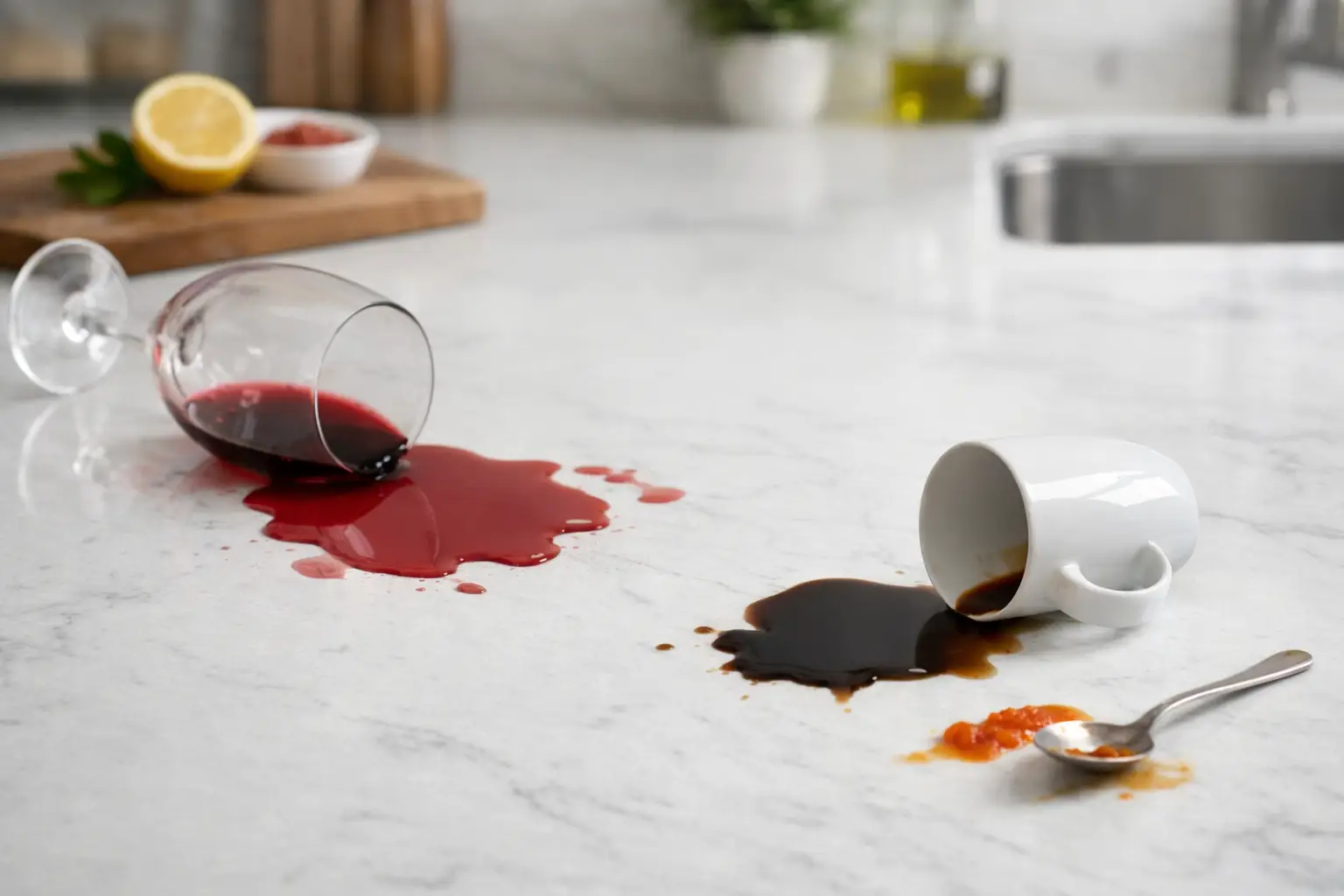
A splash of red wine left overnight, a ring from cooking oil near the hob, or turmeric on the prep area after making a curry – these are the moments when people start asking, can quartz worktops stain?
The short answer is that quartz worktops are highly stain resistant, but not completely stain proof. That difference matters. If you are updating your kitchen and want something practical, easy to live with and smart-looking for years, quartz is often a very sensible choice. But like any surface, it performs best when you know what it can handle and where a bit of care makes all the difference.
Can quartz worktops stain in everyday use?
In most busy kitchens, quartz copes very well with the usual spills. Tea, coffee, diluted squash, milk, crumbs, grease splashes and everyday food preparation are not normally a problem if they are wiped up in reasonable time. That is one of the main reasons quartz remains such a popular option for family kitchens.
Quartz worktops are engineered from natural quartz combined with resins and pigments. Because the surface is non-porous, liquids do not soak in the same way they can with some natural stones. That makes staining much less likely. It also means quartz does not need the regular sealing that some other worktop materials do.
Still, non-porous does not mean invincible. If strong-coloured substances are left sitting for too long, or if the surface is exposed to harsh chemicals, you can end up with marks, discolouration or residue that looks very much like a stain.
What actually causes marks on quartz?
This is where a lot of confusion starts. People often call any visible mark a stain, when in reality there are a few different things going on.
One is surface residue. Cooking oils, dried-on sauces or cleaning product build-up can leave a dull patch or sticky mark that sits on the surface rather than soaking into it. Another is pigment transfer from things like turmeric, food colouring or some strongly dyed liquids. These can be more stubborn, especially on lighter worktops.
Then there is chemical damage. Bleach, oven cleaner, paint stripper, very strong degreasers and some limescale removers can react with the resin in quartz. When that happens, the result may look like a stain, but it is actually surface damage or discolouration. That is harder to put right because the issue is not something sitting on top – the finish itself has been affected.
Heat can also play a part. Quartz is durable, but it is not the best choice for direct heat. A hot pan taken straight from the hob or oven can damage the resin and leave a mark that will not simply wipe away.
The spills most likely to catch people out
If you are wondering whether quartz will suit your household, it helps to be realistic about what happens in a normal kitchen. The most common troublemakers tend to be red wine, beetroot, turmeric, tomato-based sauces, coffee, tea and cooking oils. On pale or white quartz, these are the products people worry about most.
Turmeric is probably the best example of an everyday ingredient that can be awkward. It is powerful, brightly coloured and quick to leave a yellow mark if not cleaned up promptly. Red wine and strong coffee are less dramatic on quartz than they might be on more porous materials, but leaving them overnight is still not a great idea.
Make-up, hair dye and some cleaning sprays can also cause issues, particularly in utility spaces or open-plan kitchens where products get used across different surfaces.
How to clean quartz without making things worse
The best approach is usually the simplest one. Warm water, a soft cloth and a little mild washing-up liquid will deal with most day-to-day mess. Drying afterwards helps prevent smeary build-up and keeps the finish looking cleaner.
For something more stubborn, use a non-abrasive cleaner that is suitable for quartz or delicate stone surfaces. Let it loosen the residue rather than scrubbing aggressively. Harsh scouring pads can dull the surface, especially on polished finishes.
Avoid anything strongly acidic or highly alkaline unless the manufacturer specifically says it is safe. That includes some popular heavy-duty kitchen sprays people reach for without thinking. The same goes for bleach and solvent-based products. A cleaner that is perfect for one surface can be the wrong choice for quartz.
If a mark does not shift straight away, it is better to repeat a gentle clean than to attack it with something stronger. Many permanent-looking marks are actually layers of residue, and they come away with patience rather than force.
Can quartz worktops stain more on lighter colours?
Yes, at least visually. A white, cream or light grey quartz worktop does not necessarily stain more easily than a darker one, but any mark is more obvious. If you love the look of pale quartz, that should not put you off, but it is worth going in with clear expectations.
Households that cook a lot from scratch, especially with spices, oils and sauces, sometimes find that a slightly busier pattern or a mid-tone finish is more forgiving. It still gives a fresh, modern look, but it hides the occasional smear or crumb better between cleans.
That is one reason seeing full-size samples matters. A colour that looks brilliant in a photo can behave very differently in a real kitchen with natural light, children, pets, packed weekday evenings and all the usual mess of family life.
Quartz compared with other worktop options
If your main concern is staining, quartz usually compares well with laminate, solid wood and many natural stones, though each material has its own strengths.
Laminate can be very practical and cost-effective, but quality varies and surface damage can be more noticeable over time. Solid wood has warmth and character, but it needs more maintenance and is more vulnerable to water marks, oils and general wear. Granite can be excellent, but some varieties are more porous than quartz and may need sealing to help protect against stains.
So if you want a worktop that feels like a step up in both appearance and everyday practicality, quartz often sits in a very comfortable middle ground. It gives you a premium look without demanding too much fuss.
Is quartz still a good choice for a kitchen refresh?
For many homeowners, yes. If you like your current kitchen layout and want to improve the look and feel of the room without starting from scratch, replacing the worktops can make a huge difference. Pairing new quartz worktops with replacement doors, updated handles and perhaps a new sink or tap can completely change the kitchen without the cost and upheaval of a full rip-out.
That is especially useful if your cabinets are still sound. The structure stays in place, but the surfaces you use and see every day feel new again. In practical terms, that can be a much more sensible investment than replacing everything.
Quartz works particularly well in this type of project because it looks clean, modern and solid. It suits both contemporary and more classic door styles, and it gives the finished kitchen a more substantial feel.
Seeing samples before you decide
Worktops are not just about colour. The finish, edge profile, pattern scale and how the surface looks against your doors all matter. A sample viewed in person is far more useful than a picture on a screen, particularly with quartz where subtle tones and flecks can shift in different light.
If you are comparing options for a kitchen refresh, it helps to look at quartz alongside other materials and talk through how you actually use your kitchen. A household that wants the lowest maintenance possible may choose differently from one that is happy to do a little extra upkeep for a particular look.
At a local showroom, you can ask the practical questions people often forget until later – how a colour will cope with daily cooking, whether a polished or matt finish is easier for your routine, and what will work best with your existing layout. That sort of advice is often what makes the final choice feel much more straightforward.
For homeowners around St Neots, Little Paxton, Huntingdon and nearby areas, visiting Replacement Kitchen Doors To Size to compare door and worktop samples side by side can be a sensible starting point if you are trying to refresh the kitchen you already have.
The honest answer
Quartz is one of the more stain-resistant worktop materials you can choose, but it is not immune to every spill, every cleaner or every bit of heat. Used normally and cleaned sensibly, it holds up very well. Neglected, scorched or treated with the wrong products, it can mark.
For most homes, that is a fair trade-off. You get a surface that looks smart, feels substantial and asks for very little day-to-day effort. And if you are weighing up a kitchen update, the best decision is usually the one that fits how you really live – not how any worktop looks in a showroom when nothing has ever been spilt on it.