Best Kitchen Taps for Hard Water
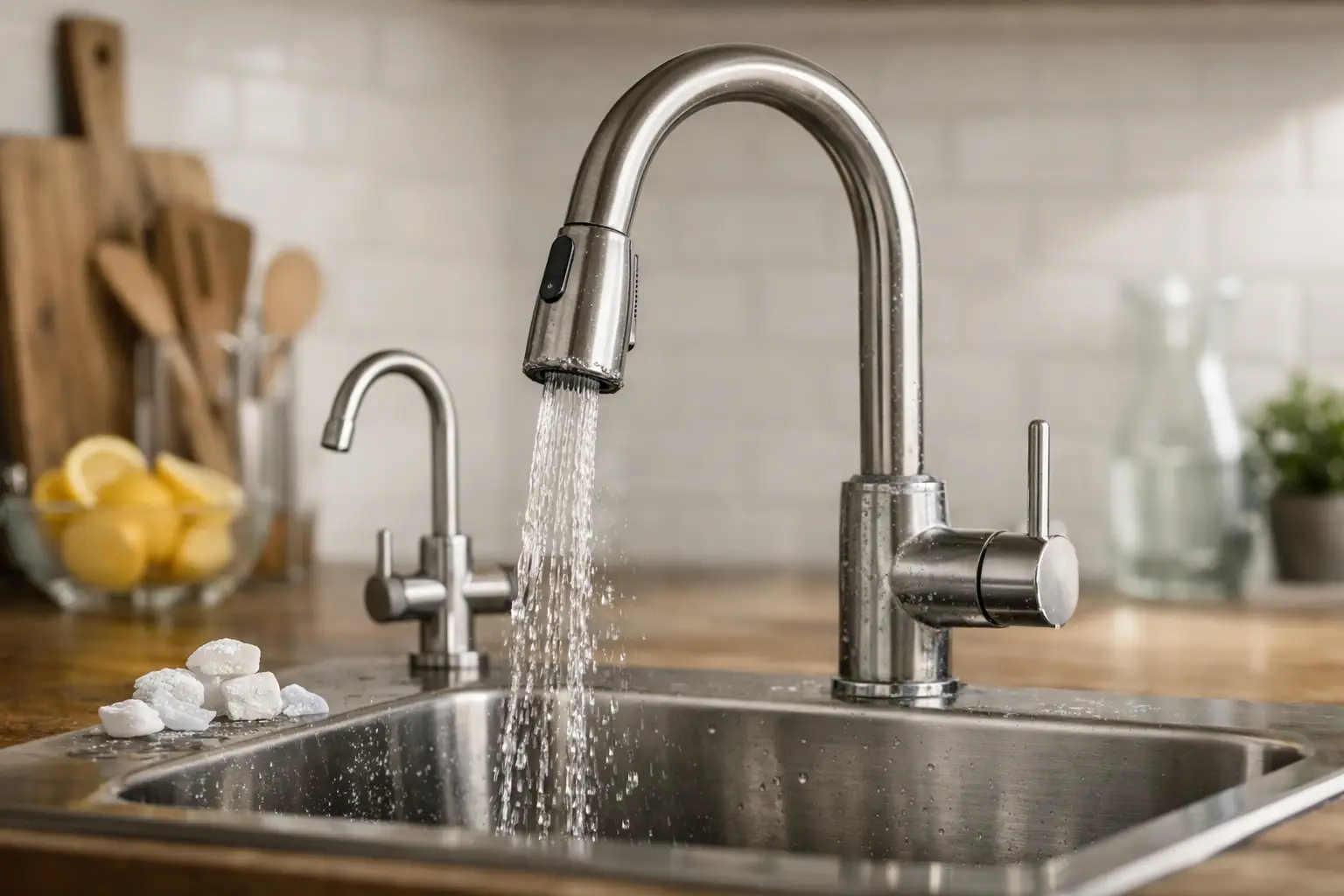
If you live around St Neots, Bedford or Huntingdon, there is a fair chance hard water is part of daily life. You notice it on kettles, around sink edges and, very often, on taps. That is why choosing the best kitchen taps for hard water is less about chasing trends and more about picking something that will still look decent, work properly and clean up without a fight six months down the line.
A tap can seem like a small detail when you are refreshing a kitchen, but it has a big effect on how the space feels and how easy it is to live with. If your existing layout works well and you are updating doors, worktops or handles rather than ripping everything out, the tap is one of those finishing touches that can quietly make the whole kitchen feel smarter.
What hard water does to kitchen taps
Hard water contains higher levels of minerals, mainly calcium and magnesium. Once the water dries, those minerals are left behind as limescale. On a kitchen tap, that means chalky marks, dulling around the spout and base, and a build-up around joints and aerators.
Over time, it is not only about appearance. Limescale can affect water flow, make spray heads less reliable and leave moving parts feeling stiff. Some taps cope with that far better than others, so material, finish and design all matter.
Best kitchen taps for hard water – what actually matters
The best kitchen taps for hard water tend to have one thing in common: they are easy to keep clean and do not show every mark. That sounds simple, but it rules out plenty of eye-catching options that look lovely in a showroom and then become high maintenance in real homes.
A smooth finish helps because there are fewer places for scale to cling to. A practical shape helps too. Taps with lots of decorative grooves, ridges or awkward detailing may suit a traditional look, but they usually take more effort to wipe down. If you want an easier life, cleaner lines are often the better choice.
It is also worth looking at the spout end. Many modern taps include anti-limescale aerators or rubber nozzles that make it easier to rub away residue before it hardens. That feature is particularly useful in hard water areas and can save a surprising amount of bother.
Which finishes work best
Chrome is still one of the most practical finishes for hard water, provided you are happy to give it a quick wipe after use. It is popular for good reason. It suits most kitchen styles, it reflects light nicely and replacement parts are generally easier to source. The downside is that chrome shows water spots quite clearly, especially in bright kitchens.
Brushed finishes are often a better fit if you want something forgiving. Brushed nickel or brushed steel usually hide spotting and fingerprints better than polished chrome, so they can look tidier between cleans. For many households, that balance of practicality and appearance makes them a strong choice.
Matt black taps are often asked about because they can look striking against pale worktops or shaker doors. They can work well, but they are not automatically the easiest option for hard water. Some black finishes show pale residue quite noticeably, and not all coatings are equal. A quality finish can perform well, but cheaper versions may mark or wear more quickly.
Brass, copper and other statement finishes can look excellent in the right kitchen, yet they are more dependent on the exact product and coating used. If you are considering one of these, it helps to see the finish in person and ask how it behaves in a hard water area rather than assuming all taps in that colour will perform the same way.
Tap styles that are easier to live with
For most homes, a single lever mixer tap is the safest choice. It is simple, straightforward and usually easier to clean than a tap with separate controls and more detailing. If your kitchen is used constantly for cooking, washing up and filling pans, that ease of use matters just as much as the appearance.
A pull-out spray tap can be very handy, especially if you cook a lot or have a larger sink. It helps with rinsing vegetables, cleaning sink corners and filling awkward containers. The trade-off is that there are more moving parts, and in hard water areas that can mean a bit more maintenance. That does not make it a bad option, only one to choose carefully. Better-quality models tend to be worth it.
Boiling water taps and filtered water taps are another category altogether. They can be excellent additions in the right kitchen, but they do need more thought if you have hard water. Some require regular filter changes or descaling to keep them performing properly. If convenience is your top priority, they can be worthwhile. If low maintenance is the goal, a good standard mixer tap may be the better answer.
Material quality matters more than many people expect
Not all taps that look similar are built to the same standard. In hard water areas, that difference becomes obvious sooner. Solid brass-bodied taps are usually a better long-term bet than very lightweight budget models because they tend to be more durable and better made internally.
The cartridge inside the tap matters as well. A good ceramic cartridge will usually give smoother performance and better longevity. If a tap feels flimsy from the outset, or if the controls already feel loose on display, that is not a promising sign for long-term use where limescale is likely to be an issue.
This is one reason many homeowners still prefer choosing taps in a showroom rather than from a picture online. You can feel the handle action, compare finishes properly and get a clearer sense of build quality before buying.
Matching the tap to the rest of the kitchen refresh
When you are updating an existing kitchen rather than replacing the whole room, the tap should work with what is already staying. A very modern square-edged tap may not suit a softer traditional door style, and a heavily ornate bridge tap can look out of place if the rest of the kitchen is sleek and simple.
Worktop choice also plays a part. Hard water marks can be more noticeable around the tap base on darker polished surfaces, so a tap finish that disguises spotting can be especially useful there. Sink choice matters too. A tap that looks balanced over a large single bowl may feel oversized above a compact sink.
These details are much easier to assess when you can compare combinations side by side. That is often where a local showroom visit is genuinely useful, especially if you are already choosing replacement doors, handles, worktops and finishing touches at the same time.
What to avoid if you want less cleaning
The worst taps for hard water are not always the cheapest or the most expensive. They are usually the ones with awkward shapes and finishes that demand too much upkeep. Deep grooves, highly decorative bases and hard-to-reach undersides can all become annoying very quickly.
Very shiny finishes can look impressive at first but may leave you forever chasing streaks. Likewise, heavily styled taps with separate levers, exposed joints and lots of detailing can be lovely in the right period kitchen, but they rarely count as low-maintenance.
If your priority is a kitchen that feels fresher and easier to manage, choose practicality first and style second. The good news is that practical taps no longer look plain. There are plenty of well-designed options that still add character.
Simple ways to help any tap cope better with hard water
Even the best tap will benefit from a bit of routine care. Wiping it dry with a soft cloth after use makes a real difference, especially around the base and spout where droplets sit. That one habit can prevent much of the visible build-up.
Regular gentle cleaning is better than leaving scale to harden and then attacking it with something abrasive. Harsh cleaners can damage finishes, particularly on darker or specialist coatings. If your aerator is removable, checking and cleaning it from time to time will also help keep the flow steady.
If hard water is a persistent problem throughout the house, some homeowners consider a water softening or filtration solution. That can help, but it is a broader household decision rather than a requirement for choosing a new tap.
Choosing with confidence
There is no single right answer for every kitchen. The best kitchen taps for hard water are usually the ones that suit your sink, match the style of your kitchen and do not create extra work every time you clean. For one household that may be a brushed steel single lever mixer. For another, it could be a well-made chrome tap with a pull-out spray and easy-clean aerator.
If you are refreshing your kitchen rather than starting from scratch, it makes sense to choose a tap the same way you would choose doors or worktops – by thinking about how you actually use the room. At Replacement Kitchen Doors To Size, that is often where the most successful updates begin: not with replacing everything, but with improving the parts you use every day.
A good tap should feel like it belongs in your kitchen and your routine, and when hard water is part of the picture, the easiest choice is usually the one that keeps looking good with the least fuss.