Which Kitchen Layout Saves Space Best?
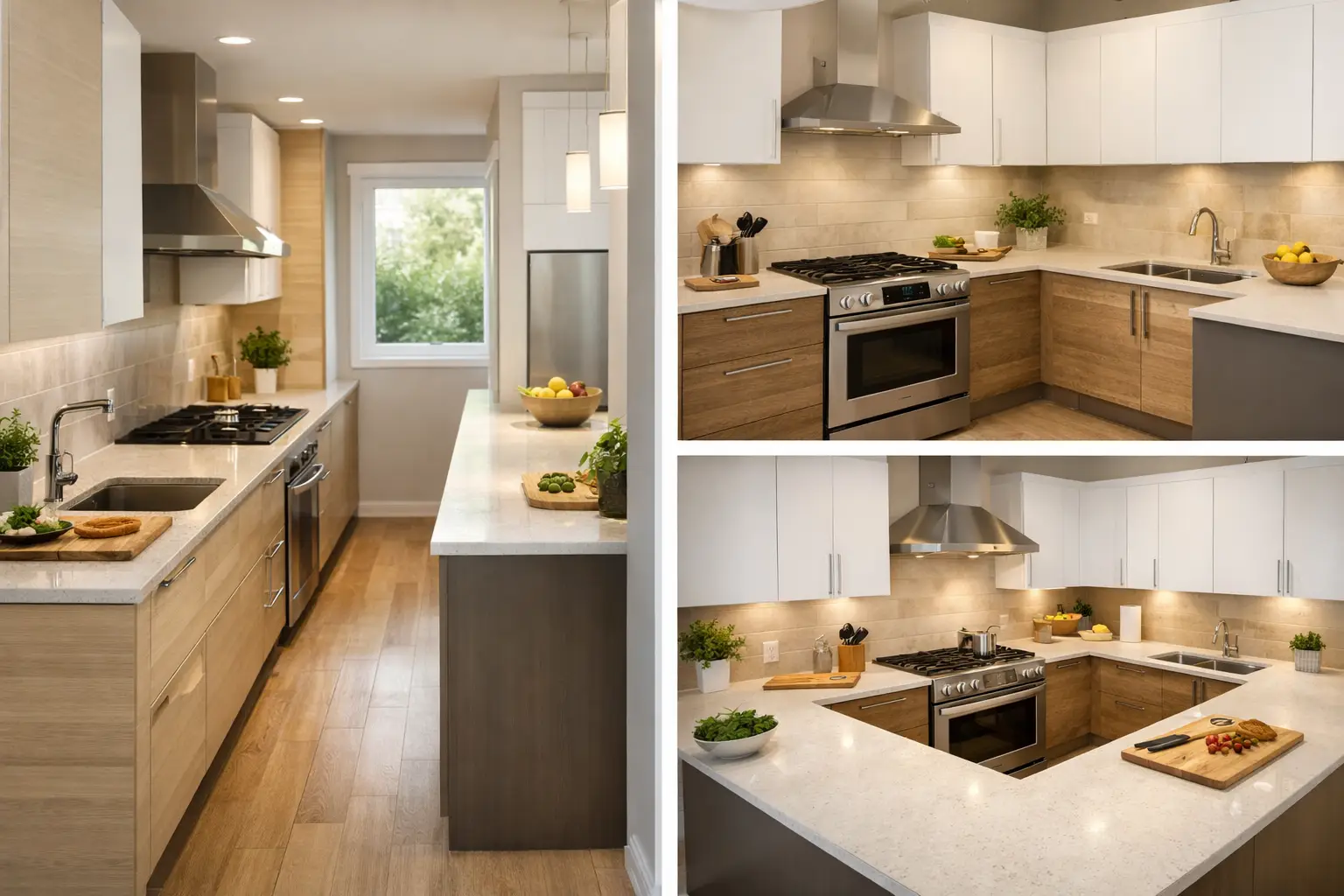
If you have ever stood in your kitchen trying to open a cupboard while someone else is unloading the dishwasher, you already know why people ask which kitchen layout saves space. It is rarely just about square metres. What usually matters is how easily you can move, store things, and use the room day to day without doors, appliances and worktops getting in each other’s way.
For most homes, the most space-saving layout is the one that uses the room’s shape properly rather than fighting against it. That means there is no single right answer for every property in St Neots, Little Paxton or the surrounding villages. A galley kitchen can be brilliantly efficient in one house and feel cramped in another. An L-shaped layout can open up a room nicely, but only if the corner space works hard enough to justify it.
Which kitchen layout saves space in real homes?
The honest answer is that the best layout depends on the room itself, where the doors and windows sit, and how much you want to change. If you are keeping your existing cabinets and refreshing the kitchen with replacement doors, worktops, handles and finishing touches, the question becomes slightly different. It is not only which kitchen layout saves space on paper, but which layout makes your current kitchen feel easier to use.
In practical terms, the most compact and efficient layouts are usually galley and L-shaped kitchens. They tend to make the best use of limited floor area while keeping everything within easy reach. U-shaped kitchens can also be excellent for storage and worktop space, but they need the right proportions. If the room is too tight, a U-shape can start to feel boxed in.
Open-plan layouts often look spacious because you can see more floor and more light, but that does not always mean they save space. They can reduce wall space for cupboards, which matters if storage is already limited.
Galley kitchens often win on efficiency
If your kitchen is narrow or set in a long rectangular room, a galley layout is often the strongest option. With units running along two parallel sides, everything stays close to hand. You do not waste much floor space on corners, and there is usually a straightforward route between the sink, hob and fridge.
That efficiency is the main reason galley kitchens are so often the answer when people ask which kitchen layout saves space. You get a lot of storage and work surface into a relatively small footprint. There is also less empty circulation space, which sounds technical but really means fewer awkward gaps that are too small for furniture and too large to ignore.
The trade-off is that galley kitchens need careful detailing. If both sides are full of deep units and appliance doors clash, the room can quickly feel pinched. Good cupboard planning matters here. Slimmer handles, better internal storage and doors that open cleanly can make the layout feel more comfortable without moving the cabinets themselves.
A galley kitchen also benefits from lighter finishes and simple lines. If the arrangement already works, replacing tired doors and worktops can change the feel of the room far more than many homeowners expect.
L-shaped kitchens make small rooms feel easier
An L-shaped kitchen is often the best compromise between space-saving and openness. It uses two adjoining walls, leaving more free floor area than a U-shape and often making the room feel less enclosed than a galley.
This layout works especially well in smaller square rooms or kitchen-diners where you want enough circulation space for family life. It gives you a practical run of units while keeping one side of the room more open. That can be useful if the kitchen needs to include a table, a back door route or simply a bit more breathing room.
The challenge with an L-shape is the corner. Corner cupboards can be awkward, and dead space can creep in if the units are not planned carefully. That does not mean the layout is inefficient, only that the details matter. Better corner storage, improved drawer access and a refreshed run of doors can all make an existing L-shaped kitchen work harder.
For many households, this is the layout that feels best rather than the one that fits the absolute most cabinetry. If your kitchen already has an L-shape and the room flows well, keeping that layout and updating the look is often a sensible choice.
U-shaped kitchens offer more storage, but not always more space
A U-shaped kitchen can pack in plenty of cupboards and worktop area. If the room is wide enough, it creates a very practical working zone with everything close by. For keen cooks or busy family kitchens, that can be a real advantage.
But more units do not automatically mean a better use of space. In a compact room, a U-shape can leave too little room in the centre. If appliance doors, drawer fronts and corner units all need clearance, the kitchen may start to feel awkward to use.
This is why the question of which kitchen layout saves space needs a bit of caution. A U-shape saves wall space by using three sides of the room, but it can cost you usable floor space. In some homes, that is the right trade-off. In others, removing one run of units would make the kitchen feel larger and easier, even if you technically lose a few cupboards.
If you already have a U-shaped kitchen that feels dark or dated, a refresh can make a big difference without changing the footprint. New doors, lighter colours and a cleaner worktop line often reduce that enclosed feeling.
Single-wall kitchens save floor space, but storage can suffer
A single-wall kitchen is the most minimal layout. Everything sits along one wall, leaving the rest of the room open. In very small homes, annexes or open-plan spaces, that can be the only realistic option.
It certainly saves floor space, but it is not always the best space-saving layout in a practical sense. You may lose valuable storage and end up spreading preparation, cooking and washing-up across one long run. That can make the kitchen less efficient, even if it looks neat.
This layout works best when paired with very good storage planning. Tall units, clever drawers and sensible appliance placement are essential. If your current kitchen is single-wall and you are trying to make it feel more useful, the finish choices and storage upgrades matter just as much as the layout itself.
Peninsula and island layouts need more room than people think
Many homeowners like the idea of an island or peninsula because it adds worktop space and gives the kitchen a sociable feel. In the right room, that is true. In the wrong room, it simply blocks movement.
A peninsula can work better than a full island in a modest-sized kitchen because it keeps one end connected to the main run of units. Even so, you need proper clearance around it. If people are squeezing past stools or walking around open cupboard doors, the layout is not saving space at all.
This is one area where fashion can be misleading. A layout that looks generous in a brochure may feel awkward in an average home. If your room is not particularly large, keeping the perimeter layout and improving the existing units is often the more practical route.
Sometimes the best answer is not changing the layout
When homeowners ask which kitchen layout saves space, they often assume the answer involves moving everything around. Quite often it does not. If the cabinets are in sensible positions and the room basically works, the bigger gains may come from improving how the kitchen functions within the same shape.
Replacing bulky old doors with a cleaner style can sharpen the room visually. Swapping worn worktops for a lighter finish can make the space feel more open. Better handles, more practical sink and tap choices, and improved internal storage can all make the kitchen easier to use without the cost and disruption of a full refit.
That approach suits many homes because the original layout was not wrong – it has just become tired, cluttered or less practical over time. A local showroom visit can help you compare finishes in person and talk through what would genuinely improve the kitchen, rather than changing things for the sake of it.
How to judge your own kitchen properly
Before deciding on a new layout, look at where the real pinch points are. Is there too little storage, not enough worktop, poor appliance clearance, or simply a dark and dated feel? Those are different problems, and they do not all need the same fix.
If movement is the issue, a galley or L-shape may be better than a U-shape. If storage is the issue, a U-shape might still make sense. If the room feels small but functions well, new doors and surfaces may achieve more than a structural change.
At Replacement Kitchen Doors To Size, this is often the most useful conversation to have with homeowners – not how to rip everything out, but how to make the kitchen they already have feel better organised, fresher and easier to live with.
The right kitchen layout is the one that earns its keep every day. If your current one mostly works, a thoughtful refresh can be the smartest way to save space without losing a kitchen you already know suits your home.