How to Choose Kitchen Appliances Wisely
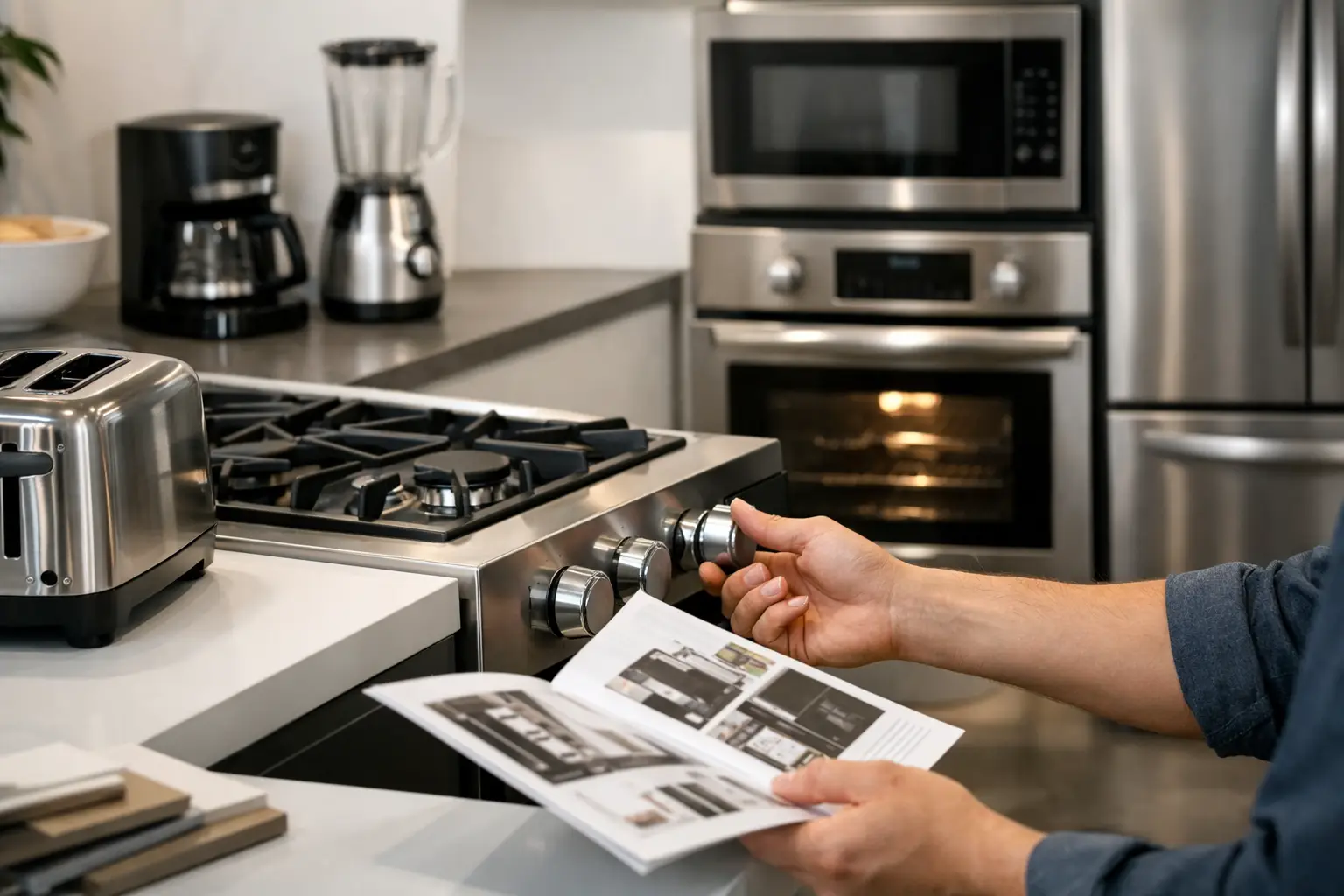
A new oven can make an old kitchen feel current again. So can a quieter dishwasher, a better laid out fridge freezer or a hob that finally suits the way you cook. If you are working out how to choose kitchen appliances, the best place to start is not with finishes or brand names. It is with your kitchen as it already is – the space you have, the cabinets you want to keep and the way your household actually uses the room.
That matters even more if you are refreshing rather than replacing the whole kitchen. Many homeowners like their existing layout perfectly well. The cupboards are in the right places, the workflow makes sense and there is no appetite for a full rip-out. In that situation, appliances need to fit around the kitchen you have, not the other way round.
How to choose kitchen appliances for the kitchen you already have
The biggest mistake people make is choosing appliances in isolation. A shiny new range cooker may look appealing, but if it overwhelms the run of units or means awkward changes to worktops and splashbacks, it can turn a straightforward update into a much larger job. The same applies to American-style fridge freezers, integrated dishwashers and deep built-in ovens. A good appliance choice should improve the kitchen without making everything around it harder.
Start by thinking about what is staying. If your cabinet layout is sound and you are planning replacement doors, drawer fronts, handles or worktops, your appliances should work neatly within that plan. Widths, depths, ventilation gaps, door clearances and service connections all matter. An appliance that technically fits the opening is not always the right choice if its door cannot open properly beside a wall, or if it leaves the kitchen feeling cramped.
This is where seeing products and samples in person is useful. Measurements on paper help, but they do not always show how a larger appliance will sit with your worktop edge, door style or handle choice.
Begin with how you cook, not what is fashionable
A kitchen used for quick weekday meals needs different appliances from one used for baking, batch cooking or entertaining. If you mostly cook simple dinners and want reliability, a well-made single oven and an easy-clean induction hob may suit you better than a complicated multifunction setup you will only use twice a year.
On the other hand, if two people regularly cook at once, a double oven or a wider hob can make daily life easier. If you bake often, look closely at internal oven capacity, shelf positions and how evenly it holds heat. If you rely on frozen food, a larger freezer may matter more than a statement cooker.
There is no single best appliance package. It depends on habits, household size and what currently frustrates you. If your present dishwasher is too small, replacing it with another compact model simply because that is what you have always had may be a missed opportunity. If your microwave lives on the worktop and steals useful prep space, a built-in option might tidy the room up nicely. Good choices usually come from solving real annoyances.
Built-in or freestanding?
This is often the point where style and practicality meet. Built-in appliances can create a cleaner, more fitted look, especially in a kitchen refresh where new doors and panels are helping everything feel more unified. Integrated dishwashers and fridge freezers are popular for exactly that reason. They let the cabinetry lead visually, which can be ideal if you want the room to feel calmer and more up to date.
Freestanding appliances, though, are not second best. They can be more flexible, easier to replace in future and sometimes better value. A freestanding fridge freezer often offers more usable capacity for the money than an integrated one. A range cooker can become a focal point if the rest of the kitchen design supports it.
The trade-off is appearance versus flexibility. If you are aiming for a tidy, coordinated update, built-in often wins. If storage volume, easier replacement or cost matter more, freestanding may be the wiser route.
Size matters more than people expect
When considering how to choose kitchen appliances, size is about more than the width of the housing. Capacity, internal layout and external proportions all affect how well an appliance works day to day.
Take ovens. Two single ovens with the same outside dimensions can have very different usable space inside. Fridge freezers are similar. Shelf arrangement, drawer depth and door storage often matter more than the headline litre figure. Dishwashers may look standard, but basket layout can make one model much easier to live with than another.
It is also worth considering visual balance. In a smaller kitchen, oversized appliances can dominate the room. In a larger kitchen, very compact models can look lost and leave you short on functionality. The most successful refreshes usually feel well judged rather than squeezed in.
Think about running costs as well as purchase price
An appliance that seems cheaper at the outset may cost more over time if it uses more electricity or water. That does not mean you always need the most expensive energy-rated option, but it is sensible to consider the long view, especially for appliances used daily.
Fridge freezers, dishwashers and washing machines tend to show the clearest difference in running costs. Ovens and hobs are more nuanced. An induction hob, for example, is often praised for speed, control and easier cleaning, but it may require suitable pans and an electrical setup that fits your home. Gas hobs remain popular because many cooks like the visible flame and familiar feel. Neither is universally right.
The best value choice is often the one that balances upfront cost, expected lifespan and day-to-day efficiency. Cheap appliances can be false economy if they are noisy, awkward to use or need replacing too soon.
Do not overlook noise, cleaning and everyday use
Appliances are easy to judge by appearance in a brochure and much harder to judge by the small details that affect daily life. Yet those details are usually what people comment on after installation.
A noisy extractor can put you off using it. A dishwasher with a better internal layout can save time every evening. Oven controls that are clear and simple may suit your household better than touch panels packed with settings. Self-cleaning functions can be useful, but so can a straightforward cavity with fewer awkward corners.
If your kitchen is part of an open-plan space, noise matters even more. The quietness of a dishwasher, extractor or fridge freezer can make a noticeable difference to how comfortable the room feels.
Match appliances to the wider kitchen refresh
Appliances should sit comfortably with the finish of the room. If you are updating doors, worktops, handles, sink and tap, think about how the appliance colour and styling will work with them. Black glass can look smart, but in some kitchens stainless steel gives a softer, more balanced result. Handle design matters too. Chunky professional-style appliance handles may jar with simple Shaker doors or slim modern fronts.
This does not mean everything must match perfectly. In fact, too much matching can feel flat. What you are aiming for is a kitchen where the elements feel considered together. A worktop change, a new sink and better chosen appliances can make a bigger difference than many people expect, even with the original cabinet layout still in place.
See before you decide
Online research is useful, but appliances are one of those purchases that benefit from being seen alongside real kitchen finishes. A door sample, a worktop edge and an appliance front can look very different in person from how they appear on a screen. So can colours. White, cream, graphite and black all shift depending on light and surrounding materials.
For homeowners around St Neots and the surrounding area, visiting a local showroom can save a lot of second-guessing. It gives you the chance to compare styles properly, discuss what will fit your existing units and get practical advice based on a kitchen refresh rather than a complete replacement. That is often where better decisions are made – not through pressure, just by seeing what works.
A sensible way to narrow your options
If the choice feels overwhelming, reduce it to three questions. What do you need the appliance to do? What space does the kitchen genuinely allow? And what level of finish suits the rest of the room? Once those are clear, most of the unsuitable options fall away quite quickly.
You do not need the most advanced appliance on the market. You need one that fits the kitchen, suits your routine and helps the room work better for years to come. At Replacement Kitchen Doors To Size, that practical approach is often what turns a kitchen update from a patchwork of ideas into a refresh that feels properly thought through.
A good appliance should not steal the show for the wrong reasons. It should make the kitchen easier to use, easier to enjoy and easier to keep looking its best.