Handleless vs Shaker Kitchens
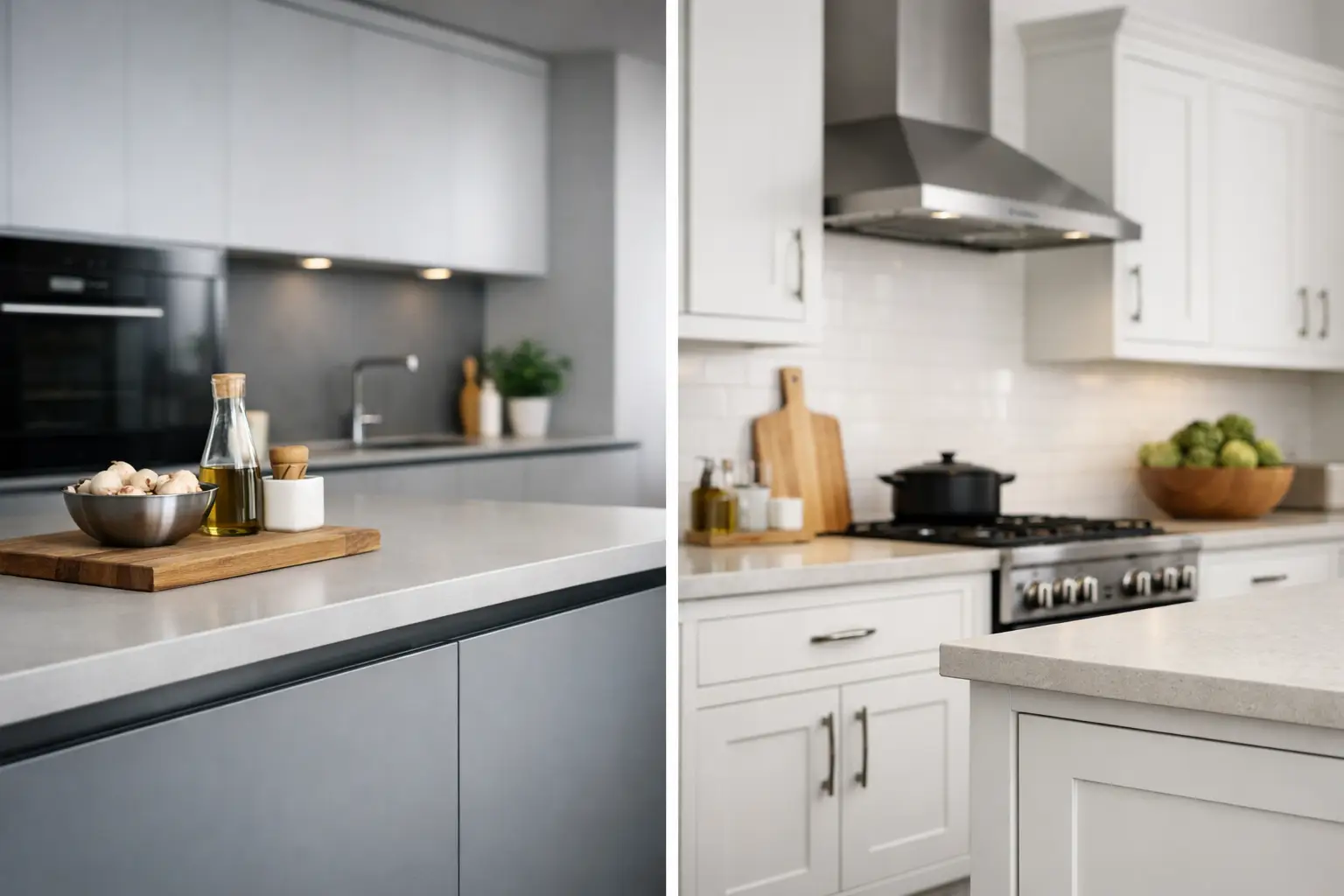
You can usually tell quite quickly which way a kitchen update is going. One homeowner wants to tidy up a dated room and make it feel cleaner and more modern. Another wants warmth, detail and a style that still feels right in ten years. That is why handleless vs shaker kitchens is such a common question when people are refreshing existing cabinets rather than starting again.
If you already like your kitchen layout, this choice matters more than many people expect. The door style sets the tone for the whole room, but it also affects cleaning, usability, how much change is needed and whether your update feels like a gentle refresh or a complete shift in style. For many homes, especially where the cabinets are staying, the best answer is not simply whichever look is most fashionable. It is whichever works best with the kitchen you already have.
Handleless vs shaker kitchens – what is the real difference?
At first glance, the difference seems simple. Handleless kitchens have a flat, pared-back look with little or no visible detailing. Shaker kitchens use framed doors with a recessed centre panel, giving more definition and a more traditional feel.
In practice, the gap is wider than that. Handleless styles tend to suit homes where you want a sharper, more contemporary finish. They work particularly well if your current kitchen feels busy, dark or visually crowded, because cleaner lines can make the room feel calmer. Shaker doors, on the other hand, add character without becoming fussy. They sit comfortably between classic and modern, which is why they remain such a dependable choice.
Neither is automatically better. A lot depends on the age of your property, the size of the room, the amount of natural light and how much of the existing kitchen you plan to keep.
If you are keeping the cabinets, compatibility matters
This is where many homeowners need practical advice rather than broad trends. When you are replacing doors and drawer fronts on existing units, not every style creates the same level of change.
Shaker doors are often a straightforward way to refresh older cabinets because they bring in a new look without demanding a complete rethink of the room. They can sit happily with a range of worktops, wall colours and flooring, and they do not usually require the kitchen to be redesigned around them.
Handleless kitchens can still be possible as part of a makeover, but the detail matters. True handleless designs often rely on a rail system or a particular cabinet configuration. In some cases, a handleless effect can be achieved with carefully chosen replacement doors and integrated grip profiles, but it needs to be assessed properly. That is one reason seeing samples and talking through your current kitchen in person is so useful. What looks simple online can be more involved once measurements, hinges and cabinet condition come into it.
Style is not just about fashion
A handleless kitchen often appeals because it feels current. Gloss finishes, matt neutrals and flat slab doors can instantly bring an older room up to date. If your existing kitchen has too many visual breaks – ornate handles, busy woodgrain, bulky cornices – moving towards a handleless style can make the whole space feel more open.
The trade-off is that very minimal kitchens can sometimes feel a little stark if the room itself does not have enough warmth. In smaller family kitchens, especially where there are lots of everyday items on show, the ultra-clean look can be harder to maintain.
Shaker kitchens have more visual texture, which helps them feel welcoming. They suit period homes naturally, but they also work well in newer houses that need a bit more character. A painted shaker in soft grey, sage, off-white or navy can feel fresh without chasing a trend.
If you are unsure, ask yourself a simple question. Do you want the new doors to make the room feel sleeker, or softer? That often gets to the answer faster than trying to decide whether your taste is modern or traditional.
Handleless vs shaker kitchens for everyday use
A kitchen has to work well on a Tuesday morning, not just in a brochure. That is where the choice becomes more personal.
Handleless kitchens have obvious practical benefits. There are no protruding handles to catch on clothing, no hardware interrupting the look of the units and fewer visual distractions. In compact kitchens, that can make movement feel easier. For some households, especially where children are often rushing through, that cleaner frontage is appealing.
But handleless does not always mean simpler to use. Some people find grip rails or recessed openings less comfortable than a conventional handle, especially if they have arthritis, reduced hand strength or simply prefer a firmer grip. Finger marks can also show up more clearly on certain matt or gloss surfaces, particularly around the opening edge.
Shaker kitchens tend to be easy to live with because they usually pair with standard handles or knobs. That gives you more flexibility over how the kitchen feels to use. A cup handle, bar handle or knob can subtly shift the overall style while also making doors easier to open. For busy family kitchens, that familiar functionality is often worth a lot.
The slight downside is cleaning. Shaker doors have more grooves and edges than slab doors, so they can collect a bit more dust and grease over time. It is not difficult to manage, but it is a factor if you want the quickest possible wipe-down routine.
Cost and value are not always the same thing
People often assume handleless will be more expensive and shaker will be the safer budget option. Sometimes that is true, but not always.
The final cost depends on the door range, finish, cabinet suitability and whether extra changes are needed to achieve the look properly. A straightforward shaker door replacement can be excellent value because it transforms the appearance of the kitchen without changing the footprint. A handleless-style update may involve more technical considerations, so the price can vary depending on what your existing units can accommodate.
Value is really about getting the right result from the kitchen you already have. If a shaker style works beautifully with your cabinets, worktops and room shape, there is little sense forcing a more minimal design that needs further alterations. Equally, if your kitchen is structurally sound but looks dated because of heavy detailing, a cleaner handleless style could give you the bigger improvement.
Which style suits your home best?
For many homes around St Neots, Huntingdon and the surrounding villages, the answer comes down to the character of the property and the way the kitchen is used.
Handleless tends to suit contemporary interiors, open-plan spaces and homes where the aim is to simplify the room visually. It can work especially well in smaller kitchens because the uninterrupted lines help the space feel less cluttered.
Shaker tends to suit mixed-use family kitchens, older properties and homeowners who want a style with staying power. It is flexible enough to look traditional with the right handles and colours, or more current if you keep the palette plain and the finishing details simple.
There is also a middle ground. Some of the best kitchen makeovers are not fully one thing or the other. A narrow-frame shaker in a muted colour can feel surprisingly modern. A slab door with a warm wood effect can feel less stark than people expect. That is why comparing real samples matters so much more than relying on online inspiration alone.
Seeing both styles in person makes the decision easier
Photos are useful for ideas, but they rarely tell you how a finish looks in changing light, how a door edge feels in your hand or whether a colour works with your flooring and worktop. The difference between a shaker that feels timeless and one that feels too traditional can be subtle. The same goes for handleless finishes – some look smart and understated, while others can feel cold depending on the setting.
Visiting a showroom gives you the chance to compare door styles properly and ask the practical questions that make a real difference. Will your existing cabinets suit the look you want? Would new worktops help one style more than the other? Are there handle options that make a shaker kitchen feel more updated? Could a made to measure replacement door give you the effect you want without replacing the whole room?
At Replacement Kitchen Doors To Size near St Neots, that is often where the decision becomes clearer. Once homeowners can see samples side by side and talk through their current kitchen, the right direction usually starts to feel obvious.
The best choice is the one that improves the kitchen you have
The most successful kitchen updates are rarely about copying a trend. They are about noticing what already works, then choosing doors, finishes and details that make the room feel better to use every day.
If you want a cleaner, more streamlined look and your existing kitchen can support it, handleless could be the right move. If you want warmth, flexibility and a style that settles easily into most homes, shaker is hard to beat. Either way, a well-planned door replacement can give your kitchen a completely fresher feel without the cost and disruption of replacing everything.
Before deciding, it is worth standing in front of both styles, opening the doors, comparing colours and asking yourself which one you will still be pleased to see each morning in five years’ time.