Guide to Kitchen Appliance Installation Planning
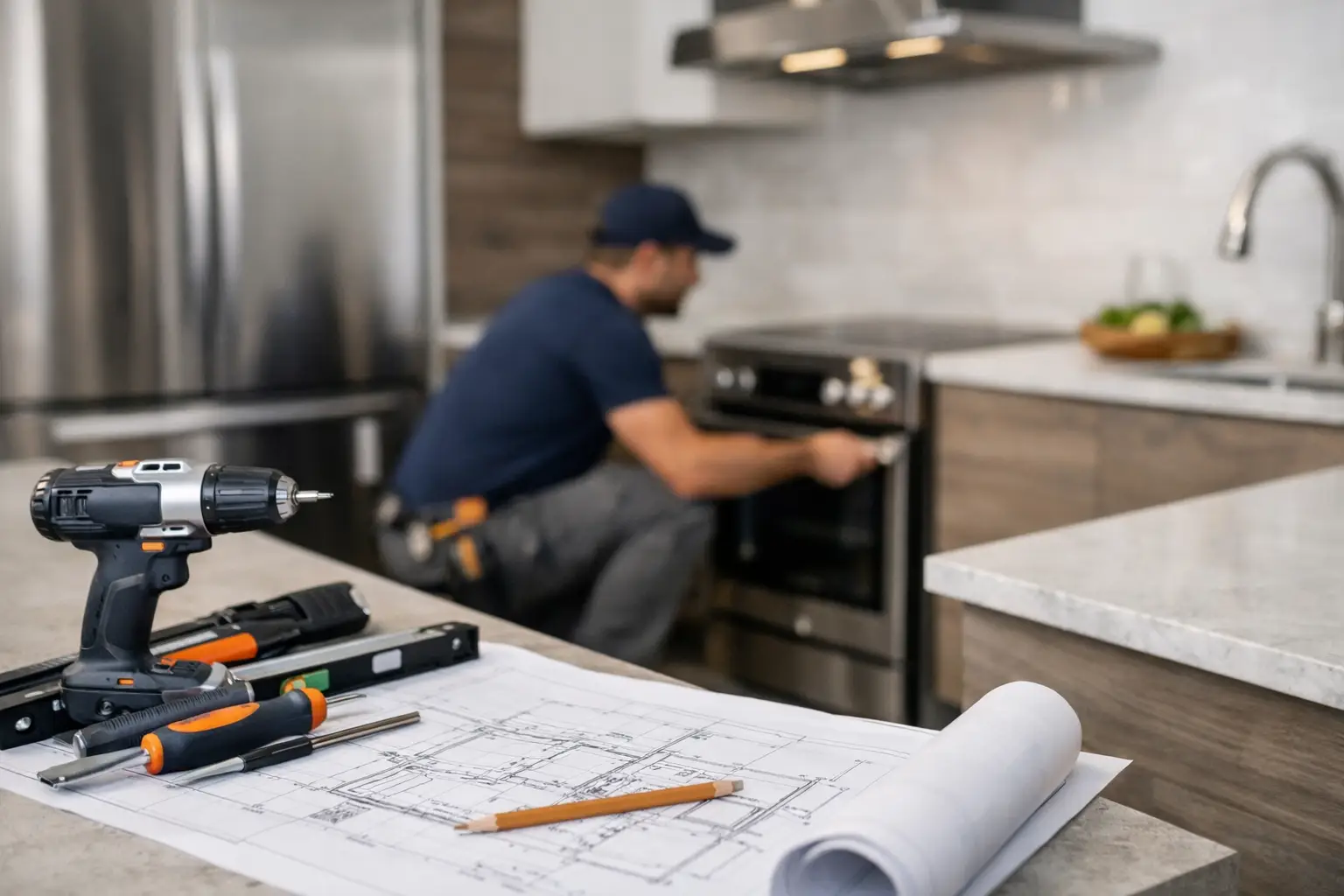
A new oven that does not fit the housing, a fridge door that catches the wall, or a dishwasher that leaves no room for pipework – these are the sorts of problems a good guide to kitchen appliance installation planning is meant to prevent. If you are refreshing your existing kitchen rather than starting again from scratch, planning matters even more, because your new appliances need to work with the cabinets, worktops and layout you already have.
For many homeowners, the layout is still perfectly serviceable. The kitchen may simply need smarter appliances, updated doors, a fresh worktop or better finishing touches to feel current again. That is why appliance planning should never be left until the end. The earlier you think it through, the easier it is to avoid awkward compromises and extra fitting costs.
Why appliance planning matters in an existing kitchen
When you are keeping the same basic layout, every millimetre counts. A full kitchen replacement gives you a blank canvas, but a makeover usually means working around existing cabinet widths, service points, wall positions and floor levels. That can be a very sensible route, but it does mean that appliances have to be chosen with care.
Integrated appliances are often the trickiest. A built-in dishwasher, washing machine, fridge freezer or oven housing needs the right opening size, ventilation allowance and door arrangement. Even among standard appliances, dimensions can vary more than people expect. Two dishwashers might both be sold as 600mm models, but one may need slightly different clearances or have a different door line.
Freestanding appliances need planning too. Width and depth are only part of the story. You also need to consider how doors open, whether handles protrude, how close the appliance sits to walls or corners, and whether the floor is level enough for proper fitting.
A practical guide to kitchen appliance installation planning
The simplest way to approach appliance planning is to start with what must stay, then move on to what can change. If your sink, waste pipe, extractor route or consumer unit is already in a sensible place, keeping those elements where they are can make the whole project more straightforward and cost-effective.
From there, think about your priorities. Are you replacing appliances because the old ones have failed, or because you want the kitchen to work better day to day? The answer affects what matters most. One household may need a bigger fridge freezer. Another may want an induction hob for easier cleaning. Someone else may be more concerned with a quieter dishwasher or an oven at eye level.
Once those priorities are clear, the planning becomes much more practical. You are no longer trying to choose from every appliance on the market. You are narrowing things down to what suits your kitchen, your budget and the way you use the room.
Measure first, and then measure again
Appliance brochures can make everything look standard. Real kitchens are less forgiving. Measure cabinet openings, internal housing sizes, worktop depths, ceiling heights and the space available in front of each appliance. If you are replacing doors or panels as part of the makeover, allow for those finished dimensions too.
Do not rely on the old appliance size alone. A previous owner may have forced something into place, trimmed a panel, or left poor ventilation behind it. If you are changing from freestanding to integrated, or replacing a single oven with a double oven, you will need to confirm that the cabinetry can support the change.
Photos help as much as measurements. A picture of the current setup often reveals things people forget to mention, such as skirting pipes, boxed-in services, uneven walls or a nearby window board that affects door swing.
Check the services before you fall in love with an appliance
Gas, electric, water and waste all have a say in what is practical. A new induction hob may need a different electrical supply from an old ceramic hob. A larger American-style fridge freezer may need space for a water connection as well as extra depth and width. A built-in microwave or coffee machine may require a dedicated feed in a cabinet that was never designed for one.
This is where trade-offs often appear. Moving services can be done, but it adds cost and disruption. Sometimes it is worth it. Sometimes a slightly different appliance choice gives you the result you want without opening up walls or floors.
Ventilation is another point that is easy to miss. Ovens, fridge freezers and some other integrated appliances need airflow around them to perform properly and to protect the cabinetry. If the housing design or plinth arrangement does not allow that, the appliance may not run as it should.
Think about how the room works, not just where things fit
A kitchen appliance can fit perfectly on paper and still be annoying to use. Planning should include daily movement around the room. Can the dishwasher open fully without blocking the main route through the kitchen? Will the fridge door open far enough for drawers and shelves to slide out properly? Is there landing space beside the oven or hob?
These details matter most in family kitchens and in smaller rooms, where two people are often trying to use the space at once. If you are keeping the same layout, small improvements in appliance choice can make the room feel much better organised. A different hinge arrangement, a slimmer housing, or a better-placed extractor can make more difference than people expect.
Noise matters as well. Open-plan kitchens and kitchen-diners tend to make appliance sound more noticeable. A quieter dishwasher, extractor or washing machine may be worth paying for if the kitchen is part of the main living space.
Match the appliance plan to the rest of the makeover
If you are updating doors, drawer fronts, handles and worktops at the same time, the appliance plan should sit alongside those choices rather than follow them. Integrated appliance doors need the right panel sizes and hinge positions. Hob cut-outs must work with the worktop material. Sink and tap choices affect what space remains beneath the cabinet for plumbing and bins.
This is one reason showroom advice can be so useful. Seeing door samples, handle styles, worktop finishes and appliance options together helps you spot issues before anything is ordered. It is much easier to adjust a plan when everything is still on paper than when fitters are already on site.
Timing the installation properly
One of the most common mistakes is ordering appliances too early or too late. Too early, and they can sit boxed up in a garage while plans change. Too late, and the fitting schedule stalls because a housing size or service position cannot be confirmed.
The best timing depends on the scope of work. If you are only swapping an appliance like for like, the process is usually straightforward. If you are also replacing doors, worktops, sinks or panels, the sequencing becomes more important. Measurements may need to be confirmed after old items are removed, especially in older kitchens where very little is perfectly square.
A sensible plan usually runs like this: confirm the layout and cabinet suitability first, choose appliances that genuinely fit the available space and services, then coordinate delivery with the fitter’s programme. It sounds obvious, but it prevents a lot of stress.
Know when a “simple swap” is not simple
Some projects look straightforward from the front. Remove one oven, slot another in, job done. In reality, the housing may need alteration, the electrical connection may be unsuitable, or the trim and ventilation gaps may no longer comply with the new model’s requirements.
The same applies to extractor changes, fridge freezer upgrades and switching between freestanding and integrated appliances. None of these are impossible, but they should not be treated as afterthoughts. A little planning can be the difference between a tidy kitchen refresh and a series of small, expensive fixes.
For homeowners around St Neots, Little Paxton and nearby towns, this is often where visiting a local showroom pays off. You can bring rough sizes, photos and questions, compare options in person, and get practical advice based on real kitchens rather than generic online listings.
What to bring when asking for advice
If you want useful appliance guidance, bring the basics. Cabinet measurements, appliance sizes, a few clear photos and a note of what currently works badly are usually enough to start a worthwhile conversation. Mention any planned changes to doors, worktops, sinks or taps as well, because those details often affect the installation.
At Replacement Kitchen Doors To Size, the most useful starting point is usually not “What is the best appliance?” but “What will work in my kitchen without turning this into a full replacement?” That keeps the focus where it belongs – on refreshing the kitchen you already have in a practical, well-planned way.
A kitchen update does not need to be dramatic to be worthwhile. When the appliance planning is done properly, everything else tends to fall into place more easily, and the finished room feels better to use from the very first day.