DIY Kitchen Doors Replacement: Worth It?
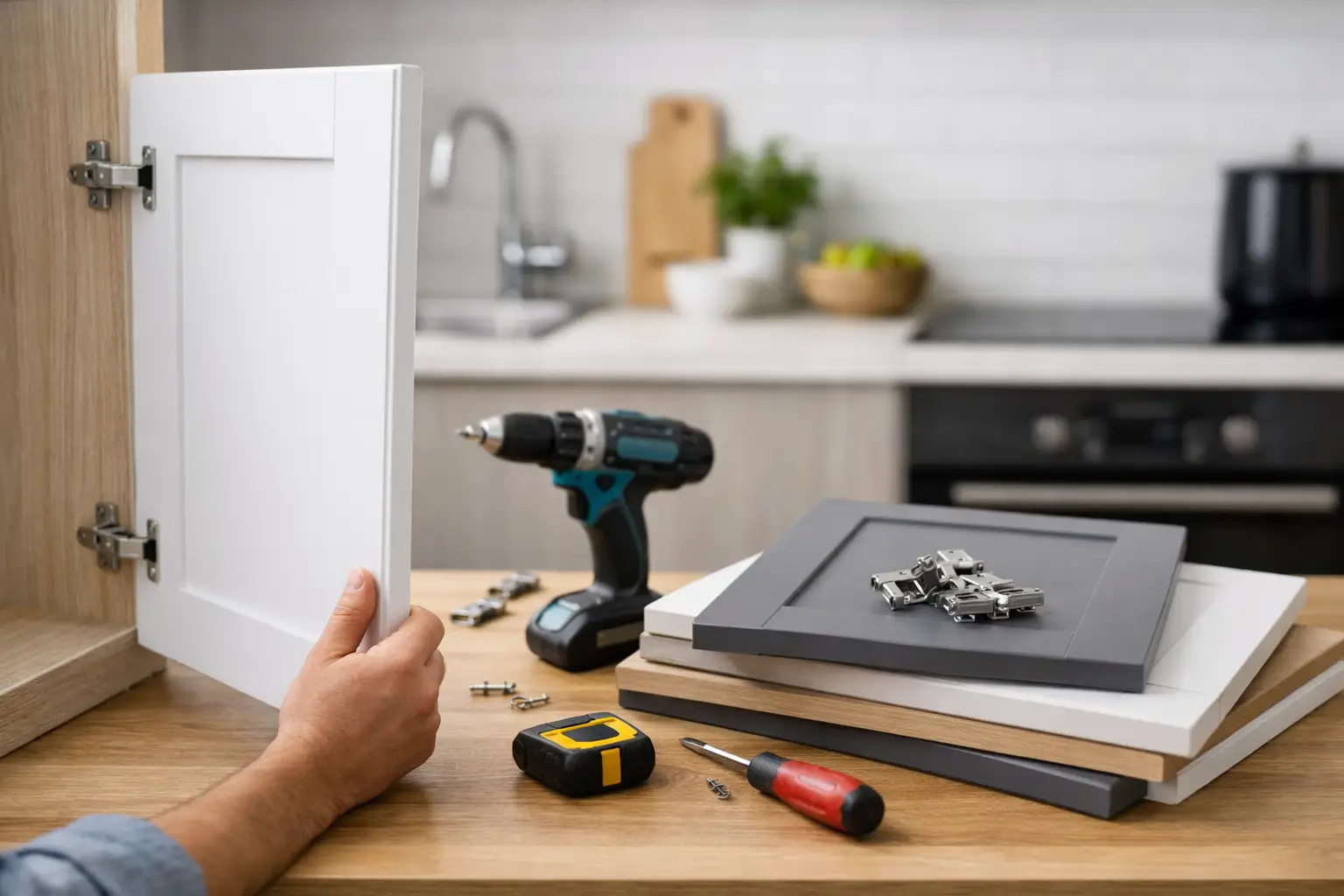
A lot of kitchens do not need ripping out. If the cabinets are still sound and the layout works for your household, DIY kitchen doors replacement can be a sensible way to freshen the room without the cost and disruption of starting again.
That said, replacing kitchen doors yourself is one of those jobs that looks simpler than it is. The idea is straightforward enough – take off the old doors, measure carefully, order new ones, fit hinges, line everything up and finish with handles. In practice, the result depends on the condition of your existing cabinets, the accuracy of your measuring and whether all the surrounding details still work once the new fronts are in place.
When DIY kitchen doors replacement makes sense
If your cabinet carcases are sturdy, level and in decent condition, replacing the doors and drawer fronts can make a big visual difference. It suits homeowners who are happy with the current footprint of the kitchen and mainly want to update a dated style, brighten the space or make it feel more modern.
It can also work well if you are comfortable with careful measuring and patient fitting. This is not usually a difficult structural job, but it is a precise one. A few millimetres can be the difference between doors that sit neatly and doors that catch, gap or look slightly off every time you walk into the room.
For many homes around St Neots, Huntingdon and the surrounding villages, this approach is appealing because it avoids the upheaval of a full kitchen refit. You keep the bones of the kitchen that already work and improve the parts you see and use every day.
The part most people underestimate
The biggest challenge is usually not removing old doors. It is working out exactly what you need to replace, and whether your existing kitchen is a good candidate for it.
Older kitchens can be inconsistent. One cabinet may have settled slightly. Another may have non-standard hinge positions. Drawer boxes might be fine, but the fronts may need made to measure replacements rather than off-the-shelf sizes. End panels, plinths and cornices can also start to matter once fresh doors are fitted, because the smart new finish makes worn surrounding pieces look more obvious.
This is where a showroom visit can save a lot of second-guessing. Seeing styles, colours and finishes in person often changes what people choose. A pale gloss that looks ideal on a screen can feel cold in a north-facing kitchen, while a woodgrain finish may add warmth without making the room seem darker.
Measuring for replacement kitchen doors
If you are planning a DIY job, measuring is the stage to take slowly. Never assume the existing door size tells the full story unless you have checked the cabinet opening, hinge layout and overlay.
In many kitchens, standard sizes are fine. In others, especially where the kitchen is older or has been altered over time, made to measure is the safer option. That can be the difference between a tidy refresh and a project that becomes frustrating halfway through.
You will usually need to measure each door and drawer front individually, even if several appear to match. You should also check hinge hole positions if you want the new doors prepared to suit your existing cabinets. If not, you may need to drill new hinge holes accurately, which adds another layer of precision.
A common mistake is ordering new doors, then realising the handles, end panels or plinths no longer match. Another is focusing only on the fronts and forgetting that worktops, sinks, taps and splashback areas may suddenly look far more tired once the cabinetry has been refreshed.
Choosing styles and finishes for a kitchen you are keeping
This is where replacing doors is more than a practical task. You are not designing a kitchen from scratch. You are choosing what works with elements that are staying.
If the room is small or short on natural light, a simpler slab or shaker style in a lighter colour can help it feel cleaner and more open. If the kitchen is part of a busy family home, a finish that hides fingerprints and everyday wear may be more useful than one that looks perfect in a brochure but needs constant wiping down.
It also helps to think beyond the doors themselves. New handles can shift the whole feel of the room, whether you want something more contemporary or a softer traditional look. Replacing worktops at the same time is often worth considering because it gives the makeover a more complete finish, particularly if the existing tops are worn or dated.
For homeowners who want to compare options properly, seeing full-size samples is far more reassuring than relying on small swatches or online images. You get a better sense of colour, texture and how different finishes sit together.
What can go wrong with a DIY fit
The honest answer is that most problems are small, but noticeable. Doors can end up misaligned. Gaps can be uneven. Handles may not sit in a straight line. Drawer fronts can look slightly out. None of these issues will stop the kitchen functioning, but they can undermine the fresh look you were aiming for.
There is also the question of what happens if your cabinets are not as sound as you thought. Loose hinges, swollen edges from past water damage, or units that are no longer level can all complicate fitting. In those cases, replacing the doors alone may not be enough, or the kitchen may benefit from a mix of new doors, upgraded panels and a few practical improvements elsewhere.
That is why the best advice is usually not simply yes or no to DIY. It depends on the kitchen, the condition of the units and how confident you are with detail work.
DIY kitchen doors replacement or expert help?
For some homeowners, DIY kitchen doors replacement is absolutely realistic. If your kitchen uses straightforward sizes, the cabinets are in good order and you are careful with measurements, it can be a satisfying project.
For others, the better route is to get advice before ordering anything. That does not always mean handing over the whole job. Sometimes it simply means checking measurements, comparing door options in person and making sure the specification is right before you commit.
This is especially helpful if you are trying to decide between standard and made to measure doors, or if you are updating more than one element at the same time. A coordinated approach often gives a better result than replacing one piece now and then trying to match the rest later.
At Replacement Kitchen Doors To Size near St Neots, that practical side of the process matters just as much as the finish. Homeowners often come in thinking only about new doors, then realise a change of handles, a new worktop or a better sink and tap choice would complete the kitchen properly without replacing the full layout.
Why local showroom advice still matters
A kitchen is not bought in the same way as a kettle or a tin of paint. Measurements matter. Samples matter. So does being able to ask ordinary questions and get a clear answer.
For local homeowners, visiting a showroom gives you the chance to compare styles side by side, understand what is likely to work with your existing cabinets and avoid expensive ordering mistakes. It is also easier to make sensible decisions when you are not trying to judge everything from photographs.
That local element matters because the goal is not to sell the most dramatic transformation possible. It is to help you refresh the kitchen you already have in a way that suits your home, your budget and how you use the space.
If you are considering replacing your kitchen doors yourself, treat the planning stage as seriously as the fitting. Measure carefully, think about what else may need updating, and if you are unsure, go and look at real samples before you order. A kitchen makeover tends to work best when it feels considered rather than rushed – and that usually starts with good advice and a clear look at what you already have.